

YOUR CART IS CURRENTLY EMPTY
What size fence banner do I need for a sport ground or building site?
What is a fence banner?
A fence banner is a printed PVC (vinyl) or mesh banner tied to an existing fence: the boundary fence of a playing field, or the temporary fence around a building site. It's the steady way to show a sponsor's name to everyone at the ground, or to dress up a site for the months it's fenced off.
There's no single standard size. The fence decides the size, and so do the rules of whoever owns the fence.
Why can't I just order the biggest banner that fits?
Two reasons: rules and wind.
At council sport grounds, sponsor signs often have size limits and may need council approval. Examples (each council sets its own rules):
- City of Casey (Vic) signage policy: "Signage fixed to field fencing must not extend above or below the fence and must not exceed 900mm in height".
- City of Moreton Bay (Qld) signage guidelines: "The maximum size of each sign is 5m2", no taller than the fence it's attached to, and "Attached at least every 600mm or as required for the size of the sign".
- AlburyCity (NSW): field fence signs "should face in toward the playing field", "should not extend beyond the height of the fence" and "should not exceed an area of ten (10) square metres for any one structure".
On building sites, the fence carries the load. South Australia's Department for Infrastructure and Transport says that when banner mesh or shade cloth is fixed to a temporary fence, it needs extra bracing, because it can catch the wind and "in extreme cases can knock it off balance even if temporary fence feet are holding it down". WorkSafe Victoria says "Fencing with signage and shade cloth type coverings may require additional support to resist wind loadings."
Use the following steps to choose your fence banner size
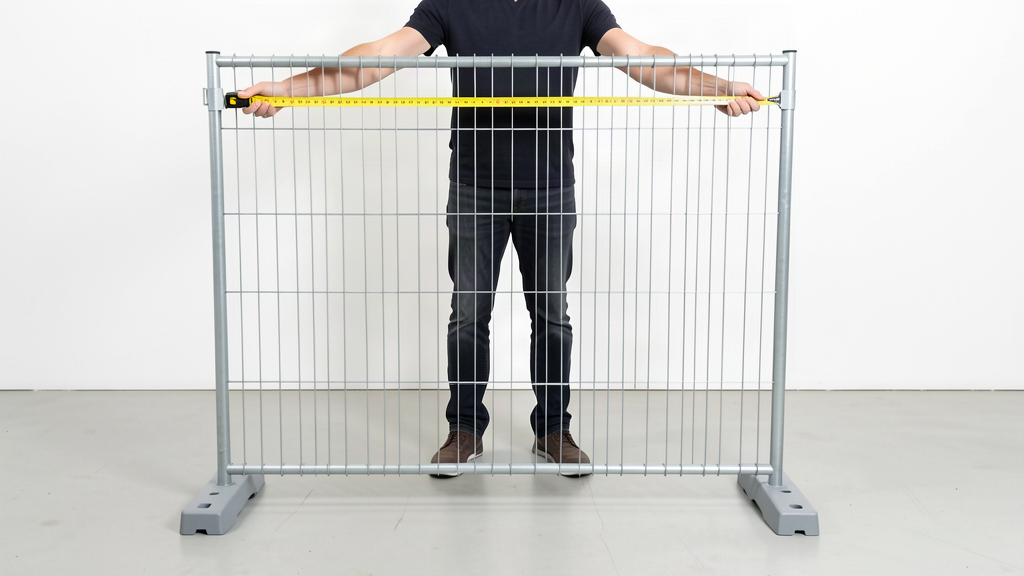
1. Measure the fence. Measure the height from the ground to the top rail, and the length you want to cover. On a temporary fence, measure one panel from post to post. Panel sizes vary, so always measure the fence you'll be using.
Note: The South Australian bulletin says temporary fence panels "must be at least 1.8 metres tall".
2. Check the rules before you order. At a sport ground, ask the council or the club that runs the ground for its signage policy and whether the sign needs council approval (AlburyCity, for example, needs an application for every new sign). On a building site, ask the builder whether the fence is braced for signage and whether graphics are allowed on it.
3. Choose the height. Make it a little less than the clear height of the fence, so the banner doesn't hang over the top rail or drag on the ground. At a sport ground, use the council's maximum if it's lower.
4. Choose the length. On a temporary fence, match whole panels, so the joins between banners sit on the posts. On a sport ground fence, keep each banner within the council's area limit (a 5 m² limit allows 5m x 1m, for example).
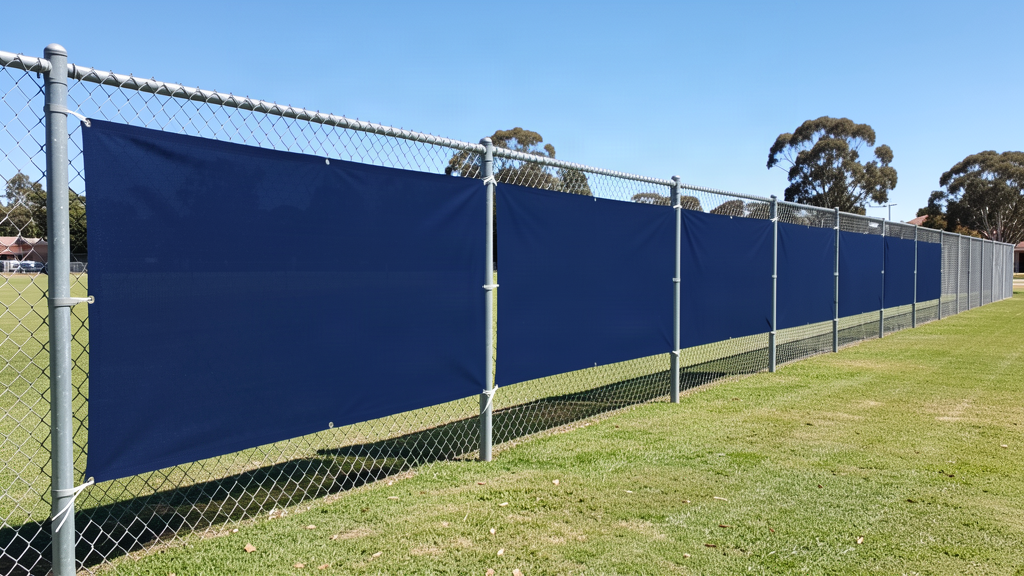
5. Choose PVC or mesh. Vinyl (PVC) banner material suits outdoor use, because properly made PVC resists moisture and UV. PVC is solid, so the wind pushes on all of it. Mesh is perforated, so some wind passes through, which suits long runs and exposed sites. Either way, check the fence is braced (step 2).
6. Set up the artwork at the banner's finished size, and keep logos and text clear of the edges where the eyelets go. Follow our artwork specifications for bleed, resolution and colour.
Note: For very long runs, set up one repeating panel. For example, the Australian Government's signage guidelines for projects it funds use hoarding, banner mesh and fence wrap panels of 5000 x 2100mm, "repeated over long distances".
7. Finally, tie the banner on at every eyelet, starting at the top corners, then pull it firm along the bottom, but not bar-tight, so the ties can give a little in gusts. You're done!
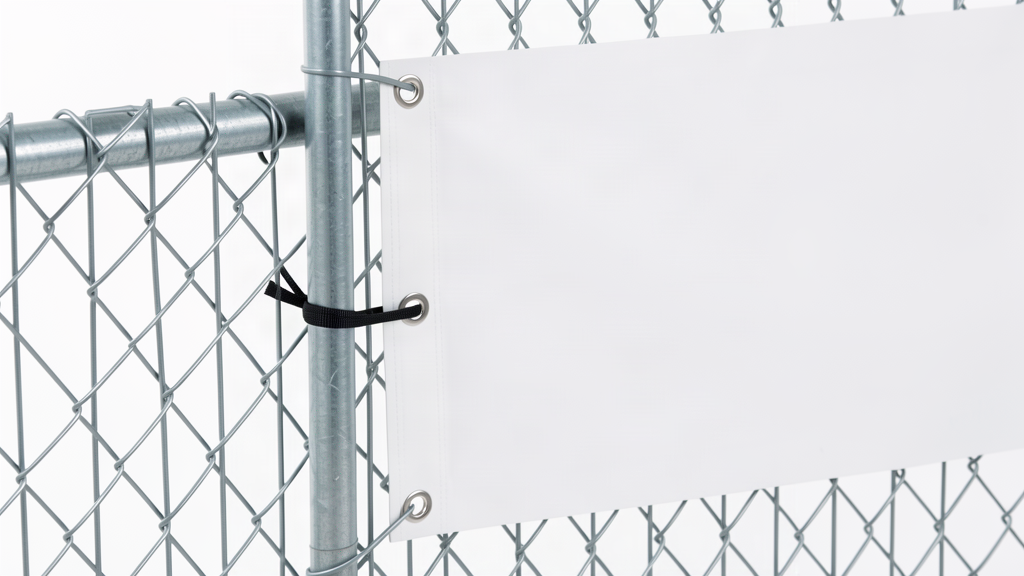
IMPORTANT: Check your banners after strong wind. A loose corner flaps, tears at the eyelet and pulls on the fence.
How many banners do I need?
Divide the length of fence you want to cover by the length of one banner, and round down. On a temporary fence it's simpler to count panels: a run of 12 fence panels takes 12 one-panel banners, or 6 banners that each span two panels. Fewer, longer banners mean fewer joins, but each one is heavier and harder to tie on by yourself.
We work with you to supply printed PVC and mesh banners. Once you've worked out your sizes, send your print-ready file to sales@displays2go.com.au.
Need some help?
We're here for you
If you're needing some advice or just a helping hand, please get in touch with our team, by clicking this button. Complete the enquiry form and one of our specialists will call you back as soon as we can.