

YOUR CART IS CURRENTLY EMPTY
What size is a billboard in Australia?
What are the standard billboard sizes?
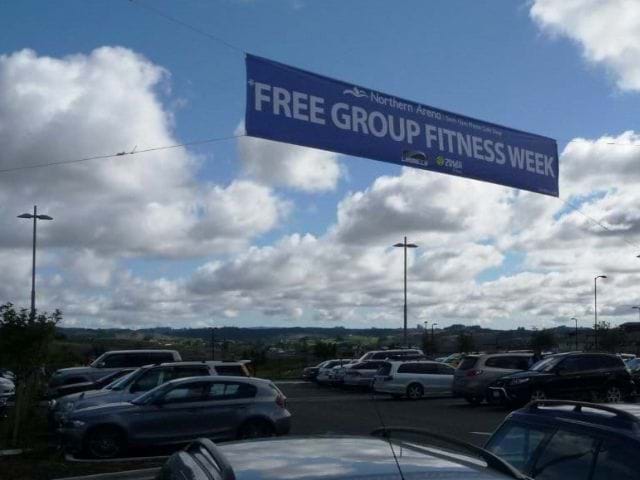
Roadside billboards in Australia come in a handful of standard formats. The two you'll hear most are the 24 sheet (6m x 3m) and the Supersite (12.66m x 3.35m), the industry-standard large format on main roads and freeways.
| Format | Typical size (width x height) | Where you'll find it |
|---|---|---|
| 24 sheet (poster) | 6m x 3m | Secondary roads, railway stations, suburban commercial areas |
| Super 8 | 8.3m x 2.22m | Mostly secondary roads |
| Supersite | 12.66m x 3.35m | Main roads, highways and freeways |
| Spectacular | about 19m x 4.5m | Main roads and inner city sites |
| Gantry | 22.58m x 2.55m | Main roads and freeways |
| Portrait | 3m x 4.5m, 4m x 6m or 6m x 10m | Inner city and retail precincts |
| Mini Super | 6.28m x 3.3m | Listed by one media owner |
| 4x2 | 3.75m x 1.75m | Listed by one media owner |
These are typical sizes, not exact ones, and they vary between sites and media owners. One media owner lists its 24 sheet as 5.95m x 2.95m and its Supersite as 12.61m x 3.3m, for example. Always work from the spec sheet for the site you've booked.
Who prints the billboard?
Billboard space is booked through the media owner that runs the site. Media owners can print the skin for you, and at least one also accepts skins you've had made elsewhere, as long as the size suits the site. Either way, get the spec before you design anything.
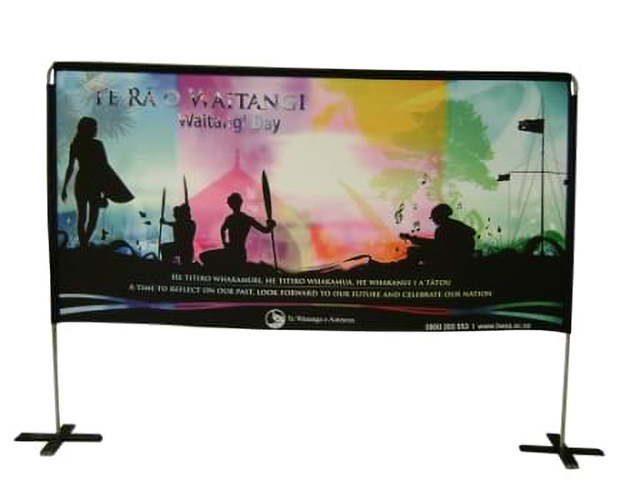
What we print is the large-format work around it: PVC (vinyl) banners, portable billboards (a wide banner held flat on a freestanding frame) and ground banners for events. We print custom graphics up to 3.2 metres wide in one continuous piece, depending on the material.
Use the following steps to set up billboard or large banner artwork
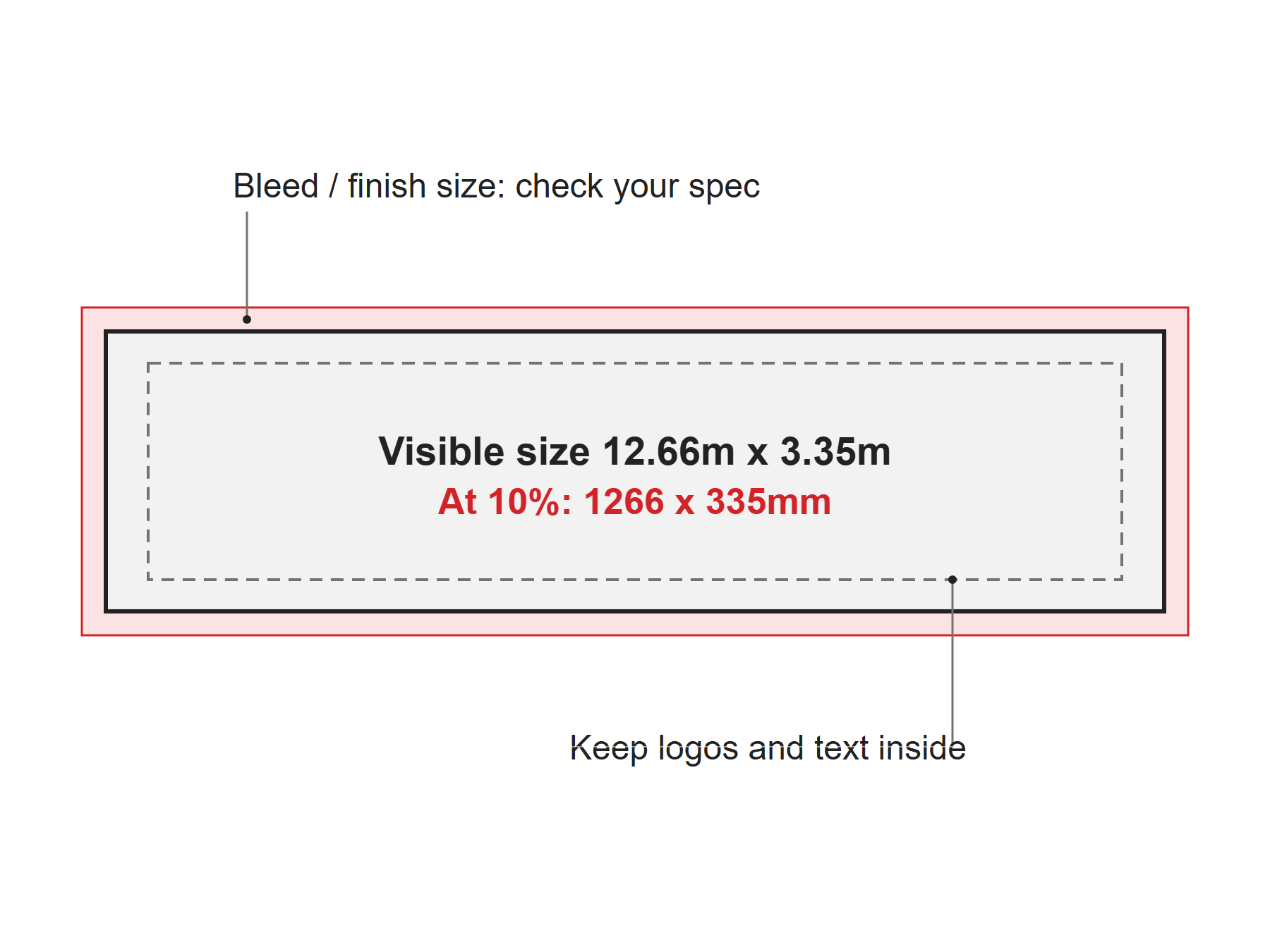
1. Get the exact size for your site. Ask the media owner for the spec sheet when you book. Some specs give two sizes: the visible size, and a larger finish size that the artwork is bled out to. Anything outside the visible size won't be seen, so keep everything that matters inside it.
Note: For a large banner from us, measure the fence, wall or frame it's going on, then talk to us about the best material.
2. Set up the document at scale. Billboards are far too big to build at full size, so the artwork is usually set up at 10% (1:10). A 12.66m x 3.35m Supersite at 10% is a 1266 x 335mm document. One media owner asks for 1:20 when the billboard is larger than 15m, so check the scale on your spec.
3. Check the image resolution at that scale. Each billboard spec sets its own resolution: one media owner asks for 180dpi at 10% scale. For our banners, images should be at least 150ppi at 100% of the finished size. At 10% scale, that means 1,500ppi in the file.
4. Add the bleed your spec asks for. Billboard bleed varies a lot: one spec asks for 250mm at final size, another for 50 to 100mm. For our banners, allow 10mm of bleed on every edge unless the product template says otherwise.
5. Set the colours to CMYK and follow your spec on printer's marks. One media owner's spec rules out registration or crop marks inside the finished area. If you're working from one of our templates, we don't require any printer's marks. Check our artwork specifications for fonts, flattening and file type.
IMPORTANT: Billboard artwork is often due about three weeks before the live date, so build that into your plan.
6. Finally, send the file. Billboard artwork goes to the media owner, following their naming and delivery rules. Banner artwork for us goes to sales@displays2go.com.au with your order or job number in the subject line, if you have one, and you're done!
What if I need something smaller than a billboard?
For events and shopfronts, a portable banner usually does the job. Our extra-wide pull-up banners come in widths from 1.5 metres to 3.2 metres, with a standard height of 2.1 metres. For a low sign at a field day or golf day, the A-2-Go ground banner is 2 metres wide x 900mm high. For anything else, our printing and production team can advise on size and material.
Need some help?
We're here for you
If you're needing some advice or just a helping hand, please get in touch with our team, by clicking this button. Complete the enquiry form and one of our specialists will call you back as soon as we can.