

YOUR CART IS CURRENTLY EMPTY
Trade show emergency kit: what to pack for build day
Published
Quick answer
A build-day emergency kit needs seven things: basic tools, venue-approved tapes and fixings, spare graphics and parts, tested and tagged power leads, cleaning gear, your paperwork and contacts, and site safety and first aid gear, including a hi-vis vest and enclosed shoes. Check the venue's exhibitor manual before you pack, because venues set their own rules on tape, double adaptors and ladders. Then pack the spares each display needs in that display's own case, so they travel together.
Why build day needs its own kit
Bump-in is when small problems show up: a pull-up banner that won't retract, a missing frame section, a lead without a current tag, or a scuff on a white counter an hour before doors open. Don't plan on borrowing from the venue. The Gold Coast Convention and Exhibition Centre, for example, says it "will not loan or hire out ladders for use", apart from a step platform at the loading dock.
This checklist covers what to bring so your team can fix small things on the spot. For bigger show-day problems, use our show-day emergency plan: a contact sheet plus fixes for a stand that doesn't fit, damaged graphics, late freight, power or AV faults and staff no-shows.
Tools for stand setup
Keep these in one labelled toolbox or bag that only comes out on build day:
- Tape measure (at least 5m) to check your footprint against the floor plan
- Screwdrivers (flat and Phillips) and a set of Allen keys
- Scissors and a retractable utility knife with spare blades
- Cable ties in two lengths, and a small side cutter to trim them
- Spirit level for counters, screens and plinths
- Torch, or a head torch, for looking inside banner bases and under counters
- Rubber mallet for stubborn frame joins
- Pen, marker and a notepad
If anyone on the team needs to reach above head height, bring your own platform ladder rated for industrial use. The GCCEC requires ladders in its restricted work area to be "industrial use, minimum 120kg rated" and to meet AS/NZS 1892.
Fixings and tapes: check the venue manual first
Tape residue can bring cleaning charges after the show, so read the exhibitor manual before you pack any adhesive.
- Brisbane Convention & Exhibition Centre: "Adhesive stickers, signs, graphics, posters or other items may not be used on BCEC floor surfaces, walls or glazing."
- GCCEC: "Double sided tape, gaffer tape and duct tape will leave a sticky residue and cleaning charges will apply to remove the adhesive residue".
Cables crossing a walkway are the main exception. BCEC wants them raised where possible, otherwise covered with carpet tile, matting or gaffer tape. GCCEC prefers cable ramps, trays or matting, with carpet tiles or gaffer tape as alternatives. Both also want floor-level changes in busy walkways marked with hazard tape. Pack what your venue's manual allows and nothing else:
- Gaffer tape, for cable runs where the manual allows it
- Yellow and black hazard tape, for changes in floor level
- Removable, low-tack tape for your own surfaces only
- Hook-and-loop strips and spare hooks for hanging signs on your own walls
- Cable ties and bungee cords for securing loose items behind walls
Spare graphics, parts and lighting
A spare graphic saves the day when a print is scuffed in transit or the wrong file was printed:
- A spare pull-up banner with your core brand message, ready to cover a gap
- Spare price cards, brochure holders and printed signs
- Any small parts that are easy to lose: end caps, feet, clips and connectors
- Spare globes or LED strips for display lighting, if the fittings take them
Count every frame section, panel and part against the packing list before you leave the warehouse, not when you arrive.
Power: leads, boards and chargers must be tested and tagged
All three convention centres we checked (MCEC, BCEC and GCCEC) expect electrical items on the stand to be tested and tagged. Melbourne Convention and Exhibition Centre tells exhibitors to "Test and tag every piece of electrical equipment" before coming on-site. BCEC requires all portable electrical equipment, appliances and leads to be "tested & tagged in accordance with legislation and AS/NZS 3760:2010", and says untagged equipment "must be tested & tagged or removed from BCEC site immediately". GCCEC makes exhibitors responsible for making sure their electrical equipment is "regularly inspected, tagged, and tested".
- Extension leads in at least two lengths, tagged and in date
- Power boards, tagged (no double adaptors: BCEC says they "must not be used at BCEC under any circumstances", and GCCEC says "the use of double adaptors is prohibited")
- Chargers for phones, tablets, scanners and payment terminals, tagged
- Every lighting transformer and screen power pack, tagged
- Cable covers or matting for any lead that crosses a walkway
Book tagging well before the show. BCEC states that it "does not provide Test and Tag service" and suggests asking your event organiser whether other arrangements have been made.
Cleaning and presentation
Hall lighting shows every fingerprint, so pack a small cleaning kit:
- Microfibre cloths and a lint roller for fabric walls and seating
- Glass and acrylic cleaner (check it is safe for acrylic before use)
- A soft, damp cloth and mild soap for printed surfaces, avoiding harsh chemicals
- Rubbish bags, so packaging leaves with you
- A hand-held vacuum or dustpan and brush for the stand floor
Paperwork, contacts and site safety gear
- Exhibitor manual, floor plan and your stand number
- Contact sheet: organiser, venue exhibitor services, freight company, your stand supplier and your own team
- Freight consignment notes and the shipping label your organiser specified
- Confirmation that your team has completed any venue induction (MCEC asks exhibitors to "complete the venue induction process" before coming on-site)
- A hi-vis vest and enclosed shoes for everyone working the build. GCCEC requires "a high visibility vest and enclosed footwear (no thongs, sandals, or open-toed shoes)" in restricted work areas during bump-in and bump-out.
First aid and personal items
- A small first aid kit with plasters, blister pads and antiseptic wipes
- Work gloves for handling cases and frames
- Water and snacks for a long build day
- Pain relief, sunscreen if you'll be at an outdoor site, and a spare shirt for show time
For anything beyond a minor cut, contact venue first aid or security (GCCEC uses its Security Control). In a life-threatening emergency, call 000 first, as BCEC advises.
Case-by-case spares: what each display case should carry
The simplest rule is that each display's spares live in its own case. Then the tool you need arrives with the display that needs it.
| Display | Keep in its case | Check before you close the case |
|---|---|---|
| Pull-up banner | The pole sections and a torch | Pole sections are together, end caps are secure and the graphic retracts smoothly. If the base or spring needs attention, contact the supplier. |
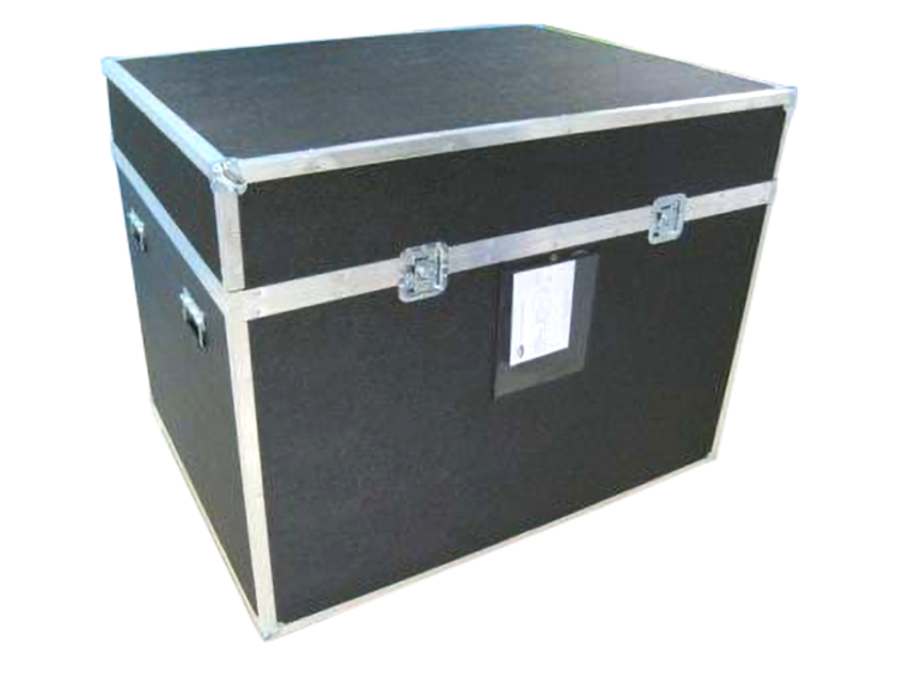
| Pop-up exhibition stand | All magnetic support bars and roll-up graphic panels | Every bar and panel is back in the hard-shell wheeled case. With the case, the kit weighs about 28 to 38kg depending on size, so plan for a trolley |
| SuperWall | Frame sections, feet (straight walls) and the fabric skin in its carry bag | The elastic cord joining the frame sections is intact and nothing has been left in the venue |
| Illuminated SuperWall (lightbox) | As for SuperWall, plus the LED light curtains and power transformers | Each transformer is tagged and in date, and a tagged extension lead travels with it |
If a pull-up banner needs a fix on the floor, our guide on how to fix a retractable banner stand covers lost tension, crooked graphics and jams. Replacement poles, rails and caps rarely swap between models, so ask whoever supplied the stand. If it's one of ours, send us a picture of the base and we'll identify the part. For equipment we supplied, we can also help on site or after hours on show day.
A SuperWall packs into a carry bag and weighs 7 to 14kg with its frame, fabric graphic and bag, depending on size. It's designed for one person to put up in under 10 minutes, without tools. If your walls travel to several shows a year, a SuperWall wheeled carry case keeps the frame and skin together and protected between shows.
Flying to the show? Keep batteries in the cabin
If your team flies with the kit, check the battery rules. The Civil Aviation Safety Authority says to "Never place spare batteries or power banks in checked luggage" and to take them with you in the cabin. Protect spare battery terminals by keeping them in their original packaging, taping over the terminals or bagging each battery separately. Airlines may limit how many spare batteries and power banks you can carry, so check with yours before you fly. CASA also says batteries of 100 to 160 Wh need airline approval, and those over 160 Wh can't go in passenger baggage.
When to hand the build to a team
An emergency kit covers the small fixes. For larger stands, or when your own team needs to arrive ready to sell, our installation and pack-down services handle the build for you. Our national team liaises with the organiser, installs the stand before you arrive and comes back for the pack-down. We can also store your display assets and check each item for wear and working order before its next show.
Next step
Browse our portable displays to plan the kit for your next show, or call 1300 240 250 to book an installation crew.