

YOUR CART IS CURRENTLY EMPTY
Fabric graphics: why tension fabric is often more sustainable
Published
Quick answer
A tension fabric display is usually the lower-waste choice when the same display goes to more than one event. You keep the aluminium frame and replace only the printed fabric skin when the message changes. On our SuperWall walls the skin packs down small, can be machine washed, and its fabric is knitted from 85% recycled polyester. The weak point is end of life: a 2022 report for the federal environment department found textile recycling in Australia very limited, so the gain comes from reuse, not from recycling.
What is SEG fabric printing?
SEG stands for silicone edge graphic. A strip of silicone runs along the edge of the printed fabric and locks into the frame, which holds the face of the graphic flat and tight. Our Brandframe fabric frames use this system, whether the frame stands on the floor, hangs from above, forms an exhibition stand or packs into a bag for travel. On Exhibition Brandframe the silicone edge feeds into a groove in the aluminium, so graphics can be changed without tools.
The other common tension fabric system is the pillowcase skin. On a SuperWall, a one-piece fabric graphic slides over a light aluminium frame and closes with a zip. The fit pulls the fabric tight, giving a smooth, crease-free face with no seams or gaps.
Both systems are printed by dye sublimation. Heat turns the dye into a gas that enters the polyester fibres, so the colour sits inside the fabric rather than on its surface. The result is vivid colour that resists fading and washing out. That matters for sustainability as much as for looks: a skin that fades can't go to the next show.
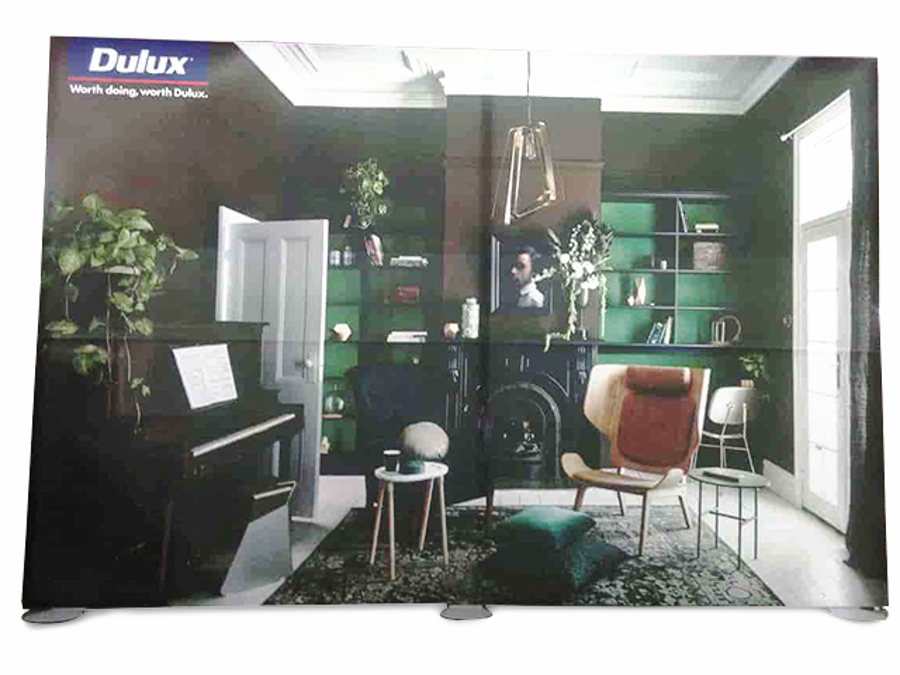
Why fabric exhibition displays are often the more sustainable choice
The case for fabric rests on three things. The frame is built for long-term use, the graphic is light to move, and the graphic can be changed without replacing anything else. None of these makes a display sustainable by itself. They add up only when the display is used again and again, so the sections below cover weight, reuse, care and what happens at the end.
The print process also counts. Our dye-sub printing page sets out why we use it: water-based dyes instead of solvent-based ones, no water used in the printing itself, and no separate drying stage, because the prints come out dry.
If you are choosing between fabric and vinyl banner for stand walls, our fabric vs vinyl wall graphics comparison covers glare, weight grades and outdoor use. This article looks at the life of the display as a whole.
Freight weight and packed size
We price freight on the size and weight of the order and the delivery address, so a display that packs small and light costs less to move to every event. Fabric systems pack down because the graphic folds and the frame breaks into short sections.
| Display | Weight or packed size (from our product pages) |
|---|---|
| SuperWall, single wall | 7 to 14kg complete with frame, graphic and carry bag, depending on size |
| SuperWall Star (curved rear wall plus star-shaped front wall) | 12kg complete |
| SuperWall Edge, 6m wide (three modules) | 15kg packed in its carry bags |
| Graphics 2 Go wall graphics, 6m x 3m stand | Whole set fits in 2 carry bags |
| Portable plinth, 400mm square x 900mm high | 3.7kg; bases fold flat so several fit in one carton or bag |
Rigid graphics depend heavily on the board and frame used, so there is no single figure to set against these. When you compare quotes, ask each supplier for the packed weight and carton size of every option. That gives you a fair basis for freight cost, and for any freight emissions estimate your sustainability team needs.
Reusing frames and swapping graphics
Think of the frame as the part you invest in. SuperWall frames are high-gauge, cold-drawn aluminium sections linked by elastic cord, designed for repeated use across different venues and users. A new message means unzipping one skin and fitting the next. On a Brandframe the fabric carries the print, so a new campaign can often be handled with a new skin while you keep the frame.
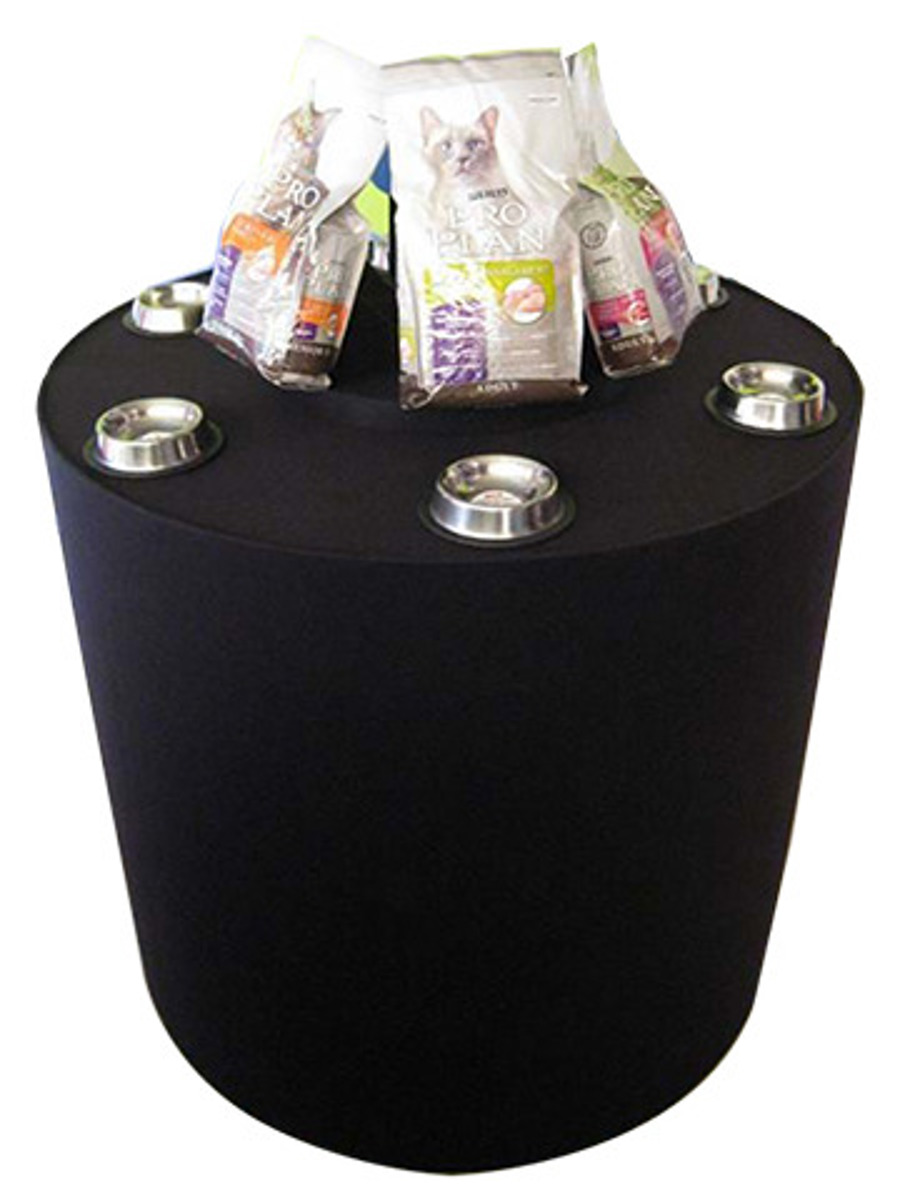
The same idea works on smaller items. Our portable plinths can be dressed in a printed Lycra sleeve that covers all four sides of the base. The sleeve is dye-sub printed, heavy-duty and washable, and you can swap it for another design, so one set of plinths can carry a different product launch at each event.
Multi-module walls give you more than one message from one kit. The SuperWall Edge is three modules, a 4.8m-wide centre wall and two angled side modules, each with its own fabric skin. You can print a different message on each module, and when one message changes, ask us about reprinting only that module's skin.
Panels work the same way. With folding panels from our Graphics 2 Go wall graphics, if one panel goes out of date after a rebrand or a message change, we can reprint just that panel. A set, fabric or panel, can be used over multiple shows.
Washing, storage and lifespan
A marked skin can often be cleaned instead of reprinted. SuperWall and Exhibition Brandframe skins are hard-wearing polyester that can go through a washing machine, the SuperWall skin has double-stitched seams, and the dye-sub print is colour-fast. Fabric graphics can be machine washed cold, and we can give you care instructions for your fabric before the first wash.
Between events, fold the skin into its carry bag with the frame, and store the kit somewhere dry where it won't be crushed or snagged. Check each skin for marks and damage when it comes back from a show, so it can be cleaned or replaced before it is needed again.
Treat the skin as the part that wears and the frame as the long-term asset. SuperWall carries a 1-year warranty and Exhibition Brandframe a 2-year warranty, in both cases covering the non-graphic parts for the first owner, not mistreatment or normal wear and tear.
End of life for polyester fabric
Recycled content and recyclability are different things, and it pays to keep them apart.
Recycled content. The graphic fabric on our SuperWall, SuperWall Star and SuperWall Edge walls contains 85% recycled polyester, made from used PET bottles. Our recycled polyester page explains how bottles are sorted, cleaned, chipped and drawn into yarn, and how using them keeps PET out of landfill and cuts the need for new, petroleum-based polyester. The 85% figure applies to that fabric only, not to the frame. Plinth sleeves use a different, stretch Lycra fabric, and other fabrics vary, so ask which fabric your quote specifies.
Recyclability. A report prepared for the Department of Climate Change, Energy, the Environment and Water in 2022 found that "at present Australia's recovery and recycling of textile waste is very limited". It said domestic recycling of synthetic and natural fibres faced numerous limitations, including a small supply of material because Australia lacks post-consumer textile waste collection systems. It also noted that innovations were emerging and that there are several Australian textile recyclers. Even so, don't plan on your skins being recycled when the campaign ends.
That makes the order of preference simple:
- Use the skin for as many events as the message allows.
- Re-skin the frame rather than replace the whole display when the message changes.
- Keep the frame for the next campaign. It is the part with the longest life.
Fabric vs rigid vs vinyl: sustainability compared
| Factor | Tension fabric (SEG or pillowcase skin) | Laminated panels (folding) | Vinyl (PVC) banner |
|---|---|---|---|
| New message | New skin; frame kept | Replace changed panels only | Usually a new print |
| Packing | Folds into a carry bag | Panels fold in half; 6m x 3m set in 2 carry bags | Rolled |
| Care | Machine washable, cold (SuperWall, Exhibition Brandframe) | Scratch-resistant laminate | Ask for care advice |
| Recycled content | 85% recycled polyester on SuperWall-range fabric | Ask about the backing board | Ask for the material specification |
| End of life | Textile recycling very limited in Australia; reuse is the main gain | Print, backing and laminate are layered together; ask before assuming it can be recycled | Ask what the supplier recommends |
Making a sustainability claim about your display
If your stand or brief will describe the display as "sustainable" or "eco-friendly", read the ACCC's environmental claims guidance for business first. A specific, checkable statement, such as "SuperWall graphic fabric knitted from 85% recycled polyester", is easier to back up than a general one.
Next step
Look at our SuperWall and Brandframe ranges. If you already own fabric frames, ask us about printing new skins for them: tell us the frame type and size and send your artwork, using any product page's enquiry form or by phone on 1300 240 250. You can also visit our Artarmon showroom, by appointment.