

YOUR CART IS CURRENTLY EMPTY
Outdoor brand activations: weatherproofing for rain, wind and sun
Published
Quick answer
Plan an outdoor activation for the worst forecast, not the likely one. Weight or anchor every leg of every gazebo, keep electrics on RCD-protected, tested and tagged gear that stays out of the wet, and give staff and visitors shade. Agree a pack-down trigger with the organiser before bump-in, and take structures and signage down when conditions reach it.
Plan for the worst forecast
Outdoors, the kit and the run sheet have to cope with whatever the day brings. Settle four things first:
- Exposure. A beachfront lawn and a walled forecourt call for different structures and very different amounts of ballast.
- Surface. Grass, sand, bitumen and pavers each change how you secure the kit (see the ground section below).
- Crew. Their numbers, tools and vehicle access limit what can safely go up, and come down in a hurry.
- Power. Without mains power, screens and lighting need a generator and an electrician, or they stay at home.
Check the Bureau of Meteorology forecast in the days before, and on the day watch the BOM Warnings and alerts page or the BOM Weather app. The Bureau says forecasting exactly where and when a thunderstorm will form is "much harder to impossible", so build that uncertainty into the run sheet.
Rain: protecting displays, electrics and print
Water is the biggest enemy at most outdoor events. Inland that means rain; near the coast it also means salt spray and salty air, which corrode metal parts.
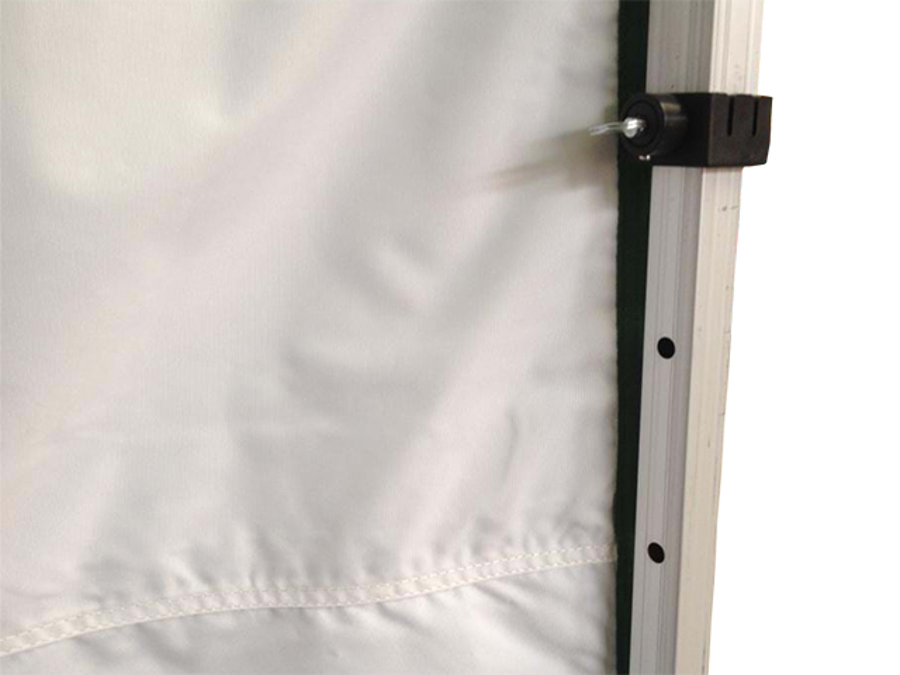
The structure. A printed marquee is the main rain cover for staff, stock and electrics. The canopies and walls on our Gazebo 2 Go event marquees are dye-sublimation printed on 600 denier polyester that is water resistant and fire retardant, on an aluminium frame, so the frame doesn't rust after rain. Water resistant isn't waterproof: in heavy rain, add full-height walls on the weather side and keep stock off the ground. Rain gutters are among the listed accessories: use them where two gazebos join, so water runs off rather than through the gap.
Electrics. Check the rules with your state's work health and safety regulator. As a benchmark, SafeWork NSW's events guide asks for an RCD (safety switch) covering all electrical items, and for leads, equipment and connection points to be protected from heat sources and wet weather and suitable for the environment they are used in. In practice:
- Use equipment and outlet boxes rated for outdoor use. Check the IP rating on the spec sheet rather than assuming.
- Use only tested and tagged leads and equipment. SafeWork NSW says to get a competent person to test equipment regularly if it is exposed to moisture, heat or damage, and to use RCDs where equipment is moved often.
- Keep power boards up off wet ground, and don't piggyback power boards or double adaptors.
- Run cables where people and vehicles won't hit them, and secure them so no one trips.
- Leave all electrical work to a licensed electrician, and have generators connected by a competent person.
Two standards are relevant. AS/NZS 3760 covers in-service inspection and testing of electrical equipment and RCDs. AS/NZS 3002 (Electrical installations: shows, carnivals and events) covers low-voltage supply to display and entertainment equipment in tents and other structures at events of up to four weeks. Ask your electrician or the event's electrical contractor to confirm their work meets both.
Print and collateral. Dye-sublimated fabric graphics hold up outdoors because the ink goes into the fibres rather than sitting on the surface, so it won't scratch off in handling. Paper is the weak point. Keep brochures in sealed tubs under cover, and put printed price cards and menus in sleeves or frames.
After the event. Rinse frames and bases in fresh water after a coastal site, and dry canopies and walls fully before they go back into storage.
Wind: weights, ballast and pack-down triggers
A sudden gust can lift a gazebo or sign and injure people. SafeWork NSW expects marquees at events to use suitable anchors (weights or stakes) chosen with adverse weather in mind, especially high winds, with anchors protected against trips and the ground suitable for them.
How much weight? Follow the manufacturer's instructions first, then the council or venue rule. As one example, Clarence City Council in Tasmania requires weights of 25kg on each leg for small gazebos where anchoring or fixing isn't available, with larger weights for larger gazebos. Here is what that means against the gazebo's own weight:
| Gazebo 2 Go size | Frame + roof weight | Packed frame size (mm) |
|---|---|---|
| 3m x 3m | 23kg + 5kg = 28kg | 1,590 x 250 x 240 |
| 3m x 6m | 33kg + 10kg = 43kg | 1,590 x 440 x 250 |
On a 3m x 3m gazebo with a leg at each corner, 25kg per leg is 100kg of ballast, more than three times the gazebo's own weight. Plan freight and manual handling around it. Our marquee accessories include 7kg steel base plates and sand bags that weigh 7kg when filled. A plate and three bags make 28kg on a leg, above that council's 25kg minimum. This is a packing example, not a safe-wind rating: confirm the anchoring for your gazebo and site with the manufacturer and organiser.
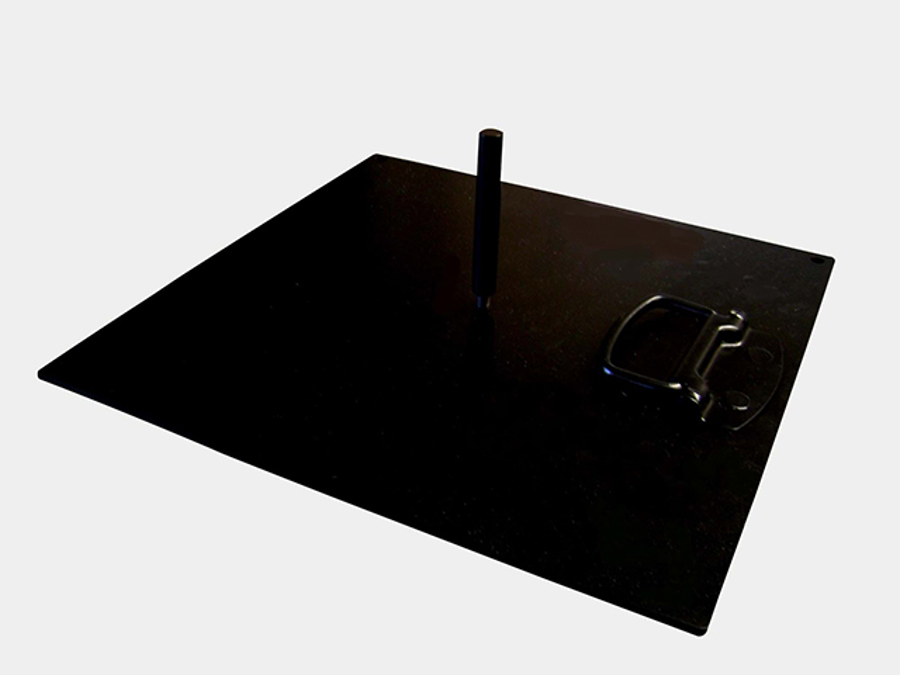
Flags, walls and umbrellas. Promotional flags are built to move with the breeze, but they still need the right base for the surface. Freestanding walls need ballast too: our SuperWall outdoor water base is filled on site and emptied before pack-up, so it travels light. Choose flag shapes and fabrics that limit flutter noise if staff will spend all day beside them.
Pack-down triggers. Agree in writing, before bump-in, the conditions at which flags, signage and structures come down, and who makes the call. Don't wait for a severe-weather warning or a wind-speed figure borrowed from another display. Follow the organiser's plan and any instructions supplied with your equipment; act earlier if conditions worsen. SafeWork NSW gives pulling signage down in high winds as an example of the proactive steps organisers should be ready to take.
Sun and heat: shade, UV and screens
ARPANSA recommends sun protective clothing, a hat, sunglasses, sunscreen and shade whenever the UV index is 3 or more. Check the forecast UV index for the site and date, and plan shade for the hours it sits at 3 or above.
- Sun protection for staff. The NSW Government's event guidance lists supplying sunscreen and other protective equipment for people working outdoors, and drinking water for staff and volunteers. Build both into the kit list.
- Shade for visitors. Shade is a reason to stop. Our Gazebo 2 Go canopy fabric is rated UPF 50+ (tested at 99.84 to 99.97% UV block-out). Branded umbrellas cover a table or serving point, come in 2m and 3m square and 2.7m hexagonal sizes, with an optional 15kg steel base plate. Seating such as branded bean bags under shade keeps people at the activation longer.
- Fade. Choose quality fabrics and dye-sublimation print so graphics last a season of sun, not a weekend.
- Screens and lighting. Illuminated walls and standard indoor screens lose much of their impact in daylight. Put screens under cover and out of direct sun.
Ground: grass, sand and slopes
- Grass. Stakes hold well in firm turf, but check first. SafeWork NSW says to consider underground electrical and gas services wherever pegs and stakes are used, and to use tent weights or sand bags where possible. Clarence City Council doesn't permit metal pegs in its parks because of irrigation lines.
- Sand. Loose sand gives pegs little grip, so plan on weights or sand bags, and bring enough for every leg.
- Hard surfaces. Bitumen, pavers and concourses can't take stakes, so plan on ballast unless the venue approves fixings.
- Slopes. Choose the flattest spot on offer and check the frame sits level, so the canopy sheds water evenly and no single leg carries more than its share.
Staff safety and the go/no-go call
SafeWork NSW expects event organisers to have a safety procedure for severe weather, with all workers trained in it, and to inspect marquees at regular intervals during the event for loose ropes or broken sections. As an exhibitor or activation owner, your part is to:
- Get the organiser's severe-weather procedure and match your own run sheet to it.
- Brief every staff member on the pack-down trigger, the order kit comes down, and where they shelter.
- Name one person to watch the BOM warnings and make the call.
- Walk the site at set times through the day, and after any squall: weights in place, walls secure, cables covered, nothing working loose.
SafeWork NSW's guidance says it plainly: safety is always the top priority and should never be compromised just to get through an event. Pausing an activation for an hour costs far less than an injury.
Make outdoor event signage read in daylight
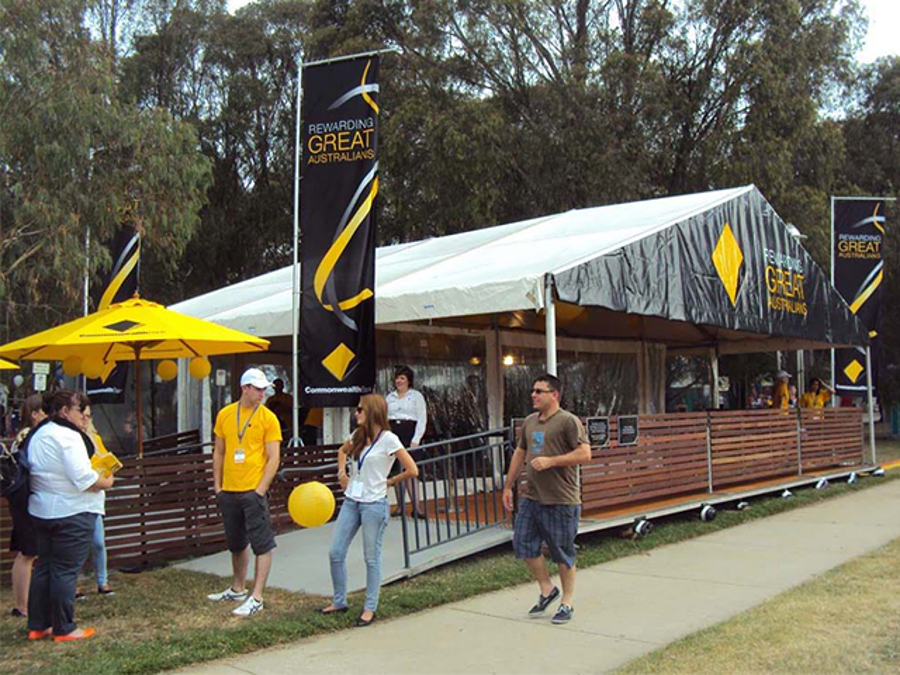
Outdoors, the sun and sky compete for attention. Choose colours that cut through in harsh light, keep messages short enough to read across a field, and use height. A printed branded marquee carries your logo at roof height where it can be seen over people's heads, and a row of flags marks the approach from a distance.
Next step
See our portable outdoor displays and outdoor events pages. Then send us the location, the surface and your bump-in plan, or call 1300 240 250. Gazebo 2 Go marquees start from $1,795 and branded umbrellas from $788 (excluding GST and freight), with standard production of 2 weeks and 1.5 weeks respectively from order and print-ready artwork.