

YOUR CART IS CURRENTLY EMPTY
Portable partitions and temporary walls: options compared
Published
Quick answer
Use portable display panels to zone a space and carry notices or posters, printed fabric walls when the partition also has to carry your brand, and folding dividers on castors when one person needs to open or close a wall in seconds. Standard heights across the three run from 1.5m to 2.25m. Pick by how often the wall moves, whether it must be branded, and whether you hire for one event or buy for repeated use.
Which portable partition suits an event space?
Start with the job. A temporary wall at an event usually splits a hall into breakout rooms, screens off back-of-house or storage, creates a private area for interviews or consultations, or acts as a branded backdrop at registration or a photo point.
There are three main formats in our portable partitions and dividers range: modular display panels, printed fabric walls and folding room dividers. They can be combined.
Panel dividers: temporary wall panels for zoning and notices
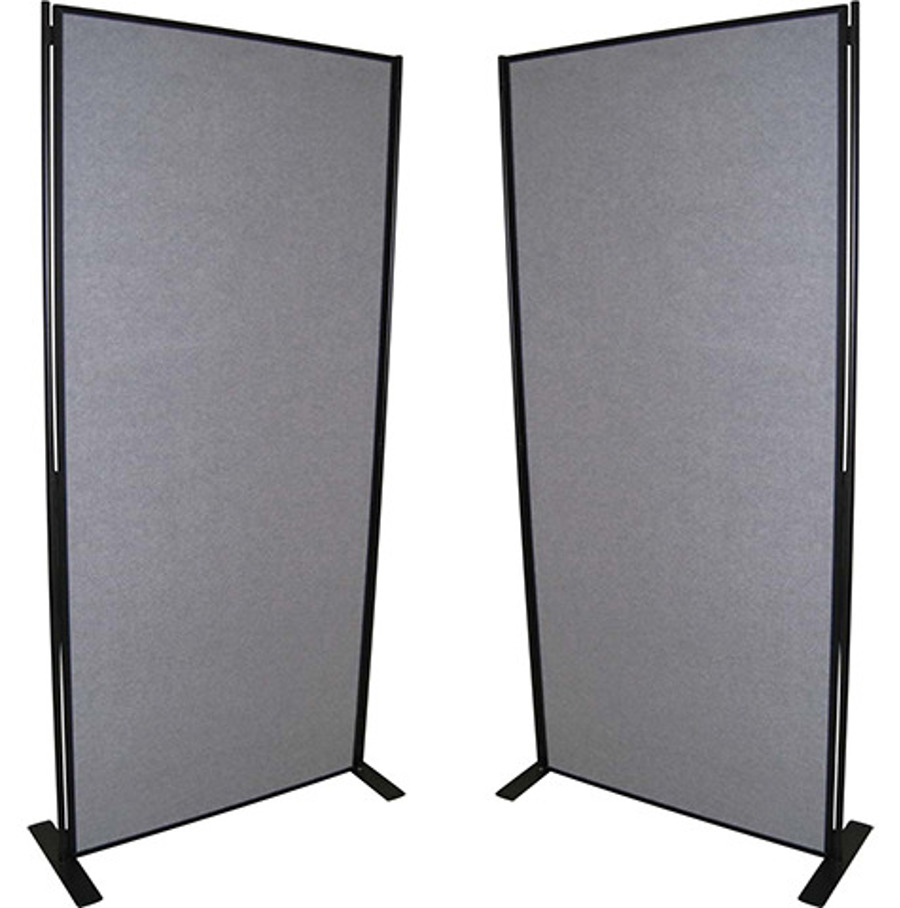
Our portable display panels are lightweight fabric-covered boards, 750mm wide by 1,100mm high, that join with poles and clips. Stacked two high, they make a wall 2.2m high. Kits run from 2 to 8 panels: four across gives a 3m run, three across 2.25m and two across 1.5m.
- Surface: both sides take VELCRO® fasteners and pins, so posters, signs, session times and light samples go up and come down in seconds. Permanent laminated graphics are an option.
- Stability: joined at an angle, the panels brace each other with no feet. A straight run or a stand-alone notice board needs the optional support feet.
- Handling: each panel weighs 2.7kg and a carry bag holds four, so one person can move and set up a kit with no tools.
- Best for: registration and wayfinding boards, poster sessions, and low-cost zoning where the wall also carries information.
They are built for indoor use, so take extra care if they go outside.
Fabric walls and backdrops: branded temporary walls
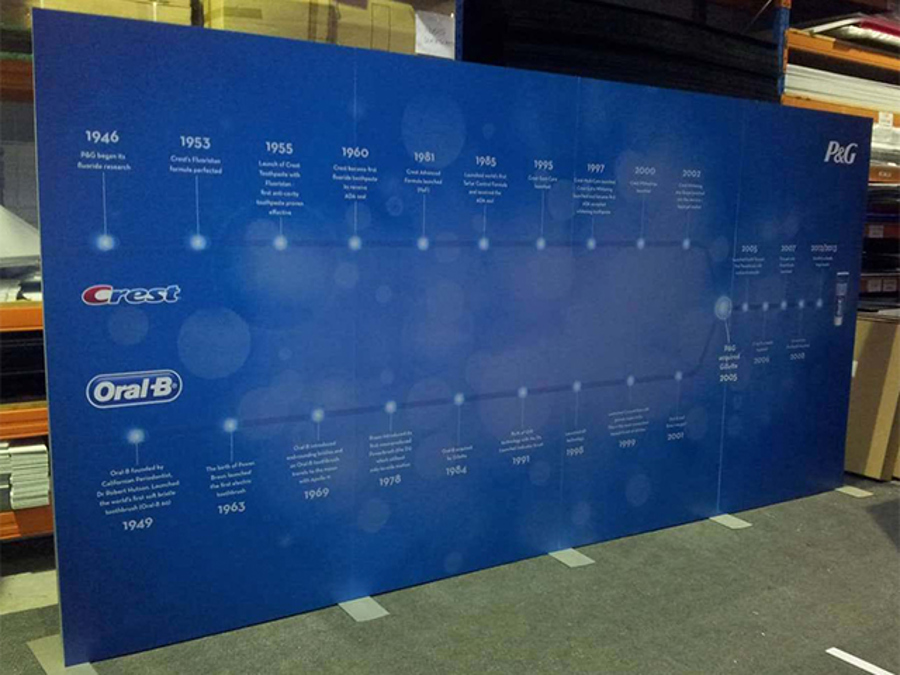
When the partition faces your audience, a printed fabric wall does two jobs at once. The SuperWall is an aluminium frame covered by a one-piece, dye-sublimation printed fabric skin that zips closed for a smooth, tight finish.
- Sizes: the most popular are 1m, 2.4m, 3m and 6m wide at 2.25m high, with 1.5m-high versions for shopping centres that cap stand heights. Custom sizes are available.
- Set-up: the frame clicks together by hand and the skin slides on like a pillowcase. One person can assemble one in under 10 minutes.
- Branding: single or double-sided print, so a wall dividing a foyer can carry a different message on each face. Skins can be reprinted for the next event.
- Best for: media walls, registration backdrops, screening a stage edge or back-of-house area in public view, and forming the walls of an exhibition stand.
Folding screen dividers: Screenflex
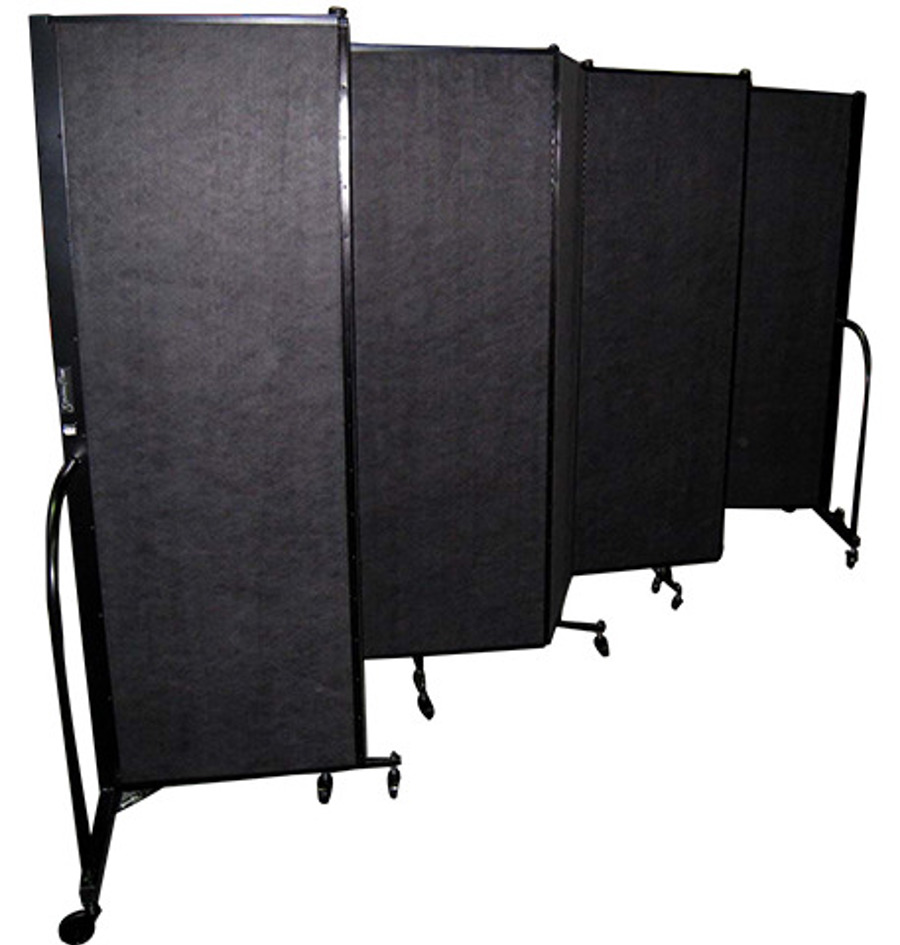
Screenflex room dividers are concertina partitions on castors. They arrive fully assembled. You roll a unit into place, release the locks, pull it open and lock it again. You can set the panels at whatever angle the space needs, including a straight line.
- Sizes: 1.8m, 2.0m or 2.2m high, in 7, 9, 11 or 13-panel units from 4m to 7.3m wide.
- Stability: self-levelling castors cope with uneven floors, and corner and castor locks stop the panels moving once set.
- Sound and surface: acoustic panels absorb some noise, and the surface takes pins and tacks for signs. Doors are available, and the product page also shows a whiteboard-surface version.
- Best for: conference venues, offices and training rooms that split and reopen a space often, and breakout rooms that need to be set up between sessions.
Folding dividers reduce noise but do not soundproof a room, so avoid placing two talks right next to each other.
Modular walls: combining systems for larger spaces
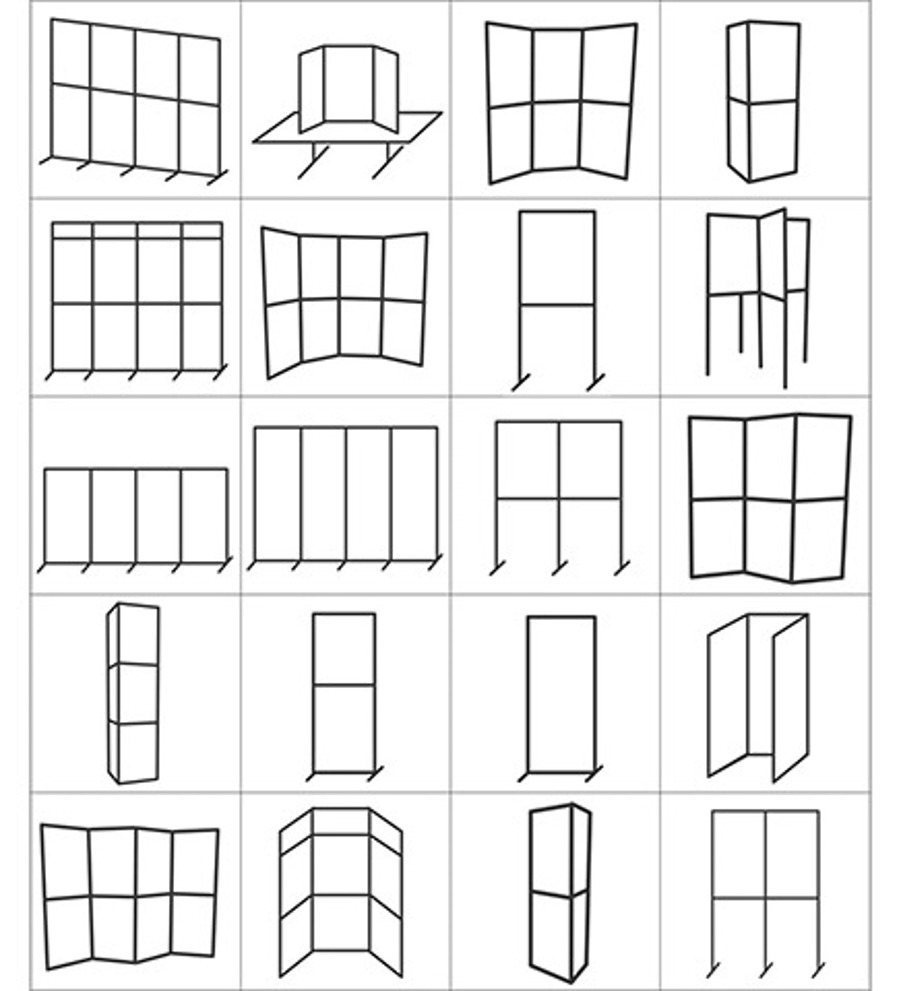
For a larger room, combine the systems instead of choosing one. Display panels can be rearranged into straight runs, zig-zags or three-sided bays, so one kit can serve as a poster wall at one event and a small enclosed area at the next. Three SuperWalls can form the walls of a 3m × 3m exhibition stand where the organiser permits independent stand walls, and one-piece walls run up to 9m wide.
A typical conference layout: Screenflex units to make breakout rooms, a printed SuperWall at the entry to each room with the session name, and display panels in the foyer for the program and sponsor notices.
Portable partition walls compared
Prices are the "from" prices on the current product pages and exclude GST and freight.
| Display panels | SuperWall fabric wall | Screenflex folding divider | |
|---|---|---|---|
| Height | 2.2m (2 panels high) | 1.5m or 2.25m; custom heights | 1.8m, 2.0m or 2.2m |
| Width per unit | About 0.75m to 3m (2 to 8-panel kits) | 2.4m, 3m or 6m standard; 1m custom, up to 9m one piece | 4m to 7.3m |
| Set-up | Minutes, no tools | Under 10 minutes, one person | Seconds: roll, open, lock |
| Branding | Pin or VELCRO® posters; laminated graphics optional | Full-colour printed fabric, one or both sides | Pinnable surface for signs |
| Stability | Self-supporting at an angle; feet for straight runs | Feet if required | Self-levelling castors with locks |
| Lead time before freight | 1.5 weeks production | 1.5 weeks production | Ships in 2 days if in stock; about 13 weeks if built to order |
| Hire or buy | Both (display board hire) | Both | Buy; not available for single-event hire |
| Price from | $637 | $1,467 | $3,700 |
Planning the layout
Measure first, then choose. Our checklist:
- Measure the full run, including feet and connectors. Feet add depth at the base, which matters in narrow corridors.
- Use corners and returns. An L or U shape stands more firmly than a long straight run. To screen a 4m x 4m interview room in the corner of a hall, you need about 8m of wall for the two open sides: two 7-panel Screenflex units, each 4m wide when opened out straight.
- Check the access route. Measure doors, lifts and loading docks against the largest packed item, not only the event floor.
- Decide what privacy you need. All three block sight lines; none soundproofs a room.
- Plan the graphics last. Confirm the wall sizes and layout before approving artwork.
Stability and safety in public spaces
Temporary walls change how people move through a venue, so plan them against the venue's floor plan and exits.
Safe Work Australia's model Code of Practice on the work environment says aisles and walkways "should be at least 600mm wide and kept free of furniture or other obstructions at all times", and that the location of exits "should be clearly marked". It also lists trailing cables among common trip hazards. That's a general workplace minimum, and venues can ask for much more: ICC Sydney, for example, sets exhibition aisles at a minimum of three metres. Get the current requirements for exits, aisle widths and wall heights from the venue or organiser before you finalise the layout.
On the day:
- Keep partitions clear of exits, exit signs and fire equipment.
- Lock castors and fit feet before the room fills.
- Run cables along the base of a wall, not across a walkway.
- Keep display panels and fabric walls indoors unless the product page says otherwise.
Frequently asked questions
What is the best portable partition for an event? It depends on how often the wall moves and whether it needs branding. Folding dividers suit frequent changes, printed fabric walls suit branded areas facing the audience, and display panels suit zoning with notices or posters.
What size temporary wall do I need? Measure the open sides of the area you want to enclose, then add returns for stability. Our standard heights run from 1.5m to 2.25m. The 1.5m SuperWall suits shopping centres with height restrictions.
Should we hire or buy portable partitions? Hire suits a one-off event. Buying makes sense when the walls will be used again, because panels can be reconfigured and fabric skins reprinted. Display panels and SuperWalls are available both ways. Screenflex dividers are not available for single-event hire.
How early should we order? Allow 1.5 weeks of production for display panels and SuperWalls, counted from order and print-ready artwork, then add freight. Screenflex ships in two days if the size is in stock, but a built-to-order colour or size takes about 13 weeks.
Next step
Tell us the room size, how many zones you need and the event date, and we'll suggest a divider layout. Start with the portable partitions and dividers range, or call 1300 240 250.