

YOUR CART IS CURRENTLY EMPTY
Planning a national roadshow: route, venues and freight
Published
Quick answer
Plan a national roadshow backwards from the first stop. Fix the cities and dates, then check each venue's approval deadline, because they differ: from two working days at one council to 3 to 4 weeks at another. Design one kit that packs into cases and sets up the same way every time, and build a buffer into every freight leg for repairs and late trucks. Decide early whether a travelling team or local crews will bump in, and measure every city the same way.
Start with the objective and the city list
A roadshow takes the same experience to several cities, so the first decision is which cities earn a stop. Rank them by where your audience is, not by habit: dealer networks, store footprints, customer data or event calendars usually point the way.
Then decide what each stop has to achieve: trial and content for a launch tour, booked meetings for a B2B tour. Write one objective and two or three measures that apply in every city. You'll use them to compare stops and drop the weakest next time.
Finally, choose the venue type for each city: a shopping centre, a convention centre, a public space or a mix. That choice sets the approval path, the bump-in rules and how big the kit can be. If the plan is one cart visiting several sites in a single city, our guide to branded cart roadshows covers permits and staffing stop by stop.
Build the route and the calendar
Order the cities so the kit moves in one direction and doesn't double back, and decide now whether New Zealand is on the list. When you set dates, check these three things for every city.
Public holidays differ by state. In 2027, Labour Day falls on 1 March in Western Australia, 8 March in Victoria, 3 May in Queensland and 4 October in the ACT, NSW and South Australia (Fair Work Ombudsman 2027 list). King's Birthday is 14 June in most states, but 27 September in WA and 4 October in Queensland. Victoria also has Melbourne Cup on 2 November. Check each venue's trading hours and dock access for any holiday that falls on a show day.
Freight needs a gap. Don't run one pack-down straight into the next city's move-in. Our guide to shipping display kits interstate suggests sending the kit back to one base between legs, or building a clear buffer into each leg. Without it you have no time to repair or reprint anything. For Perth and Darwin, ask the carrier for its published transit time on that exact route and add at least one business day.
Early isn't always better. Some venues only take goods inside a set window. Perth's convention centre, for one, accepts deliveries only during an event's official move-in period, so a kit that lands early needs a booked place to wait.
Venues and approvals in each city
Every stop has its own landlord and its own deadline. These are some of the published lead times we've checked:
| Venue type | Example | Lead time it publishes |
|---|---|---|
| Shopping centre | Mount Sheridan Plaza (June 2025 agreement) | Agreement to centre management at least 5 business days before the booking date |
| Shopping centre | Victoria Point (2020 guide) | Insurance certificates at least two weeks before occupying the site |
| Council public space | City of Melbourne | 10 full business days for sampling-only activations; 3 to 4 weeks if you need vehicle access or complex infrastructure |
| Council public space | North Sydney Council | An absolute minimum of two working days' notice |
| Convention centre | ICC Sydney | Custom stand permit due 14 days before the hiring period starts |
| Convention centre | Gold Coast Convention and Exhibition Centre | Custom build plans no later than 21 days before the event |
Each landlord may also want its own certificate of currency for public liability, a site plan and photos of the kit, so keep one master pack of documents and adapt it per city. Lodge the slowest approval first. If one city needs 3 to 4 weeks and another needs two days, the 3 to 4 weeks sets your design deadline for the whole tour, because the plans and photos have to exist before you can send them.
For convention centres, our guide to stand rules at Australian convention centres compares height limits, rigging, test and tag and sample sizes across six venues.
One stand, every city: designing the kit
A touring kit has to look right in a small centre site and in a larger hall, and go up the same way every time. Design it around these rules:
- Modular, not bespoke per city. Build a core set of walls and counters that fits the smallest site on the route, with extra pieces for bigger spaces.
- Tool-free where possible. Our hire SuperWall backdrop takes one person about five minutes to set up, which matters when crews change between cities.
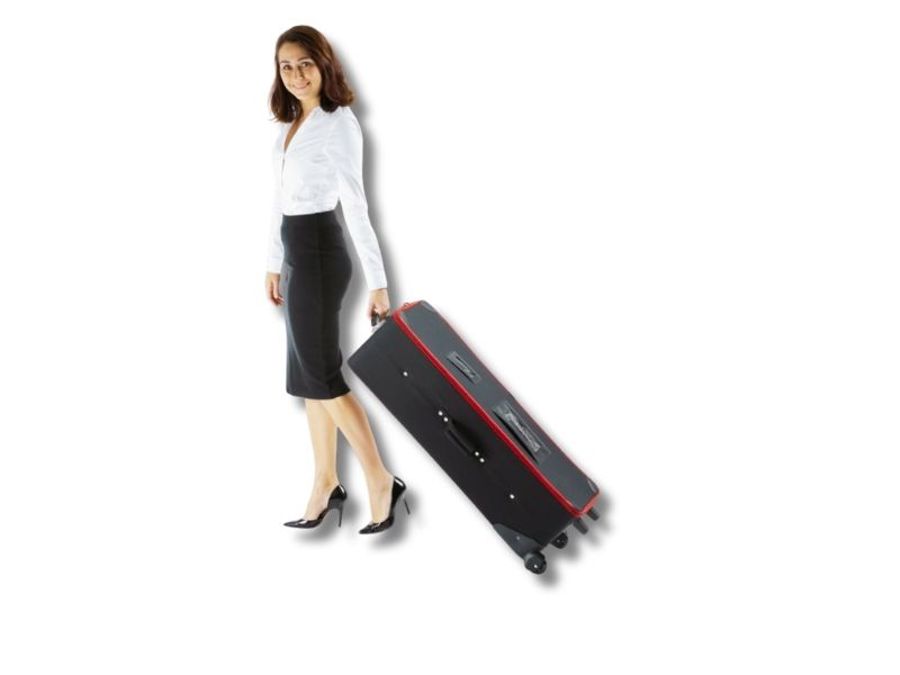
- Every piece in its own case. With our SuperWall wheeled carry case, the packed wall rolls from the vehicle to the site instead of being carried down a service corridor, and it is protected between cities.
- Labelled and listed. Put a contents list and a photo of the packed case inside every lid, so each crew packs it the same way.
- Spares travel with the kit. Pack spare fixings, a spare graphic for the most-handled panel, cable ties and tools in a hand-carry bag that stays with the team.
For a short tour, hiring can make sense: our exhibition hire kits are priced for up to five days, with longer hires quoted on request. If the kit will tour more than once, compare the cost per show in our hire, buy or custom build guide. A custom brand activation build typically takes about 5 weeks, so brief us well before the first approval deadline.
Freight, storage and checks between stops
Plan each leg as its own job:
- Book the outbound and return together. Collection runs to different rules from delivery. At Perth's convention centre, anything still there after the official move-out period can be thrown away or charged for storage and handling.
- Label for the venue. Use the delivery label the organiser or venue issues and fill in every field. Perth's convention centre label wants the stand number and the on-site exhibitor's name and number as well as the event details.
- Inspect at every pack-down. Check graphics, fixings, feet and leads before the cases close. Note damage straight away so a replacement can meet the kit at the next city.
- Keep a spare-parts budget. A torn graphic or lost connector on day one shouldn't wait until the tour ends.
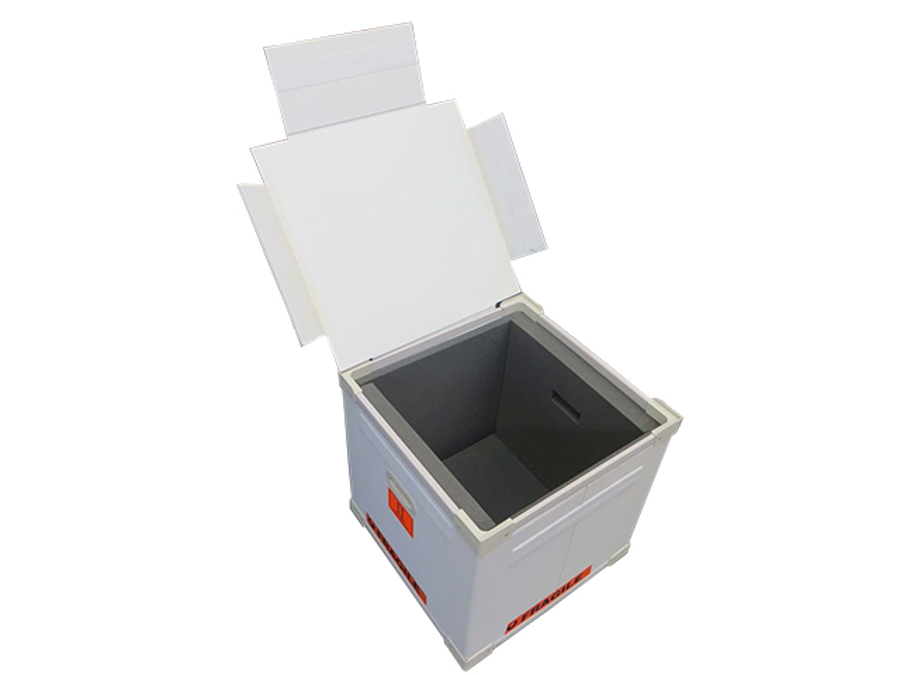
Our event logistics and storage service can run this for you. Between stops your kit sits in our warehouse, where every item is logged in, checked for wear, repaired if it needs it and cleaned, then sent on to the next venue when you book it. On a national tour we can also install and dismantle the stand in each city.
Adding New Zealand. We work with our sister business in Auckland to run campaigns on both sides of the Tasman. Sometimes the best answer is shipping the kit across; sometimes producing in each country costs less. Decide early, because it changes the production plan.
Crew: travelling team or local labour
There are two ways to staff bump-in and the stand:
- A travelling team knows the kit and the brand, and sets up faster by the third city. It costs flights, accommodation and days on the road.
- Local crews in each city cut travel, but each crew sees the kit for the first time. Clear set-up instructions, labelled cases and a photo of the finished stand become essential.
Many tours mix the two: one travelling lead who knows the kit, with local help in each city. We aren't a labour-hire company, but if the kit came from us, we can support you on site or after hours on show days.
Bump-in and bump-out timing
Get each venue's move-in and move-out windows in writing, and plan to them:
- Check whether you can deliver yourself or must use a booked dock time or the event's freight forwarder. ICC Sydney, for example, requires a vehicle time slot booking for all deliveries unless you book through the event freight forwarder.
- Expect centres to set the hours. Victoria Point's guide, for example, wants displays installed by 8am (9am on Sundays), and Harbour Town on the Gold Coast doesn't let contractors move materials through public areas in trading hours.
- Test and tag every lead before the tour starts, including new ones. MCEC and Cannon Hill Kmart Plaza both say brand-new leads must be tested and tagged too.
- Allow time at the first stop for a full rehearsal of set-up and pack-down. The times you record there set the plan for every other city.
Content and measurement across cities
Use the same measures at every stop so you can compare cities fairly: visitors or conversations, leads or sign-ups, samples handed out and sales where a retailer can share them. Record the hours the stand was open, so a short day doesn't look like a weak city. After the tour, review city by city and decide which stops earn a place next year.
Next step
Send us your city list, dates and venue types, and we'll plan the kit, freight and storage for the whole route. Call 1300 240 250 or use the enquiry form on any product page.