

YOUR CART IS CURRENTLY EMPTY
POS display brief template: 15 things your display maker needs
Published
Quick answer
A POS display quote is only as good as the brief behind it. Give the maker the campaign and in-store date, the retailers and store count, where the unit will stand, every SKU's pack size and weight, how long the display must last, the retailer's size limits, who supplies the artwork, how it will be delivered and a budget range. Send the same brief to every supplier and you can compare the quotes like for like.
Why the brief decides the quote
If two suppliers guess different stock weights, store counts or delivery methods, you'll get two prices you can't compare, and a display that may not hold the product or pass the retailer's checks.
Below are the 15 things we need to quote a point-of-sale display accurately, grouped the way the work runs. If you're briefing graphics rather than a physical unit, our guide on how to write a creative brief covers that side.
Project, retailer and stores
1. Campaign name and in-store date. Give the campaign a name and the date the display must be on the shop floor. Add any earlier dates that are fixed, such as a retailer's sample or photography deadline. Everything else is planned back from these dates.
2. Retailer and banners. Name every retailer and banner the display is going into. A unit designed for one grocer's rules may not suit another, and the quote changes if you need more than one version.
3. Store count and states. Give the number of stores and the states they're in. Quantity drives the unit price, and the spread of stores drives freight.
4. Placement in store. Say where the display will stand: floor, shelf, checkout or gondola end. Each position has its own size limits and its own build, and a checkout unit is a very different job from a floor stand.
Product and stock
5. SKUs, pack dimensions and weights. List each SKU with its pack size (height, width and depth in millimetres) and its weight. This is the detail most often missing, and it decides shelf spacing, shelf strength and the size of the whole unit.
6. Facings and stock per unit. Say how many facings you want for each SKU and how many packs each unit should hold when it's full. Shelves and bins are built to carry a known load, so give the full-stock weight, not just the product list.
Format, retailer limits and materials
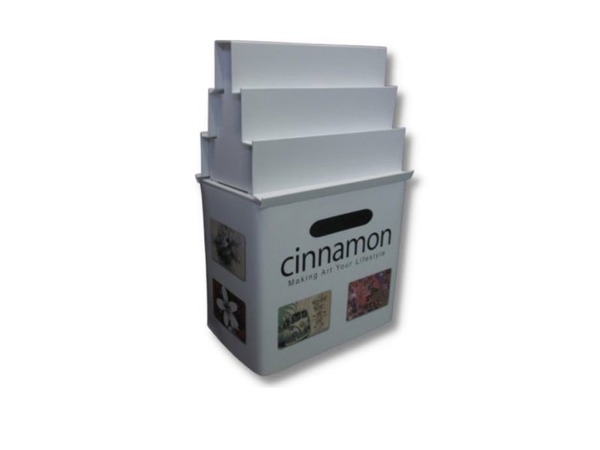
7. Lifespan. Tell us whether the display is temporary, semi-permanent or permanent, and how many weeks it needs to last. Lifespan decides the material. For dump bins, for example, cardboard costs least but wears out sooner, so it suits a short supermarket promotion. A unit that has to survive months on the floor may need polypropylene, timber, acrylic or steel, which cost more and last longer.
8. Retailer footprint, height and approval process. List the retailer's maximum footprint and height for that position, and what its approval needs. Our guide to supermarket POS display approval sets out what Woolworths and Coles ask for, their published size limits and Coles' photography deadline. If you don't have the retailer's current spec, say so, and ask your buyer before the design starts.
9. Material and sustainability preferences. Note any material you need or want to avoid, any recycled-content target, and how stores will dispose of the unit. Tell us about wet areas as well. Near fridges and freezers, our long-life dump bins in 1,000gsm hollow-core polypropylene can be washed down, but check the retailer's material rules first: Woolworths' voluntary guidance lists corflute and rigid plastic boards for phase-out on temporary displays (under 16 weeks).
Artwork and design
10. Artwork supplier and file format. Say who is producing the artwork: your team, your agency or us. If it's yours, name the file format you'll supply and who will place it on the template. Our guide on how to read a POS display dieline explains how artwork goes onto a cardboard template without costly reprints.
11. Prototype or sample. Say whether you need a render, a white sample or a printed prototype, and for whom: your own sign-off, the buyer, or a retailer's photography. We can provide renders and CAD drawings for your stakeholders to approve before anything is made.
Quantities, delivery and sign-off
12. Quantity, including spares. Give the total number of units, including spares for damage in transit and late store additions. Ordering more later means a second production run.
13. Delivery and kitting. Say whether units go to the retailer's distribution centre or direct to each store, and whether they travel flat-packed, pre-assembled or pre-packed with stock. Retailers can set rules here that change how the unit is packed. Coles, for example, caps pre-packed and flat-packed units sent through its distribution centres at 16kg each, because they're picked by hand.
14. Installation or merchandising. Say who will build the unit in store and stock it: store staff, your field team or a merchandising service. If store staff build it, say so, because it changes how the unit is designed and packed.
15. Budget range and decision date. Give a budget range, even a wide one, and the date you'll choose a supplier. A range lets us suggest the right material and finish, rather than quoting one option that misses.
Attachments to include
- Pack shots and a dimensions sheet for every SKU
- The retailer's POS guidelines, or the buyer's emailed spec
- A photo or plan of the store position, if you have one
- Brand guidelines and any mandatory copy
- Examples of displays you like, and why
The brief at a glance
Copy this list into your email and fill in each line:
- ☐ 1. Campaign name and in-store date
- ☐ 2. Retailers and banners
- ☐ 3. Store count and states
- ☐ 4. Placement: floor, shelf, checkout or gondola end
- ☐ 5. SKUs with pack dimensions and weights
- ☐ 6. Facings and stock per unit
- ☐ 7. Lifespan: temporary, semi-permanent or permanent
- ☐ 8. Retailer footprint, height and approval process
- ☐ 9. Material and sustainability preferences
- ☐ 10. Artwork supplier and file format
- ☐ 11. Prototype or sample needed
- ☐ 12. Quantity, including spares
- ☐ 13. Delivery (distribution centre or store-direct) and kitting
- ☐ 14. Installation or merchandising
- ☐ 15. Budget range and decision date
Next step
Send us the completed brief through the enquiry form, or call 1300 240 250, and we'll come back with a quote.