

YOUR CART IS CURRENTLY EMPTY
What types of materials are commonly used in exhibition displays?
The main materials in exhibition stands and displays are aluminium for frames, printed fabric for walls and backdrops, acrylic (Perspex) for plinths and showcases, and timber or MDF for custom joinery. Card and foamboard cover short-run signs and promotions, and corflute suits retail units that must cope with wet areas.
Choose by how often the display will be used, how far it travels, and what the venue's fire rules ask for.
How do the main display materials compare?
Cost bands compare similar-sized pieces. They are not prices.
| Material | Typical use | Durability | Look | Weight | Cost band | End of life |
|---|---|---|---|---|---|---|
| Aluminium | Frames, poles, wall systems | Built for repeated set-ups | Usually hidden behind graphics | Light | Medium | Recyclable again and again without losing quality |
| Printed fabric | Backdrops, wall skins, counter wraps | Years, if folded and stored well | Vibrant, seamless print | Very light | Low to medium | Replace the skin, keep the frame |
| Acrylic (Perspex) | Plinths, showcases, signage | Long-lasting, but scratches if products are dragged across it | Gloss, clear, frosted, mirror or coloured | Medium | Higher | Reuse where possible |
| Timber and MDF | Custom walls, counters, joinery | Solid, but heavy to move | Natural timber, or painted and laminated | Heavy | Medium to higher | Reuse panels where possible |
| Card | Retail units, entry boxes, short promotions | Short-term | Printed all over | Very light | Lowest | Paper recycling; check local rules |
| Corflute (hollow-core polypropylene) | Bins and signs for wet or long-life spots | Tough and washable | Printed | Light | Low to medium | Check local plastics recycling |
| Foamboard | Mounted posters, temporary signs | Temporary | Smooth and flat | Very light | Low | Plan it as single use |
Why are most display frames made of aluminium?
We build many of our frames from aluminium, because it makes a lightweight display structure that still stands up to repeated use. It weighs about a third as much as steel for the same volume, so it is easy to carry, freight and assemble.
The oxide layer that forms on its surface resists corrosion, so a frame tends to last through several sets of graphics: you change the print, not the hardware. Aluminium is also classified as non-combustible, which helps when a venue asks about the fire properties of your stand.
Read more about aluminium recyclability.
What are SEG and dye-sublimated fabric prints?
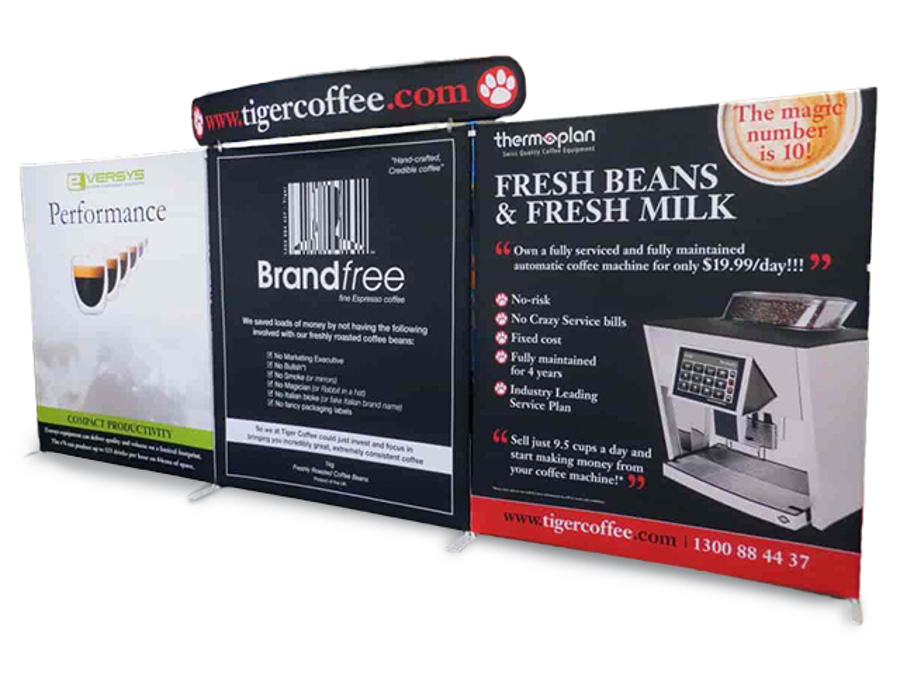
Printed fabric is light, folds down for transport, and covers a large wall in one seamless graphic. Two terms to know:
- Dye sublimation is how we print knitted fabric in house. It gives colour that stays fast and UV-stable through years of folding, stretching and washing. Our fabric graphics can be machine washed cold.
- SEG (silicone edge graphic) means the print has a silicone strip around its edge that locks into the frame and holds the fabric flat and tight. Our Brandframe fabric frames use this system, so updating the message only needs a new printed skin.
Is there a lower-impact fabric option?
Yes. Our environmentally friendlier displays use graphics printed on recycled polyester, a fabric made from PET plastic such as drink bottles.
When is acrylic (Perspex) the right choice?
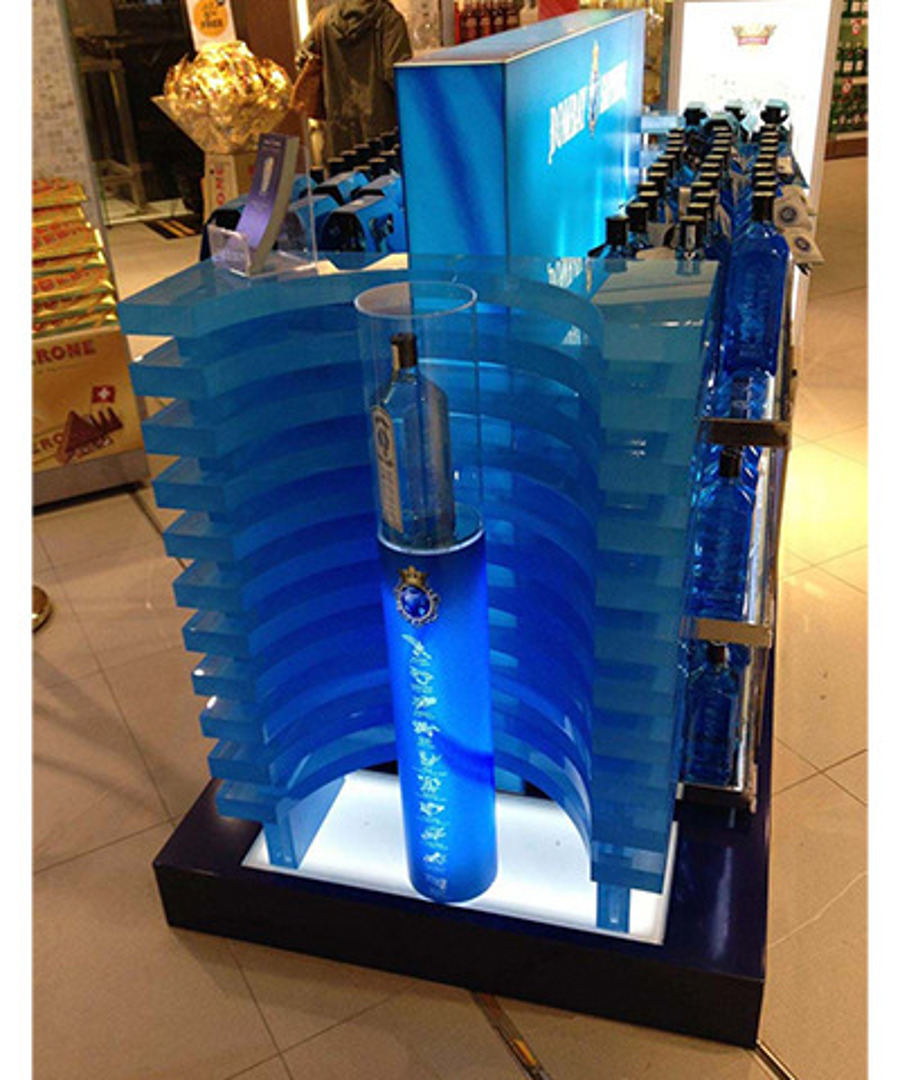
Acrylic, also known as Perspex, gives the polished finish that suits product launches, showrooms and premium retail. It comes clear, in colours and tints, frosted, gloss black, and silver or gold mirror. Some acrylics are translucent and let light through, which is why acrylic suits lit plinths and cube towers.
It prefers to stay put. Acrylic suits a showroom or store more than a stand that moves every week.
What should I know before specifying acrylic?
- Thickness matters. We build floor-standing acrylic plinths from 6mm acrylic as standard, because thinner sheet isn't strong enough, and use thicker sheet for heavy products. As a rough guide, a 400 × 400mm plinth in 6mm acrylic, up to 1,000mm high, holds about 20kg; tell us the product weight and we'll size the acrylic to suit.
- Joins show. On clear acrylic a butt join is far more obvious, so we cut corners at an angle for a clean mitred edge. That joint is also 40% stronger than a butt join.
- It scratches. Clean it with water and a mild detergent and a microfibre cloth, and don't drag products across the top.
- Lead time. Standard production for acrylic plinths is 1.5 weeks from order and print-ready artwork. Custom builds take about two weeks.
Is timber or MDF a good choice for a stand?
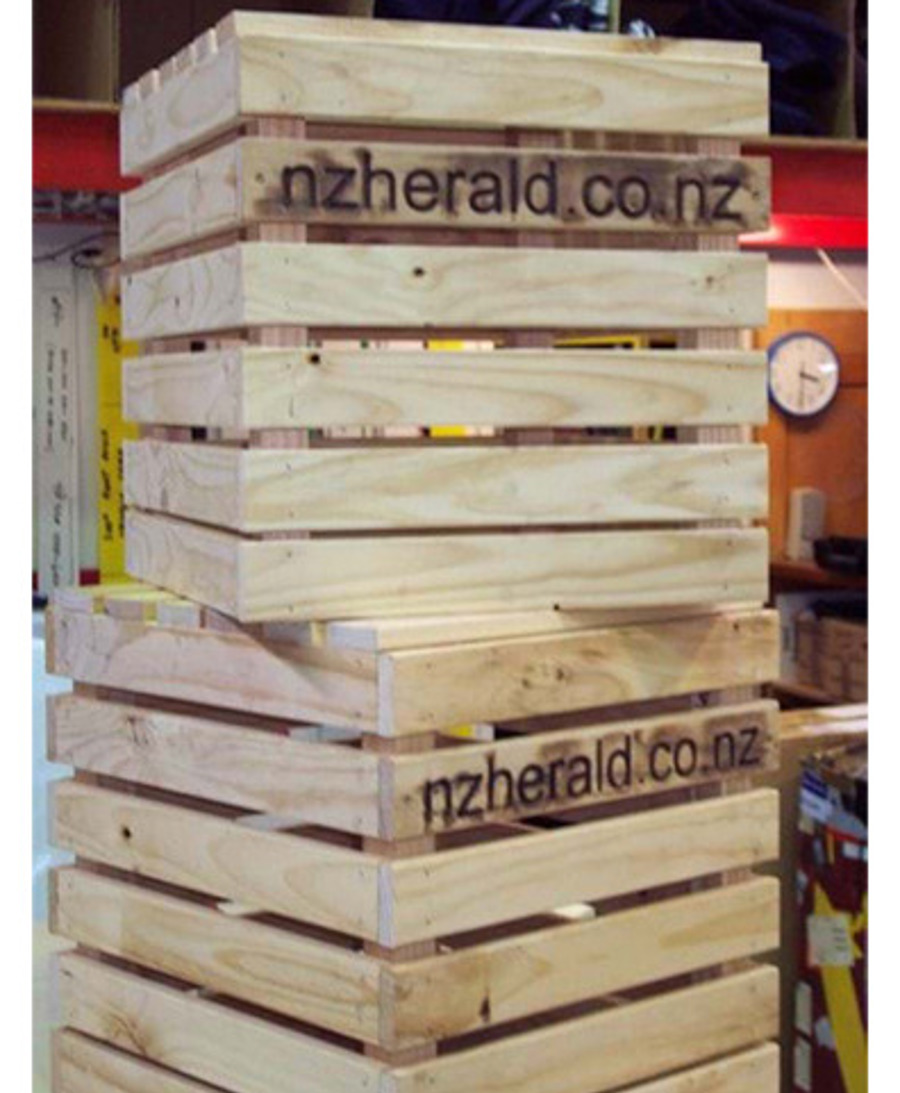
Timber gives a natural, warm look that metal and plastic can't match. Plywood is a common choice for custom stand walls and counters, and it can be finished in many ways. MDF (medium-density fibreboard) costs less and gives a smooth face for paint or laminate.
Timber is heavy to freight, so it suits a flagship event or long-term fixture more than a roadshow. Venues may also ask for timber to be fire treated: Perth Convention and Exhibition Centre's exhibitor manual, for example, requires plywood, hardwood, pulpwood or fibreboard to be made flame resistant by an impregnation process acceptable to the authorities.
What are card, corflute and foamboard display boards used for?
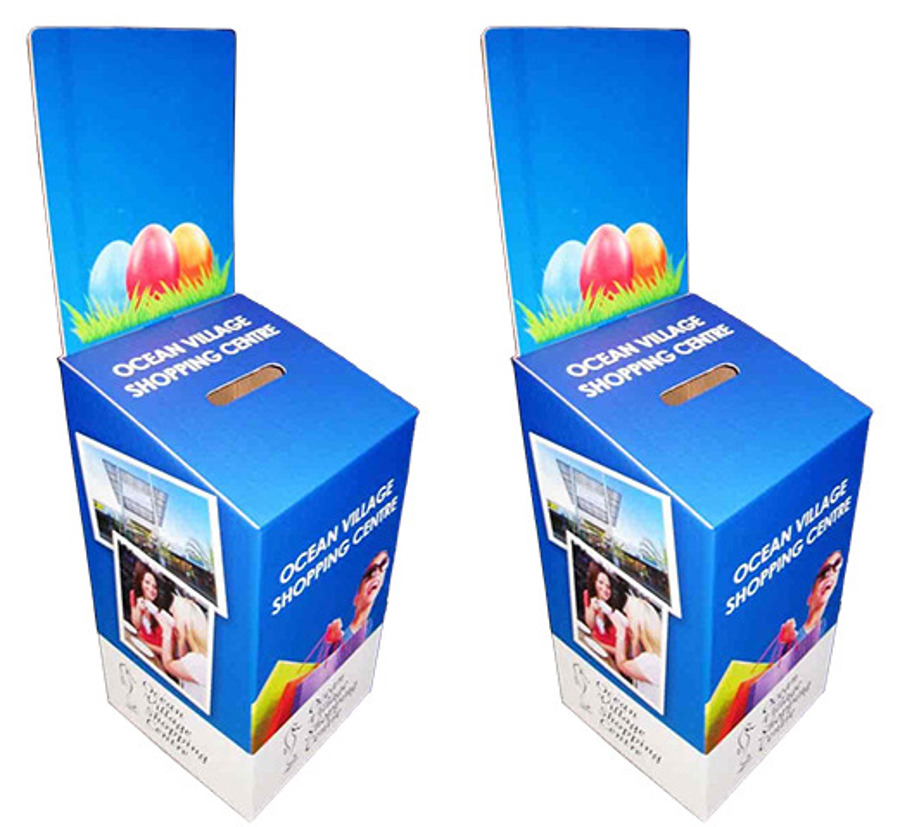
- Card is the cheapest option for retail units and promotional bins, and it can be printed all over. Its short life is not a problem in supermarkets, where a promotional unit is usually off the shop floor within a short time. Our standard square cardboard dump bins are 450mm square and 700mm high.
- Corflute (hollow-core polypropylene) works where card won't: near fridges and freezers, in hardware stores, outdoors and in wet areas. Our long-life bins use 1000gsm hollow-core polypropylene, which is washable and resists oils and other liquids.
- Foamboard is light and cost-effective for mounted graphics and temporary signs, so plan it as a single-use item.
Can I take card, corflute or foamboard into an exhibition venue?
Card, corflute and foamboard need care at venues. Brisbane Convention & Exhibition Centre, for example, prohibits readily flammable materials such as corrugated cardboard, plastic and polystyrene unless they have been treated with fire retardant, and proof of the treatment must be supplied on request.
What fire ratings do display fabrics and materials need?
Venues set the rules, so read the exhibitor manual before you order. Brisbane Convention & Exhibition Centre's event safety and design guidelines say that materials used for lining, drapes, backdrops, overhead structures, signs, banners and theming must be rendered non-flammable to AS/NZS 1530.3:1999, the Australian Standard fire test for ignitability, flame spread, heat and smoke. Perth Convention and Exhibition Centre's exhibitor manual cites the same standard; other venues set their own rules.
The venue can ask for proof. Get fire-rating documents for fabrics and boards well before move-in, not on the day. We work with you to supply fire-test certificates for our SuperWall, Big Mural and Brandframe fabrics.
Which material suits a one-off event, a roadshow or a retail fixture?
| Use | Start with | Why |
|---|---|---|
| One-off event | Fabric on an aluminium frame, with card or foamboard for extras | Light freight and little to store |
| Roadshow or repeat events | Aluminium frames with SEG fabric skins | Survives repeated packing; change the message by changing the skin |
| Showroom or product launch | Acrylic plinths and showcases, timber for warmth | Premium finish where the display doesn't move often |
| Retail fixture | Card, corflute, acrylic or timber, depending on the store | Card suits supermarkets; corflute suits wet or cold areas; acrylic and timber suit longer stays |
Are steel, glass and vinyl still used?
- Steel gives strength and stability for larger structures, but it is much heavier to move.
- Tempered glass gives a high-end look for showcases and display cases.
- PVC and vinyl are still used for banners, wall graphics and decals. We supply PVC and vinyl banners.
Can display materials be recycled or reused?
The best end of life is a second life. Keep the frame and replace the print: an aluminium frame can take a new print instead of being replaced, and we can fit a new banner to your own pull-up banner stand.
When something is finished:
- Aluminium can be remelted and reformed again and again with no loss in quality. The International Aluminium Institute reports that recycling aluminium saves about 95% of the energy needed to produce it new.
- Pull-up banners should be taken apart first, so the banner, frame and end caps each go to the right recycling stream.
- Card can go into paper recycling where local rules accept it.
- Recycled polyester fabric keeps PET bottles out of landfill and cuts demand for new petroleum when it is made. Don't claim more than that without evidence.
How should I describe a display's environmental credentials?
Be specific in your own marketing. The ACCC says environmental claims must be truthful and accurate and backed by clear evidence, and that broad claims mislead more easily than specific, proven ones. "Frame made from recyclable aluminium" holds up; "eco-friendly stand" does not.
---
Next step: Tell us what the display has to do, how often it travels and where it is going, and we will recommend the material. Call 1300 240 250, or start with our Brandframe fabric frames.