

YOUR CART IS CURRENTLY EMPTY
How do I set up café barriers and keep them standing in wind?
What is a café barrier?
A café barrier is a freestanding steel frame with a printed banner across it. Our café barriers come 1m or 2m wide and 0.9m high, in a black or silver frame, with UV stable custom printing on both sides. You'll see them around alfresco dining areas and bars, and as branded screens around queues and crowds at concerts, brand activations, exhibitions, shopping malls and sporting events.
Why do café barriers blow over?
The printed panel is outdoor banner vinyl, so the wind pushes against it rather than passing through. A row of barriers works like a low fence with a sail on it. Our frames are steel with wide feet, which makes them stable while still being easy to move. On an exposed corner or in a strong gust, though, the feet need help.
What do councils ask for?
If your barriers sit on a council footpath, your outdoor dining permit will have its own rules. As an example, the City of Greater Geelong's outdoor dining guidelines say non-fixed barriers must be secured with a locking mechanism or a weighted base, and must not exceed 0.9m in height, including a minimum clearance of 0.15m from the footpath. Geelong also asks for a 2m gap for access if the barriers run further than 10m in a continuous line, and for all temporary furniture to be removed by close of business or 1.00am, whichever is earlier.
Note: Every council is different. Check your permit's height, clearance and fixing rules before you order, and again before the barriers first go out.
Steps to set up café barriers and keep them standing in wind
1. Check your permit or event rules. Look for the maximum height, how barriers must be secured, any gaps you have to leave, and the hours they can stay out. Write the rules on a card and keep it with the barriers. At an event, also ask the organiser for their severe-weather procedure and the conditions at which signage has to come down.
2. Plan the line. Mark where each barrier will go, inside your trading zone or the event's approved area, keeping any required access gaps clear.
3. Stand each barrier on its feet. Set it down on flat, level ground, so both feet sit firmly on the surface and the frame stands straight.
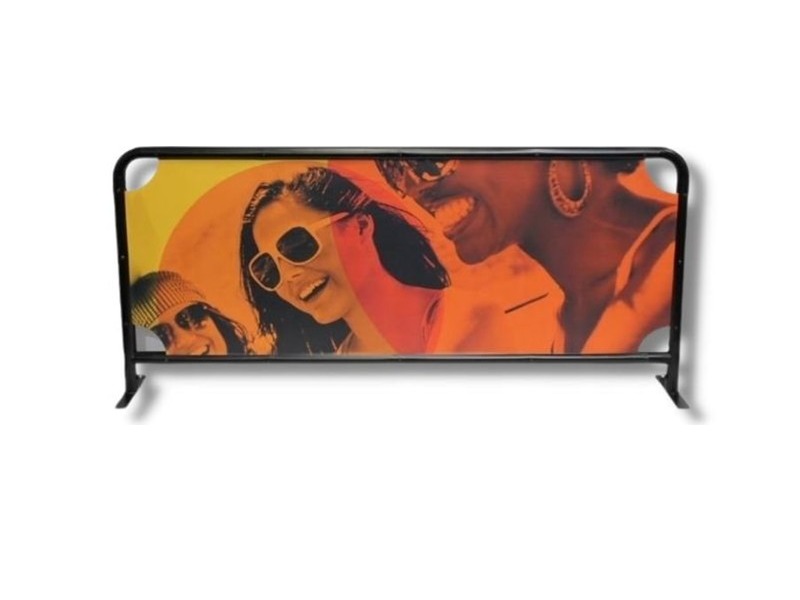
4. Check the banner. The graphic should be tight across the frame with no flapping corners. A loose panel catches more wind and wears faster.
5. Weight the feet if the site is exposed or your permit asks for a weighted base. Ask the council or venue what weights it accepts, and keep any weights low so they can't be kicked or tripped over. On bitumen, pavers and concourses, use weights rather than fixings unless the council or venue approves them. There's no published wind rating, so weights help but don't make barriers wind-proof: step 7 still applies.
IMPORTANT: Don't tie barriers to street furniture, trees or poles unless the council or venue has approved it.
6. Check the whole line. Walk along it and push gently on the top rail of each barrier. Nothing should rock, and the access gaps should still be clear.
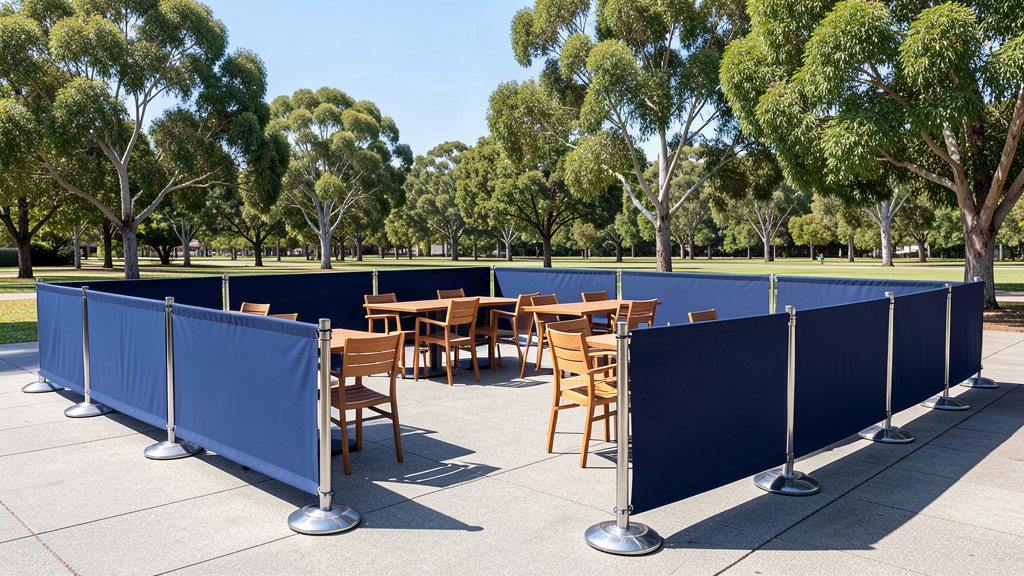
7. Bring them in when the wind gets up. Don't wait for one to fall: carry the barriers inside or lay them down flat as soon as gusts start to rock them. Agree that trigger with your team (or the event organiser) before the barriers go out, and name one person to make the call. Our guide on exhibiting at an outdoor event has more on wind, rain and sun.
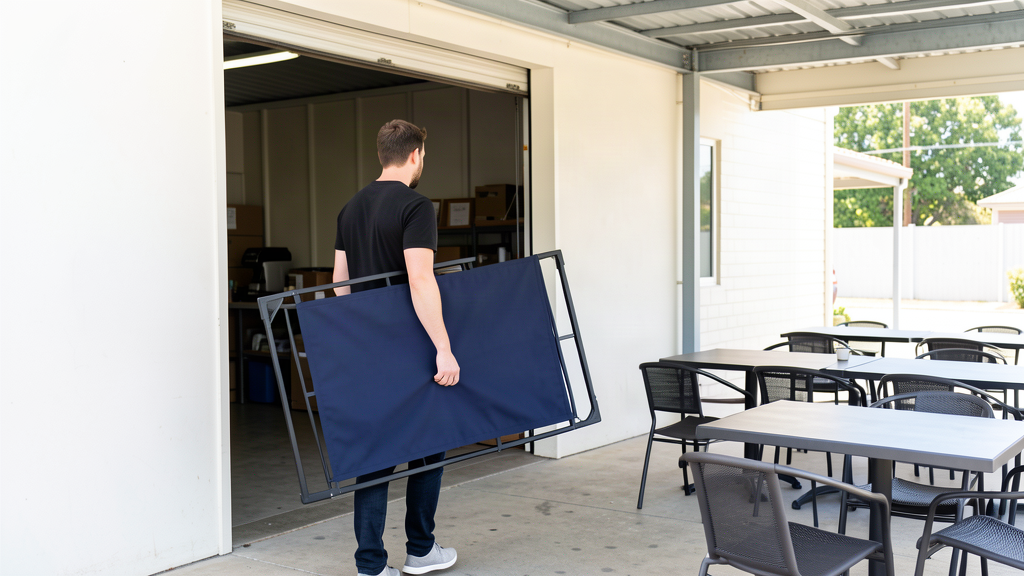
8. Finally, at close of trade, lift off any weights, carry the barriers inside and stand them somewhere dry until the next day, and you're done!
You can see both sizes, frame colours and the artwork templates on our café barriers page. Standard production is 2.5 weeks from your order and print-ready artwork, plus delivery time. Every barrier carries a 2 year warranty for the original owner, which doesn't cover mistreatment or normal wear and tear.
Need some help?
We're here for you
If you're needing some advice or just a helping hand, please get in touch with our team, by clicking this button. Complete the enquiry form and one of our specialists will call you back as soon as we can.