

YOUR CART IS CURRENTLY EMPTY
How to sample alcohol, medicines and health products within the rules
Sampling a wine, a spirit or a health product isn't like handing out a biscuit. Alcohol tastings sit under state liquor laws, so you need to know whose licence covers the pour and who is allowed to pour it. Medicines and other therapeutic goods sit under the national advertising code, which limits which products can be given away as samples at all.
Below are the checks we'd run before briefing any regulated-category activation. Every rule is quoted from the regulator's or venue's own page. Rules change and vary by state, so confirm the current position with the regulator, and with your own legal or regulatory team, before you plan around it.
Alcohol tastings
#1 - Work out whose licence covers the tasting
A tasting runs under somebody's liquor licence, and that licence sets where and how you can pour.
- In a bottle shop. In NSW, a packaged liquor licence lets the licensee "hold tastings on the premises with or without charge" (Liquor & Gaming NSW). In Victoria, a packaged liquor licence lets the venue "Offer free tastings at your venue", and Victoria's self-paced guide for these licensees says holding a wine tasting in the grocery area of a supermarket is an offence: it "must be held within the red line area shown on the plan approved by LCV" (Liquor Control Victoria).
- At a trade show or consumer show. Some convention centres hold the licence themselves; others expect you to bring your own. ICC Sydney's Exhibition Manual says that "As the liquor licence holder, ICC Sydney is the sole provider and seller of alcohol at the venue." Adelaide Convention Centre's handbook says all alcohol sampling there is covered by its operator's liquor licence. At BCEC in Brisbane, exhibitors sampling liquor must supply a current liquor licence and hold a current Queensland RSA certificate.
- At your own event. NSW offers limited licences for events, including a trade fair licence for businesses from one industry selling or supplying alcohol at a trade fair or exhibition, such as a wine or food show.
Don't assume that free drinks need no licence. Liquor & Gaming NSW says a licence isn't required where there is no direct or indirect charge for the drinks, but is necessary if a venue "intends to receive something (such as money, goods, or other benefits), either directly or indirectly, in exchange for the liquor." If your tasting is there to sell product, check with the regulator whether it needs a licence.
#2 - Make sure every pourer holds the right RSA for that state
Responsible Service of Alcohol (RSA) training is set by each state.
- NSW. For packaged liquor and trade fair licences, the licensee and all staff selling, serving or supplying alcohol need an approved RSA course and a valid NSW competency card. Liquor & Gaming NSW adds: "This requirement also applies to security staff and promotional staff conducting tastings on the premises."
- Victoria. Staff need a current RSA certificate if their job includes "offering alcoholic drinks" or "pouring or serving alcoholic drinks" under a general, on-premises, late night or packaged liquor licence. They must complete it before they start or "within one month of the date when you first supply alcohol". Liquor Control Victoria says you "cannot rely on an interstate RSA certificate".
- Other states. Check with the state regulator. Don't assume one state's RSA covers a national roadshow.
Ask your staffing provider for copies of each person's RSA before day one. ICC Sydney, for example, asks for a copy of each server's NSW competency card before tenancy starts.
#3 - Keep pours to a tasting size
NSW law defines a tasting as "sampling a small amount of a particular product", usually for the first time or to decide whether to buy a larger quantity, and says it stops being a tasting once it is no longer ancillary to buying the product to drink elsewhere (Liquor Act 2007, section 4).
Venues set their own limits. Two we checked:
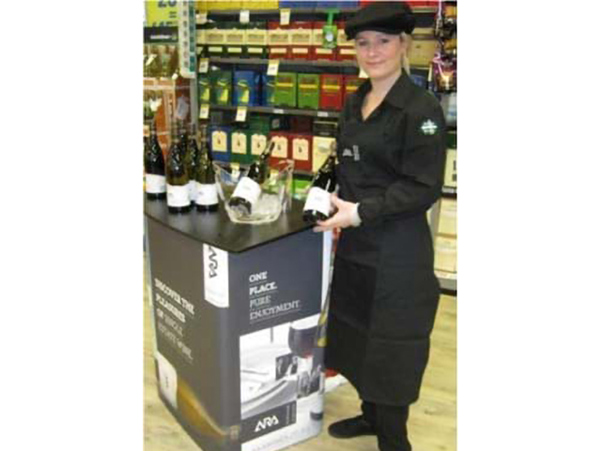
- ICC Sydney: non-alcoholic drinks 100 ml or less, spirits 20 ml or less, wine and beer 50 ml or less.
- Adelaide Convention Centre: no more than 10 ml for spirits and 50 ml for wine, beer and cider.
Other venues and retailers may set different limits, so ask before you order cups and plan stock.
#4 - Check ages before anyone tastes
Under the ABAC Code, a Minor is anyone under 18. Liquor & Gaming NSW warns that supplying liquor to a person under 18 is an offence, with penalties of up to $11,000 and/or 12 months' imprisonment. Brief staff to ask for ID and to refuse anyone who can't show it.
#5 - Run the activation past the ABAC code
The ABAC Responsible Alcohol Marketing Code applies to "competitions and other brand activations" and to marketing collateral, including point of sale material and branded merchandise. Among other things, alcohol marketing must not:
- have "Strong or Evident Appeal to Minors", including through activities or interactive games likely to appeal strongly to them
- be delivered directly to a Minor by hand
- prominently show paid models, actors or influencers who are under 25.
ABAC offers a confidential, user-pays pre-vetting service for proposed marketing. Use it for anything you're unsure about, such as a game on the stand.
Medicines and health products
#6 - Check whether the product can be sampled at all
The Therapeutic Goods Administration (TGA) guidance on samples is blunt: "Advertisers are not permitted to promote or distribute samples of any therapeutic goods that are not listed in Annexure 2" of the Therapeutic Goods Advertising Code. The list consumers can be offered includes:
- hand sanitisers, disinfectants, face masks and gloves
- sunscreens and other therapeutic goods containing sunscreen
- oral hygiene goods such as toothpaste, mouthwash and interdental brushes
- condoms and personal lubricants, tampons and menstrual cups
- nicotine replacement therapies given by oromucosal or transdermal means
- wound care dressings for superficial wounds, including first aid items and antiseptics.
Annexure 2 has other entries too, so check the full current list. If your product isn't on it, it can't be sampled to consumers. A free extra pack of the same product under a "buy one, get one free" offer isn't treated as a sample.
#7 - Sample in the right pack, to the right people
Even a permitted sample has conditions. It generally must be on the TGA's register (the ARTG), handed out "in the original container for the goods" (not as loose foils or sachets), and never given to children. Check the TGA's sampling rules before you plan the activation.
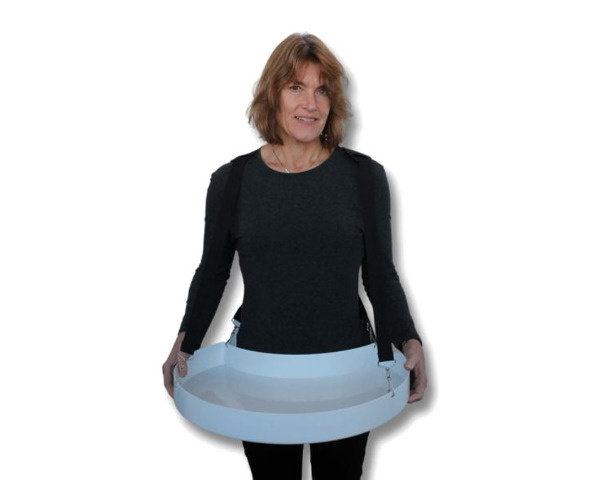
Kit for regulated sampling
Regulated tastings need tidy, controlled kit: one pour point, stock out of reach and the required signs in view.
- Demonstration tables. Superlight and Presenter tables come in 600, 800, 1,000 and 1,200mm widths, plain or with printed wraps and headers, so the tasting point is clear and staffed from behind.
- Vendor trays for permitted health samples handed out on the move. Our standard tray is 520 x 400mm and its surface is safe for direct food contact. Drop-in inserts can be made to suit the product's shape and size, so packs sit upright. We sell trays; we don't hire them.
- Branded consumables. Disposable cups, aprons and polos from our liquor store tasting range.
For planning the wider campaign, see our product sampling campaign guide and our sampling and demonstrating work.
If you're planning a tasting program or a health-brand activation and need the kit built to suit, call us on 1300 240 250.