

YOUR CART IS CURRENTLY EMPTY
Concession vs shop-in-shop vs pop-up: which retail presence fits?
Published
Quick answer
The three formats trade commitment for control. A pop-up is the fastest and shortest commitment: a casual site in a shopping centre for a fixed short term, with your own kit. A concession puts your brand, your staff and your stock inside a department store, on commercial terms the store sets. A shop-in-shop is a branded space with your own fixtures inside a host retailer, and who staffs it depends on the deal. Choose by how long you want to stay, who will sell, and how much of the brand experience you need to control.
Three formats, three different deals
The terms overlap, so it helps to separate the commercial deal from the physical space.
- Concession describes the deal. The brand runs its own business inside the host store.
- Shop-in-shop describes the space: a clearly branded area inside a bigger store, built with the brand's own fixtures, signage and layout.
- Pop-up describes the time frame. It opens for a fixed run, then the kit comes down and moves on, most often from a casual site in a shopping centre.
A single brand can use all three: a pop-up to test a market, a shop-in-shop in a partner retailer, and a concession in a department store's flagship.
Concessions: your business inside a department store
In a 2003 media release, the ACCC described concession businesses as "'stores within stores' that display and sell particular brands", and noted that those inside David Jones "set prices, hire staff and sell products independently of David Jones".
At Myer, the store processes the sale. In its half-year report for the 26 weeks to 24 January 2026, Myer defines concession sales as "the sale of concession holders' goods to customers, processed by Myer". Those sales were $500.6 million, and Myer reported concessions revenue of $115.5 million for the same period. That is $115.5m ÷ $500.6m = 0.23, or about 23 cents of revenue to Myer for each dollar of concession sales. It's a group-wide average, not a rate any one brand pays, and the report doesn't break down how it is charged.
What a concession gives you:
- Control of the sale. Your staff, your stock, your prices and your service.
- Department store traffic without signing your own shop lease.
- Responsibility for the costs. Wages, stock and fixtures are yours, on top of what the store charges under the agreement.
Each store sets its own terms. Get them in writing before you design anything.
Shop-in-shop: your fixtures in someone else's store
A shop-in-shop is about how the space looks and works. Your brand gets a defined zone inside the host's store, from a single counter to an enclosed boutique, built in your colours with your own fixtures and signage.
Who staffs it depends on the deal. Run as a concession, your own team sells. In other arrangements the people on the floor may be employees of the host store. Either way, the host store's rules apply, so agree the design, materials and staffing with the store before anything is built.
What a shop-in-shop does well:
- A consistent brand presence across many stores, because the same fixture package can go into every one.
- A home for a whole range, such as appliances, cosmetics or electronics, where shoppers want to compare models side by side.
- Visual merchandising control inside a store you don't run. Our guide to visual merchandising basics covers sightlines, eye level and hot spots.
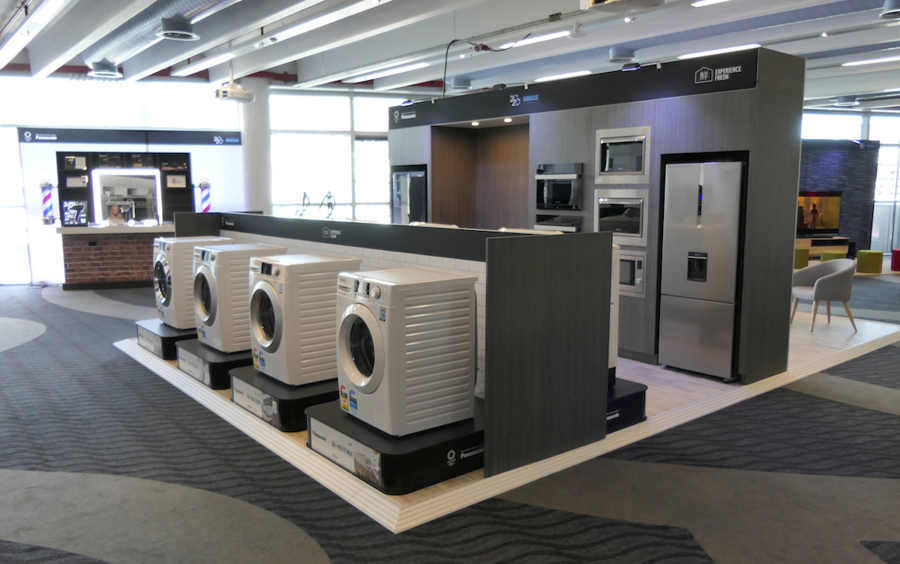
Pop-ups: short term, fixed dates
A pop-up gives you a physical presence for a fixed period, on a short licence rather than a long-term lease. In a shopping centre, you book the site with centre management, usually through its casual leasing team. The Shopping Centre Council of Australia's 2021 fact sheet on casual mall licensing describes a casual mall site as an area in the public mall where a business can trade "for a short term, and a maximum of 180 days". It adds that a survey of shopping centres found the average term was 12 days. The Casual Mall Licensing Code of Practice it describes applies in all jurisdictions except South Australia, which regulates casual mall licensing separately. The code is voluntary, so ask centre management whether your centre applies it.
Pop-ups suit launches, seasonal ranges, sampling and testing a new market before committing to a longer format. The trade-off is that you usually bring everything: walls, counters, signage, storage and the staff to cover the trading hours you agree with the centre. Confirm with the centre what it supplies and which hours you must open.
If you're still deciding between a pop-up shop, a kiosk and a brand activation, read our comparison of pop-up shop, kiosk and brand activation formats. For centre rules, approvals and a planning timeline, see our pop-up shops planning guide.
Comparison: commitment, cost, control and speed
| Concession | Shop-in-shop | Pop-up | |
|---|---|---|---|
| What it is | A commercial deal inside a department store | A branded space with your fixtures in a host retailer | A temporary site, often a casual mall site |
| Commitment | Ongoing agreement with the store | Ongoing, set by the retailer's agreement | Short term: up to 180 days under the code; 12 days was the average in a centre survey |
| Who sells | Your staff | Your staff or the host store's, depending on the deal | Your staff, for the hours agreed with the centre |
| What you agree with the host | The store's concession terms | The retailer's terms | A casual mall licence with the centre |
| Your main costs | Staff, stock, fit-out and the store's charges | Fixtures, plus staff if they are yours | The licence, the kit and the staff |
| Brand control | High within the store's rules | High over the look; service depends on who staffs it | Full, within the centre's rules |
| Fixtures | Built to the store's fit-out standards | One fixture package rolled out to many stores | Portable kit you hire or buy |
| Speed to open | Slowest: negotiate, design, fit out | Slow: retailer approvals, then roll-out | Fastest: book a site and set up |
Which fits your goal?
- Test a product or a market: pop-up. Short commitment, real sales data, and you can try more than one centre.
- Launch a season or a campaign: pop-up, sited where your audience shops.
- Build a permanent presence without your own lease: concession, if you can staff it and want to control the sale.
- Get a range sold properly across a retail network: shop-in-shop, with a fixture package that keeps your brand consistent from store to store.
- Step up over time: use a pop-up to prove demand, then take the sales data to a department store or retailer when you negotiate a longer format.
Fixtures and displays for each format
For a pop-up, go portable. Our shopping centre packages cover registration, foot traffic and consultant set-ups for mall sites. Each is printed with your artwork, and you can hire or buy. A pop-up display counter gives you a branded sales point: a 1,300mm x 480mm curved top on a 900mm base, 12kg in total, which one person can put together in under three minutes. It starts from $792 (excluding GST and freight), with 1.5 weeks' production from order and print-ready artwork. A custom pop-up build typically takes about 5 weeks.
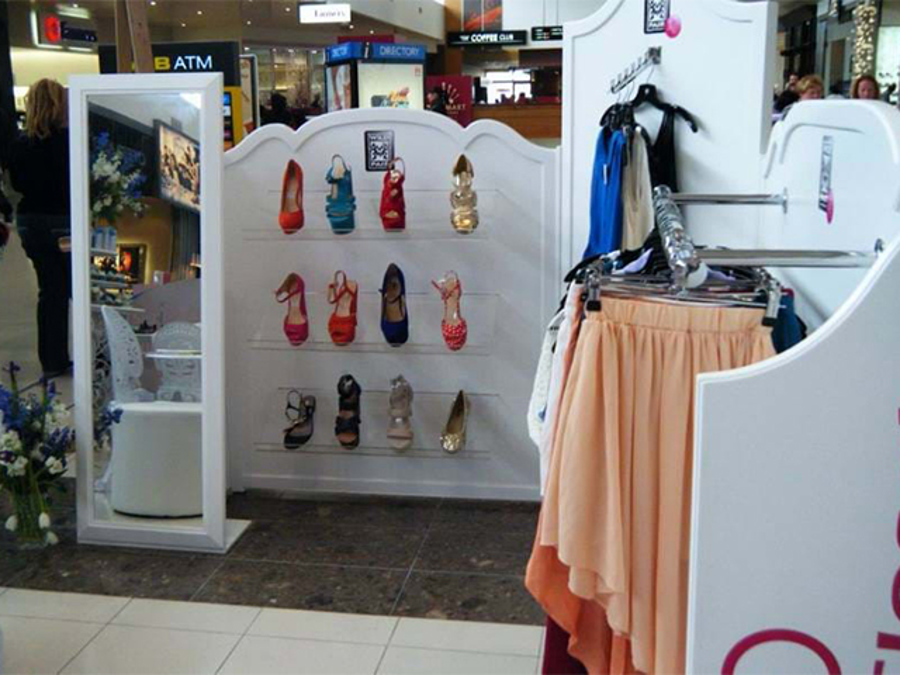
For a shop-in-shop, think in packages. Design one set of display walls, merchandising units, plinths and signage that fits the smallest store in the network, then scale it up. Build in screens if the range needs explaining. See our work on retail displays.
For a concession, start with the store's fit-out standards and build to them. The fixtures have to work hard every trading day: easy to restock, easy to clean, and with storage for stock and staff belongings.
Next step
Talk to us about fixtures for your next retail format. Send us the format, the site or store dimensions and your dates through the enquiry form, or call 1300 240 250, and we'll suggest the displays that suit it.