

YOUR CART IS CURRENTLY EMPTY
All you need to know about amusement device registration
A ride, a mechanical simulator or a jumping castle can be a great crowd-puller at a brand activation. It also brings safety rules that a branded counter or a backdrop doesn't. Many of these attractions count as amusement devices under work health and safety law, and many of those must be registered with the state regulator before anyone uses them.
You don't need to become an expert, but you do need to ask the right questions before you book. Here's what counts as an amusement device, when registration applies, and the checks to make with the operator and the venue. We don't hire out inflatables or supply rides, so treat this as a briefing for when you engage a specialist operator, and check the detail with your state regulator.
What counts as an amusement device?
Safe Work Australia's guide for amusement devices defines an amusement device as plant operated for hire or reward that entertains people through its own movement, or when people travel or move on, around or along it. WorkSafe WA's guide for local government gives these examples:
- mechanically operated rides, fixed or mobile
- inflatable devices such as bouncy castles
- go-karts
- water slides
- flying foxes (ziplines)
The definition also has exclusions. Two that come up at activations: a coin or token-operated ride, usually found in a shopping centre, that carries no more than four children under 10 at a time, and plant designed for sporting, professional stunt, theatrical or acrobatic use. Public playground equipment is not an amusement device either.
Display inflatables are a different thing
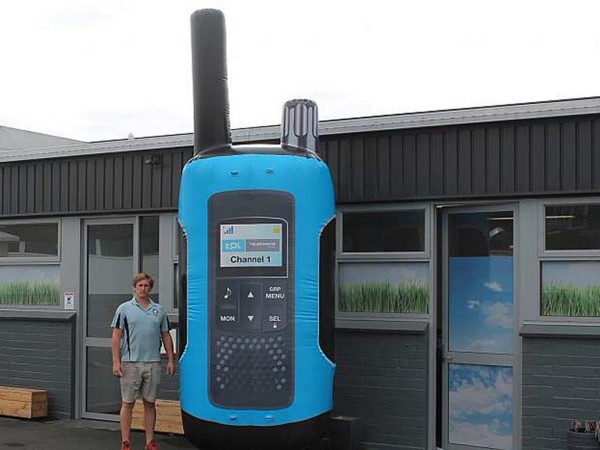
An inflatable arch, gazebo, counter or giant replica product is there to be seen, not ridden. Our inflatable display products fall into this group, and none of them needs a blower running all day. A bouncy castle, inflatable slide or obstacle course that people climb, jump or slide on is an inflatable amusement device, and the rules below apply to it.
If people will climb, jump or play on a display piece, ask your state regulator before the event. Safe Work Australia's advice is simple: if you're not sure whether a device needs to be registered, contact the regulator.
When does an amusement device need registration?
In most states, an amusement device covered by section 2.1 of Australian Standard AS 3533.1:2009 needs two registrations:
- Design registration, which the manufacturer, importer or supplier arranges.
- Item registration for the individual device, held by its owner, lessee or the person in control of it.
Safe Work Australia's guide lists the devices that don't need registration: class 1 devices, playground devices, some water slides and wave generators, and inflatable devices, other than continuously blown inflatables with a platform height of 3 metres or more. A continuously blown inflatable relies on a constant supply of air to keep its shape. Platform height is measured from the ground to the top of the highest surface people stand on, with the device inflated but unloaded.
Not needing registration doesn't mean no rules apply. Safe Work Australia's guide says every amusement device, including a jumping castle under 3 metres, needs a daily check before use, a trained operator and an inspection by a competent person at least every 12 months.
Examples of devices that must be registered include most powered and manually operated mechanical rides, continuously blown inflatables with a platform of 3 metres or more, climbing walls, giant slides, go-karts, high ropes courses and bungy jumping.
A device's class is worked out under AS 3533.1 using data such as height, speed and acceleration. WorkSafe WA says this is a technical calculation that a competent person should do, and the result should be recorded, for example in a letter. For a class 1 device, ask the operator for that letter.
Who to check with in each state
The rules are similar across Australia, but not identical. Check the regulator's own page for the state your activation is in:
- NSW: SafeWork NSW lists inflatables, other than continuously blown ones with a platform height of 3 metres or more, among the devices that don't need registration. Its registration guidance says registrations from other states are recognised in NSW, and item registration is needed every 12 months, so the organiser should check it is current.
- Victoria: WorkSafe Victoria says certain amusement structures need both design and item registration before they are used. If the design is registered in another state, the operator must apply for a Victorian certificate of interstate recognition before the device operates. Item registration lasts 12 months. Victoria is phasing item registration in: structures designed on or after 1 July 1995 must have it, or have applied for it, by 30 October 2026, and older structures by 1 November 2027.
- Queensland: WorkSafe Queensland says most amusement devices need both item and design registration, and lists inflatables, other than continuously blown ones with a platform height of 3 metres or more, among the exceptions.
- South Australia: Check whether registration applies. If it does, the device must have registration approval and a plant registration number before use. A registered second-hand device must be re-registered in the new owner's name.
- Western Australia: WorkSafe WA says unregistered devices, other than class 1, should not be used, and registration should be checked before devices are booked.
- Tasmania, the ACT and the Northern Territory: check with WorkSafe Tasmania, WorkSafe ACT or NT WorkSafe.
What to ask the operator
Whoever books the device has duties too. Safe Work Australia says that if you hire or lease an amusement device, you may have management or control of it for the hire period, and you and the supplier both have duties to manage the risks. SafeWork NSW's guide for event organisers says organisers have some management or control of the devices whether they hire them directly or rent space to the operator.
Before you sign, ask for:
- Registration numbers for the design and the item, or the class 1 letter. If the operator says the device doesn't need registration, ask for the reason in writing.
- The current annual inspection report. A competent person must inspect each device at least every 12 months. SafeWork NSW says the organiser should make sure the report is current for the whole event.
- The log book. Safe Work Australia's guide says a log book must be kept with the amusement device, along with its operating and maintenance manuals, and daily checks must be recorded in it. Check that the inspection and maintenance records are up to date.
- Public liability insurance.
- Operator training records. SafeWork SA says a device may only be operated by someone given instruction and training in its proper operation, including how to do the daily checks.
- Licences for the build. SafeWork NSW says no high risk work licence is needed to operate an amusement device, but one may be needed to use a forklift or elevating work platform, or for rigging, during set-up. Check the licences are current, cover the right classes and match the worker.
Plan the site with the venue
Safe Work Australia says a separate risk assessment must be done for each site. Give the operator and the venue the facts they need early:
- the ground surface, and whether it will hold anchors for inflatables
- clearance from buildings, trees, overhead power lines and walkways
- access for delivery, set-up and emergency vehicles
- power, and where leads and blowers will sit
- expected weather, especially wind
For inflatables, WorkSafe Victoria says they need to be anchored even when low winds are forecast, recommends an on-site wind meter, and says impact-absorbing material should extend at least 1.2 metres from any open side. Blower fans must be guarded and fenced off to prevent unauthorised access. Our guide to inflatables at brand events covers anchoring and wind for display pieces.
Checklist before the doors open
- Registration numbers, class 1 letter or written reason for no registration sighted
- Annual inspection current for every day of the event
- Log book and manuals with the device
- Insurance certificate on file
- Trained operator named for each device
- Anchoring and the operator's wind limit confirmed for inflatable amusement devices; display inflatables have no supplier wind rating
- Exclusion zone, fencing and guarded blowers in place
- Site plan agreed with the venue
Then run your usual pre-open check on the rest of the activation.
Planning an activation and need display inflatables, a custom inflatable or the outdoor event kit around the attraction? Call us on 1300 240 250.