

YOUR CART IS CURRENTLY EMPTY
What are the best practices for stand staffing?
Good stand staff stand at the front, face the aisle, keep phones away and open with a question about the visitor. Roster enough people to cover every open side of the stand plus breaks, so it is never left unattended, and keep shifts short enough that energy stays up.
Brief everyone before the show on the objective, the key messages, how to qualify a lead and how to record it. Below are common questions about staffing a stand.
What are the dos and don'ts for stand staff?
Visitors decide in passing whether to step onto a stand, and staff behaviour is a big part of that decision.
| Do | Don't |
|---|---|
| Stand at the front edge, facing the aisle | Sit behind the counter or stand with your back to the aisle |
| Keep your phone in your pocket or the store room | Scroll, text or take calls on the stand |
| Eat and drink off the stand, on a break | Eat at the counter or leave cups and food on display |
| Talk to visitors, and keep team conversations short | Huddle in a group talking to each other |
| Open with a question about the visitor ("What brings you to the show?") | Open with "Can I help you?" or a pitch |
| Keep arms uncrossed, make eye contact and smile | Fold your arms, lean on walls or hide behind a screen |
| Wear your badge where it can be read, showing your name and role | Leave your badge in your bag or on the back of a lanyard |
| Hand brochures and samples to people who've shown interest | Push a brochure at everyone who walks past |
| Pass a visitor to the right colleague when you can't answer | Guess at answers or promise what the product can't do |
| Keep the stand tidy and the store room door shut | Leave boxes, bags and coats in view |
| Note every lead as soon as the conversation ends | Rely on memory or a pile of business cards |
Do show manuals have rules for stand staff?
Yes, and they vary by show. At Sydney Build 2025 (ICC Sydney), exhibitors could only do business and hand out literature from their own stand, and activities could not spill into the aisles. The manual also asked that no stand be pulled down until all visitors had left the halls on the final day. Check your own exhibitor manual for the rules at your show.
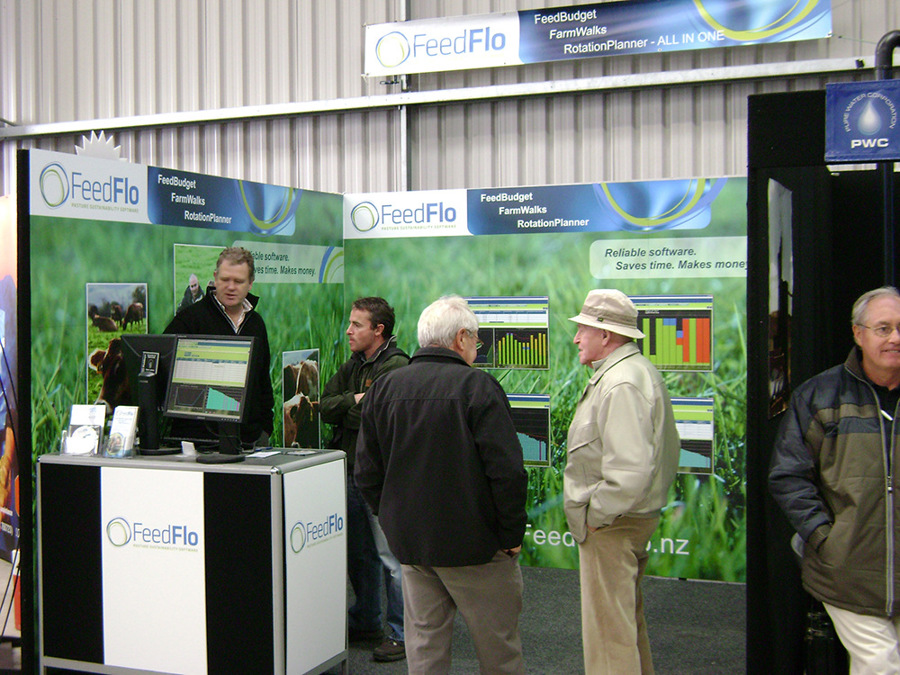
How many staff do I need on my stand?
There's no fixed ratio that suits every show. Work it out from the stand and the jobs on it:
- Count the open sides. Each side that faces an aisle needs someone standing at it during busy periods. A 3 x 3m stand with one open side needs fewer people than a 6 x 6m island open on all four.
- Count the roles. Add one person for each activity that ties someone down, such as running a demo, hosting a game or scanning badges.
- Add break cover. Allow enough people that every break is covered without leaving a side empty.
- Adjust for traffic. Put more people on at opening, lunch and any scheduled show feature, and fewer in the quiet late-afternoon hour.
Can I leave the stand unattended during a break?
Plan to keep it staffed. The Sydney Build 2025 manual required stands to be staffed at all times during show open hours. It told exhibitors to book enough staff to manage this, and not to ask a neighbouring exhibitor to watch the stand while they went on a break.
What roles should each person have on the stand?
On a stand of more than two or three people, give each person a job:
- Greeter. Stands at the front, starts conversations and finds out what the visitor needs.
- Specialist or demonstrator. Runs demos and answers detailed product questions.
- Lead capture. Records details and the qualifying answers, and books follow-up meetings.
- Stand lead. Watches traffic, moves people between roles, calls breaks and runs the daily debrief.
On a small stand, one person may cover two roles. Decide who does what before the show opens, not on the morning.
How should I schedule shifts and breaks?
Standing and talking all day is tiring, and tired staff stop approaching people. Short shifts, planned breaks and rotating people between the front and quieter jobs keep the stand sharp.
An example roster for a show open 9 am to 5 pm, with four people on a stand open on two sides:
| Time | On the stand | On break or off the stand |
|---|---|---|
| 8.30-9.00 | All four: briefing, stock check, screens on | |
| 9.00-11.00 | Greeter A, greeter B, specialist, stand lead | |
| 11.00-12.00 | Greeter B, specialist, stand lead | Greeter A |
| 12.00-1.00 | Greeter A, greeter B, stand lead | Specialist |
| 1.00-2.00 | Greeter A, specialist, stand lead | Greeter B |
| 2.00-3.00 | Greeter A, greeter B, specialist | Stand lead |
| 3.00-5.00 | All four (rotate one person off for 15 minutes at a time if quiet) | |
| 5.00-5.15 | All four: debrief and lead upload |
What breaks are stand staff entitled to?
Break entitlements depend on the award or agreement that covers each employee. The Fair Work Ombudsman says awards and registered agreements set the rules for paid and unpaid rest and meal breaks, including how long they are and when they must be taken. Check the rules for your team before you finalise the roster.
What should stand staff wear?
Dress to match your brand and the audience. The Sydney Build 2025 manual set a dress code of business or smart casual. Matching shirts or polos make your team easy to spot and easy to approach; our branded staff apparel range covers t-shirts and polos with printed or embroidered logos. Name badges that show each person's role help visitors find the right person.
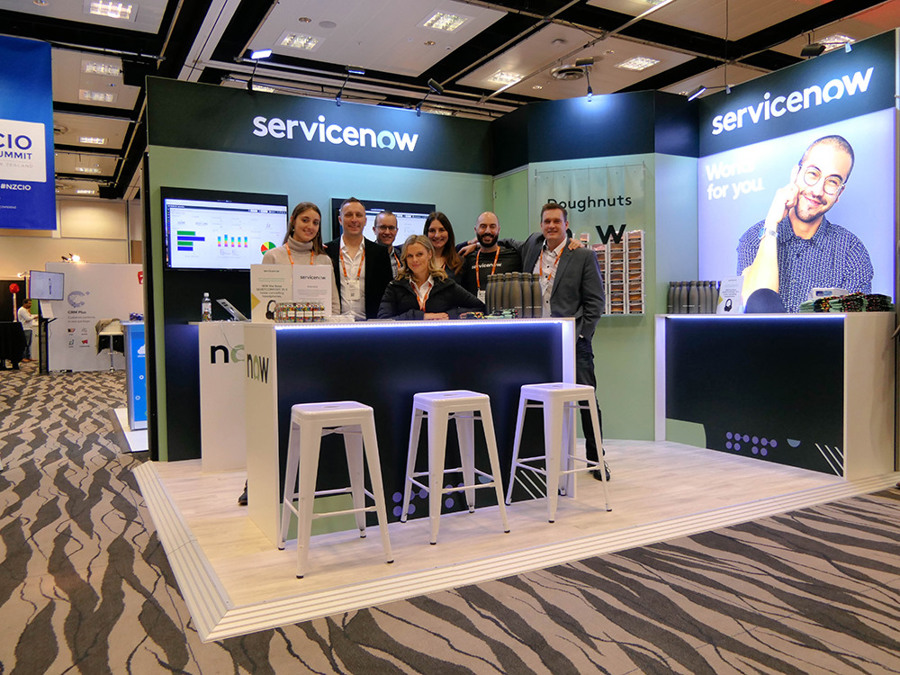
How do I train stand staff before the show?
The best stand teams are briefed, not just rostered. Cover these points in a pre-show session, and role-play the hard ones:
- The objective. What a good show looks like: the number of qualified leads, demos or meetings you want.
- Key messages. One clear line about what you do, and the two or three points every visitor should hear.
- Product knowledge. Enough to answer most questions, and who to pass the hard ones to.
- Qualifying questions. Three or four questions that tell you whether a visitor is a buyer, an influencer or just browsing, and a simple A, B, C grading.
- Engagement skills. Open questions, active listening and tailoring the conversation to the visitor.
- Lead capture. How to use the scanner, app or form, and what to record. If the Privacy Act covers your organisation, it sets rules on telling people when you collect their details and on using them for marketing. Marketing emails also need the person's consent under the Spam Act, so agree what you'll tell visitors when you take their details.
- Difficult visitors. How to end a conversation politely, handle a complaint and move on.
- Event details. Show hours, the stand layout and where to store bags.
If many visitors speak another language, roster someone who speaks it too.
What should staff do in quiet periods?
Use quiet periods to tidy the stand, restock literature, update lead notes and meet other exhibitors, who may be customers or partners.
What happens at the end of each show day?
Hold a short debrief at the end of each day: what worked, which questions came up, which leads need fast attention. Upload and grade the day's leads the same evening. Our 48-hour follow-up plan covers what happens next, and our FAQ on measuring exhibition success covers how to judge the show afterwards.
What should the stand team tick off before the show?
- Roster written, with every open side and every break covered
- Roles assigned, with a named stand lead
- Pre-show briefing held, with objectives, key messages and qualifying questions agreed
- Lead capture tested and everyone trained to use it
- Exhibitor passes registered for everyone
- Dress code and branded apparel confirmed
- Store space planned for bags, coats and stock
- Daily debrief time set, and a named owner for lead follow-up
A well-briefed team works best on a stand that invites people in. See our FAQ on maximising engagement at your stand for design and activity ideas. We don't supply stand staff, but if we supplied your stand or display equipment, we can help on site or after hours on show days. Call 1300 240 250 to talk it through.