

YOUR CART IS CURRENTLY EMPTY
How to brief a brand activation agency
A brand activation brief tells your agency or display partner what the activation has to achieve, who it is for, where it will run and what they have to work with. Answer ten questions before you write anything about the look, and every idea and quote you get back will be aimed at the same target.
Here are the ten questions, in the order we'd answer them, followed by a template you can copy into your own brief. If you're briefing a trade show stand, our guide to writing an exhibition stand brief covers show details and stand specs, and our guide on how to write a creative brief covers graphics and design work.
What is a brand activation brief?
A brand activation is a live event where people do something with your brand: taste it, try it, play a game or walk into a pop-up. The brief sets out why you're running it, who it's for and how you'll judge it, along with the practical limits: sites, dates, budget and rules.
Advertising is judged by who saw it; an activation is judged by what people did, so the brief has to name that action before anyone picks a format. Our article What is a brand activation? explains the seven common types and the kit each one needs.
The 10 questions to answer first
#1 - Why this activation, and why now?
Start with the business reason. A product launch, a move into a new state and a seasonal push each need a different idea. Tell your partner what has changed, what you've tried before and what worked.
#2 - Who exactly do you need to reach?
Name one primary audience and describe them as people, not just an age bracket: where they'll be, what they already think of your brand, and what stops them buying now.
The most useful line in many briefs is an insight: a truth about the audience that an idea can work with. "Parents doing the weekly shop have a few spare minutes, not a quarter of an hour" gives a designer far more to go on than an age bracket.
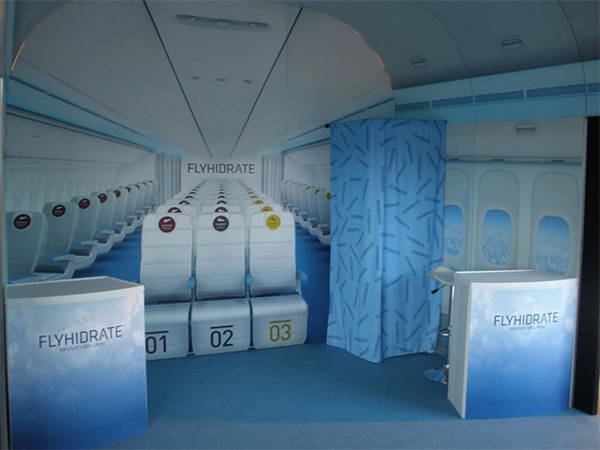
#3 - What should they think, feel and do?
Pick one action: taste the product, book a test drive, sign up, scan a code or buy on the day. Then say what you want people to think or feel as they walk away. If a brief asks for five actions, the activation will do none of them well.
The action shapes the layout: sampling needs a quick flow past a counter, a demonstration needs room for a small crowd, and data capture needs a quiet spot to type.
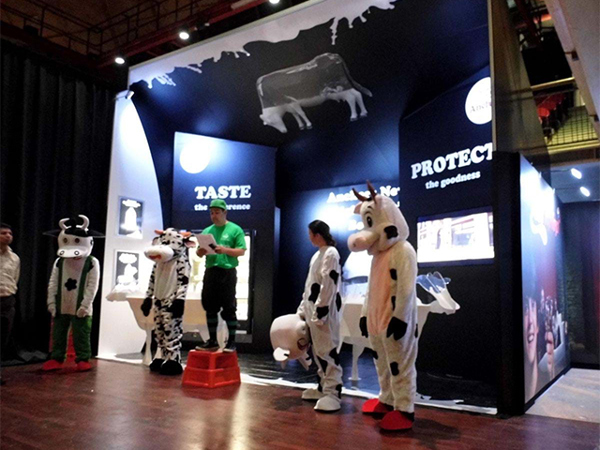
#4 - Where will it run, and who controls the space?
List the sites: shopping centres, supermarkets, festivals, sports events, conferences, campuses or public spaces. For each one, give the footprint you've booked in metres, plus what you know about access, power and ceiling height.
Then name who controls each space, because their rules shape the build. In shopping-centre common areas the centre sets the rules, including height limits and access times, and they change from centre to centre. Many Westfield centres, for example, no longer allow pull-up banners. Get the current requirements from centre management or the event organiser and attach them to the brief.
#5 - When does it run, and for how long?
Give the live dates, opening hours, number of days and number of sites. A one-day launch and a twelve-week roadshow need very different kit: one can be a showpiece, while the other has to survive weeks of packing, freight and rebuilding without looking tired.
Work back from the first live date. A custom brand activation build typically takes us about 5 weeks, and venue approvals need time on top of that. If the date can't move, say so up front.
#6 - What's the budget, and what does it cover?
Give a figure or a range. A partner can match an idea to a budget, but can't aim at a number they don't know. Say what the budget has to cover: design, build, graphics, staffing, venue fees, stock, freight, installation and storage, or just part of that list.
Costs climb fastest with custom rather than catalogue kit, and with every extra site, staff day, venue fee, stock order and freight leg.
#7 - How will you measure it?
Decide the measures before anyone chooses equipment, and make each one a number you can count:
- Reach: people passing or entering the space
- Interactions: demonstrations, games played, conversations
- Samples: how many were handed out
- Leads: sign-ups or enquiries, with consent recorded at capture
- Sales: product sales in that store or area against a normal week
Say who collects each figure, and arrange any baseline, such as a normal week's sales, before the activation starts.
#8 - What are the mandatories?
List everything the activation must include or avoid. Attach your brand guidelines and any legal lines, then add the rules set by others:
- Retailer and venue rules: floor position, signage, sampling and trading hours inside a store; height limits and access times in a centre.
- Trade promotion rules: if prizes are decided by chance, check the rules in every state and territory where the promotion runs. In NSW, for example, an authority is required if the total prize value for a single trade promotion exceeds $10,000, including promotions open to NSW residents run from another state. Below that, no authority is needed, but NSW's other rules, such as no entry fee, still apply.
- Privacy: if you collect names, emails or phone numbers, the OAIC's guidelines on Australian Privacy Principle 5 say organisations bound by the Principles must take reasonable steps to tell people about the collection at or before the time it happens, or as soon as practicable afterwards. Put the notice wording in the brief so it can be designed into screens and forms.
#9 - Who approves, and how long does each round take?
Name everyone who signs off: brand, legal, the retailer or centre, and any partner brand. Say how many rounds of changes you expect, and how long each round takes inside your business. Then build that time into the dates in #5 rather than adding it at the end.
#10 - What does a great result look like afterwards?
Describe the result the way you'd report it to your manager, for example "every sampling target met in every centre, and higher sales in those stores than a normal week". Say what you want handed back: photos, data, a wrap-up report and the kit. If you plan to run it again, say so now, because kit designed for reuse is built and packed differently.
A brand activation brief template
Copy these headings into your brief. Where you don't know an answer yet, say so.
- Project: name, brand, your contact and the final decision maker
- Background: why this activation, and why now (#1)
- Audience and insight: one primary audience, one insight (#2)
- Action: the one thing people should do, and how they should feel (#3)
- Sites: locations, footprint in metres, power, access, and who controls each space (#4)
- Dates: live dates and hours, number of sites, fixed deadlines (#5)
- Budget: a figure or range, and what it includes (#6)
- Measures: each KPI as a number, who collects it, and any baseline (#7)
- Mandatories: brand guidelines, legal lines, venue and retailer rules, trade promotion and privacy (#8)
- Approvals: names, number of rounds and turnaround per round (#9)
- Success and wrap-up: the result you'd report, what's handed back, reuse plans (#10)
- Attachments: brand guidelines, site plans, centre or venue rules, and examples you like
What happens after you send it
When you send us a brief for a brand activation, a Client Services project manager becomes your single point of contact. They help refine the brief, run the design process from first concepts to final graphics, and look after production, freight, installation and pack-down. Our design and production teams work under one roof in Sydney, so each concept is checked against what can be built within your budget. On event days, we can also give on-site or after-hours support for the equipment we've supplied.
Not every activation needs a one-off build. Our custom built portable displays are made to the size you need and take 1.5 weeks to produce from order and print-ready artwork.
Send us your brief, or call 1300 240 250, and we'll be in touch within one business day.