

YOUR CART IS CURRENTLY EMPTY
What is a SWMS, and does your stand build need one?
A SWMS (safe work method statement) explains how high-risk construction work will be done safely. The law does not require one for every exhibition bump-in. A venue may separately ask for a SWMS or risk assessment, so check its rules before installation.
A SWMS is required by law for certain high-risk construction work. Other installations may still need paperwork under the venue's rules. For a custom build we install, we work with you to supply the paperwork the venue asks for.
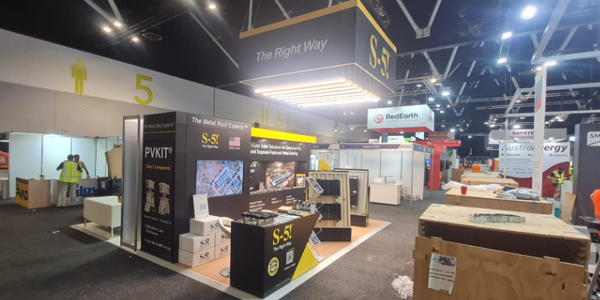
SWMS or risk assessment: what's the difference?
- SWMS. Covers high-risk construction work: its hazards and how the risks will be controlled.
- Risk assessment. A wider look at what could go wrong across the whole set-up. In Safe Work Australia's words, it "involves looking at what could happen if someone is exposed to a hazard and the likelihood of it happening".
- Job safety analysis (JSA). Like a risk assessment, but for one specific task.
Whichever document a venue asks for, the people doing the work still have to work safely. The paperwork shows how they will.
When will you need a SWMS?
When the job includes high-risk construction work. The legal SWMS requirement applies to certain construction activities, not every event set-up. Ask the installer which rules apply to the actual work.
When the venue, organiser or centre asks for one. Some venues have their own paperwork rules, even when the legal SWMS requirement does not apply. Read the current event manual early.
If you're not sure what your set-up needs, ask the venue or organiser first. Your state's work health and safety regulator can also help.
Who writes it?
For high-risk construction work, the business carrying it out prepares the SWMS. For other event installations, agree with your installer who will prepare and submit any paperwork the venue requests.
You and the venue still play a part:
- Exhibitors. Gold Coast Convention and Exhibition Centre (GCCEC) says exhibitors "must ensure that those engaged to undertake work on their stand are competent and have undertaken a suitable and sufficient Risk Assessment".
- Organisers. Brisbane Convention & Exhibition Centre (BCEC) says organisers "are required to assess the risks associated with their event".
- The venue. ICC Sydney says it "reviews and authorises risk assessments and safe work method statements (SWMSs), and monitors the control measures during the event".
A copy from another job isn't enough. Safe Work Australia warns that a SWMS used at different workplaces "may not meet the requirements of the WHS laws" unless it's reviewed for each site, so it should name the venue and the actual tasks.
What venues ask for
These are examples from venue manuals. Check the current manual for your event, as requirements can change.
- ICC Sydney: anyone doing high risk work must complete an induction before move-in. Welding and hot works need a permit backed by "a risk assessment and Safe Work Method Statement (SWMS)". Operating machinery on a stand needs ICC Sydney's permission and a risk assessment.
- BCEC Brisbane: two-storey custom stands are approved only after the contractor provides "an engineering certificate, Job Safety Analysis or Safe Work Method Statement".
- GCCEC Gold Coast: a SWMS for high risk work, and for low risk work "either a Risk Assessment, Job Safety Analysis, Safe Work Procedure, Standard Operating Procedure, or other Work Instruction". Contractors also provide public liability insurance of $20 million and a Work Cover certificate of currency. Exhibitors submit a pre-event health and safety checklist at least 21 days before the event.
- Adelaide Convention Centre: "ACC reserves the right to request the SWMS for the stand at any time". Two-storey stands need one before ACC will approve them.
Organisers ask too. For Sydney Build 2025 at ICC Sydney, the organiser's manual asked space-only exhibitors to submit a reviewed stand permit with their stand plans and risk assessment. Shopping centres set their own rules for anyone installing a display, and our guide to shopping centre activation paperwork covers what they ask for. For the venue rules that shape the stand itself (heights, rigging, test and tag), see our comparison of Australian convention centre stand rules.
What a good SWMS covers
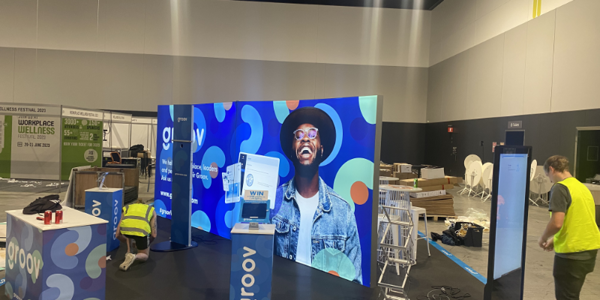
A SWMS should:
- list the high risk tasks
- set out what could go wrong
- describe how the team will control those risks
- say how the controls will be put in place, checked and reviewed.
Safe Work Australia's information sheet says a SWMS "should be short", because a long one is hard to follow on site.
What to ask your installer for
Send this list with your brief, so the paperwork is ready before the venue's deadline:
- A SWMS if the work includes high-risk construction work, or if the venue specifically requires one.
- A risk assessment or JSA if the venue asks for one for other installation tasks.
- A public liability certificate of currency and a workers compensation certificate. Check the amount your venue asks for.
- Engineering certificates where the venue asks for them, for example for two-storey stands.
- Confirmation that every crew member has done any induction the venue requires.
- Any permits the set-up needs, such as hot works or a delivery notice for an elevating work platform.
This page is general information, not legal advice. For your own event, check the venue or organiser's manual first.
If all this sounds a bit complicated, it can be! This is where we can help. If we're setting up your stand, our installation and pack-down crew deals with the organiser for you, and knows the venues and their rules across Australia and New Zealand. When the venue asks for a SWMS or other safety documents for a custom build we're installing, we work with you to supply them. For a custom exhibition stand or a brand activation, your project manager is the single point of contact for timelines and venue requirements.
Got a show or an activation coming up? Call us on 1300 240 250 and tell us which venue it's at.