

YOUR CART IS CURRENTLY EMPTY
Trade show prizes and prize wheels: attracting buyers, not prize hunters
Published
Quick answer
Prize hunters come for the prize, so the fix is a prize only your buyers value and an entry step that sorts people before they play. Offer something tied to your product or service, ask one or two qualifying questions before the spin or draw, and record the answers with the entry. Judge the game on qualified leads, not scans. A prize decided by chance is still a trade promotion when a question comes first, so check the rules in each state where entrants live.
Why your game filled the scanner but not the pipeline
It is a familiar result. The stand was busy all show, the scanner logged hundreds of badges, and a month later the sales team says the list is thin. The game did its job of drawing a crowd. It just drew the wrong one, and nobody sorted it.
The usual causes:
- The prize appealed to everyone. A gadget or a gift card gives every passer-by a reason to play and no reason to talk.
- The scan was the entry. If a badge scan buys a spin, the list records everyone who wanted the prize, not everyone who wanted a conversation.
- Nobody qualified the player. The host ran the spin, someone else handed over prizes, and no one asked what the visitor does or needs.
- Players and prospects went into one list. Follow-up then treated a student and a procurement manager the same way.
None of these needs a different game. They need a different prize and a different order of events.
Choosing prizes only your buyers want
Use one test: would someone with no interest in buying from you still want this prize? If the answer is yes, it will attract prize hunters.
Prizes that pass the test:
- Your product or service, in use. A trial period, an extra licence, a free service visit, an upgrade, training places or a site assessment. Only a likely customer gets value from them.
- Tools of the buyer's trade. Something a specifier, engineer or practice manager would use at work, ideally linked to your product.
- Useful branded items for the lower tiers. Practical things that go back to the office and stay on a desk, not novelties that go in the bin at the hotel.
- A hero prize built around the brand, such as a year's supply, a fully supported pilot or a place at a customer event.
Keep the total prize value in mind as well. Several states and territories set permit thresholds on total prize value, covered in the rules section below.
Entry conditions: qualify before you spin
The order matters most. Have the conversation first and spin second, so the game rewards an action that tells you something.
- Ask one or two questions before the spin. Role and timing are usually enough: "What do you look after?" and "Are you reviewing this soon?" Record the answers with the entry, not on a separate notepad.
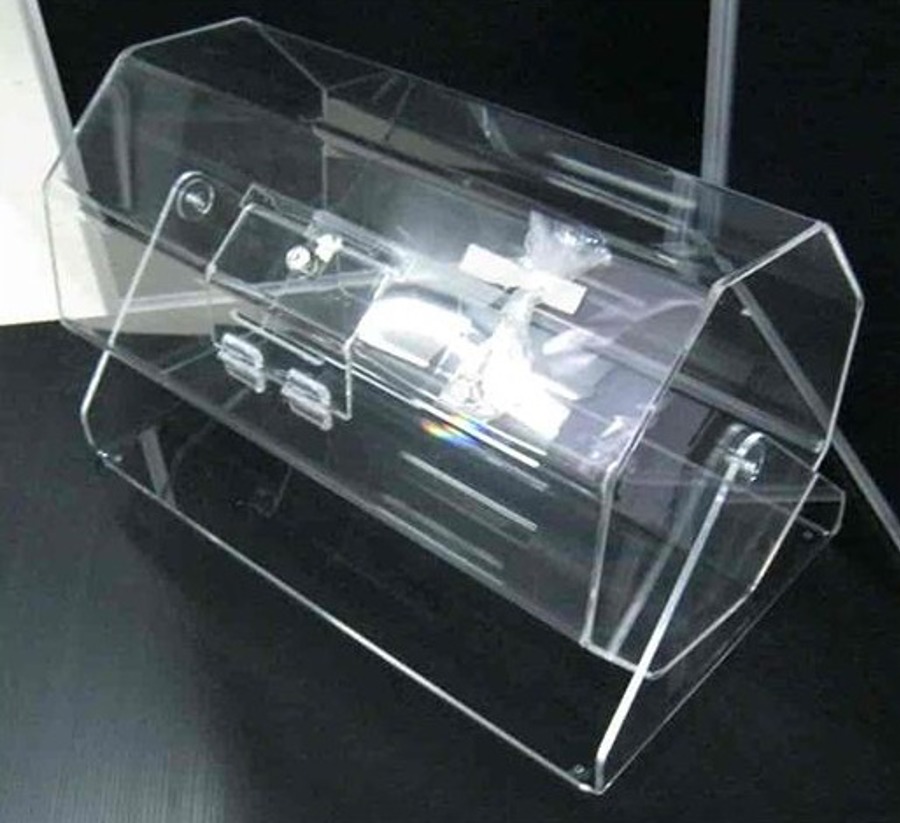
- Make the spin the reward for an action that signals interest. A short demo, a product walk-through or a booked meeting. Our competition entry boxes can hold the forms if you run a draw instead of a wheel.
- Set eligibility in the terms. South Australia's trade promotions page says anyone can enter "subject to any requirements or restrictions outlined in the terms and conditions". If you want to limit entry, for example to trade visitors, write it into the terms and have your legal team confirm it works in each state.
- Say how you will use the details. Victoria's conditions require the conditions of entry to state if entrants' information will be used "for a purpose other than the lottery". If entries become sales leads, write that in.
- Give everyone else a polite exit. A small sample or a brochure for people who don't fit keeps the queue moving and the stand friendly.
Prize and entry ideas by industry
These are illustrative examples, not case studies. Adapt them to what your buyers actually need.
| Industry | A prize buyers value | A question to ask before the spin |
|---|---|---|
| Building products | A specification support session for a live project | Are you specifying for a current project? |
| IT and software | Extra user licences or an extended trial | How many people would use this? |
| Healthcare equipment | Training places for practice staff | How many sites or rooms do you manage? |
| Food service supply | A product trial pack for one menu cycle | How many covers do you serve a week? |
| Manufacturing and industrial | A free site assessment or service visit | When is your next equipment review? |
| Professional services | A half-day workshop for the buyer's team | Who makes this decision in your business? |
The pattern is the same in every row: the prize is only useful to a customer, and the question tells your sales team which conversation to have next.
Setting up the wheel or draw on a B2B stand
A wheel draws attention because people can hear it and watch each spin. On a B2B stand, you want that attention to lead to a conversation.
- Place the wheel where the conversation happens. For pure volume, the wheel goes at the front edge of the stand. For qualified leads, keep it visible from the aisle but spin it beside the counter where your team asks the questions.
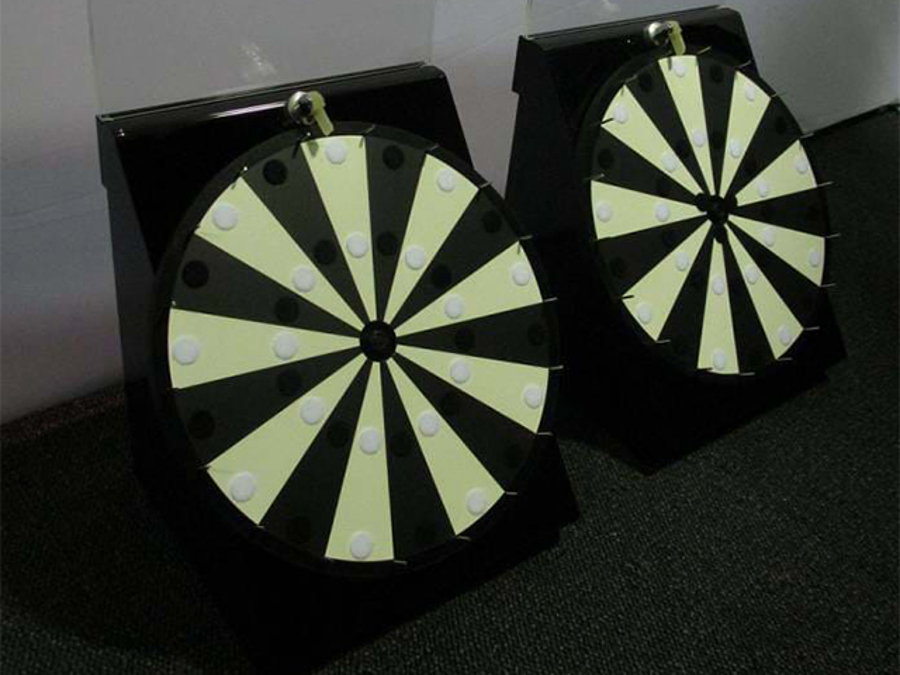
- Match the wheel to the space. Our prize wheels include floor-standing wheels 1.5m high with an 800mm or 1,000mm wheel, and counter-top wheels with a 420mm wheel on a 500mm upright. A counter-top wheel suits a stand where the spin follows a chat at a counter.
- Give segments to prize tiers, not every prize. Fewer, clearer segments are easier to read from the aisle. Sizes, segment counts and setting the odds are covered in our spin to win prize wheel guide.
- Consider a timed draw instead. A daily draw at a stated time gives visitors a reason to come back, and the entry form does the qualifying.
We sell prize wheels; we don't hire them. For other game formats, see our guide to gamification at trade shows.
Trade promotion rules for a B2B stand game
A qualifying question does not turn a chance game into a skill game. South Australia's trade promotions page puts it plainly: a competition where a person can only enter by "answering a simple question" is "still a trade promotion if the winner is determined by a draw". The ACT counts winners decided by "a mixture of chance and skill" as a trade promotion lottery.
Points that matter on a B2B stand, from the regulators' own pages:
- Entry must be free. NSW says trade promotions "cannot have an entry or other related fee for participating."
- Leave your own people out. South Australia excludes anyone "involved in the conduct or promotion of the lottery (whether as principal, agent or employee)", and the Northern Territory says "no employees of the business or their family members may participate". Tell stand staff and contractors before the show.
- Permit thresholds differ, and the other rules still apply below them. NSW requires an authority if the total prize value exceeds $10,000. The ACT doesn't require a permit where the total prize value doesn't exceed $3,000, though conditions must still be met. The Northern Territory doesn't require one for a minor trade lottery with prizes of $5,000 or less. Victoria, Western Australia and Tasmania don't require a permit and Queensland doesn't require a licence, but conditions apply in each. For South Australia, check with Consumer and Business Services (CBS).
Visitors at a national show can come from several states, so check with the regulator in each state where entrants live. Your promotions or legal team should own the terms.
Measure the game on qualified leads
Count plays, but judge the game on what came after:
- Entries by grade. How many matched the buyer profile your questions were designed to find.
- Meetings booked at the stand or in the week after.
- Opportunities that sales can trace to the show a few months later.
A simple comparison: cost per qualified lead = (prizes + the game's share of cost + staff time) divided by the number of qualified leads. Run the same sum for your last show. If the new prize and question order lift the qualified count, the game earned its place. For grading entries on show night and following them up, see our 48-hour trade show follow-up plan.
Next step
Compare floor-standing and counter-top formats on our prize wheels page, then send us your show date, stand size and prize list through the enquiry form, or call 1300 240 250, and we'll help you plan a wheel that suits the conversation you want to have.