

YOUR CART IS CURRENTLY EMPTY
How far in advance should I plan for an exhibition?
For a major trade show, start planning about 12 months out, because some organisers offer next year's space to returning exhibitors first. Brief your stand designer around six months out and have the design signed off and in production by three months out. Exhibitor manual forms can close nearly two months before the show, and at the venues we checked, deadlines for plans, rigging and permits fall two to three weeks out.
The exact timing depends on the show and the stand. Allow four to eight weeks between brief sign-off and show day for a typical custom stand. The rest is set by other people's dates: when the organiser releases space, when the manual's forms close and when the venue wants your plans. Work back from the show date.
What does a trade show planning timeline look like?
| When | Main job | What can go wrong if it slips |
|---|---|---|
| 12 months out | Choose the show, book space, set the goal and budget | A poor position on the floor plan |
| 6 months out | Write the brief, design the stand, book travel | Rushed design and dearer travel |
| 3 months out | Production, exhibitor manual forms (which can include stand plans), promotion | Late fees on forms, rushed artwork |
| 1 month out | Remaining venue paperwork, freight, staff briefing | Plans not approved, freight stuck |
| Show week | Bump-in, show days, bump-out | Lost leads, missed pack-down slot |
| After the show | Follow-up and review | Leads go cold |
What should I do 12 months out?
Pick the show against a goal. Decide what the show is for (new leads, meetings with key accounts or a launch) and put a number on it. That number decides the size and layout of the stand later.
Book space early. Some organisers give previous exhibitors first option to rebook their space before it is released for general bookings. If you are new to a show, ask when rebooking closes and register your interest before then.
Set the budget. Cover space, stand design and build, graphics, freight, venue services (power, internet, rigging), travel and staff time.
Should I book space only or a shell scheme?
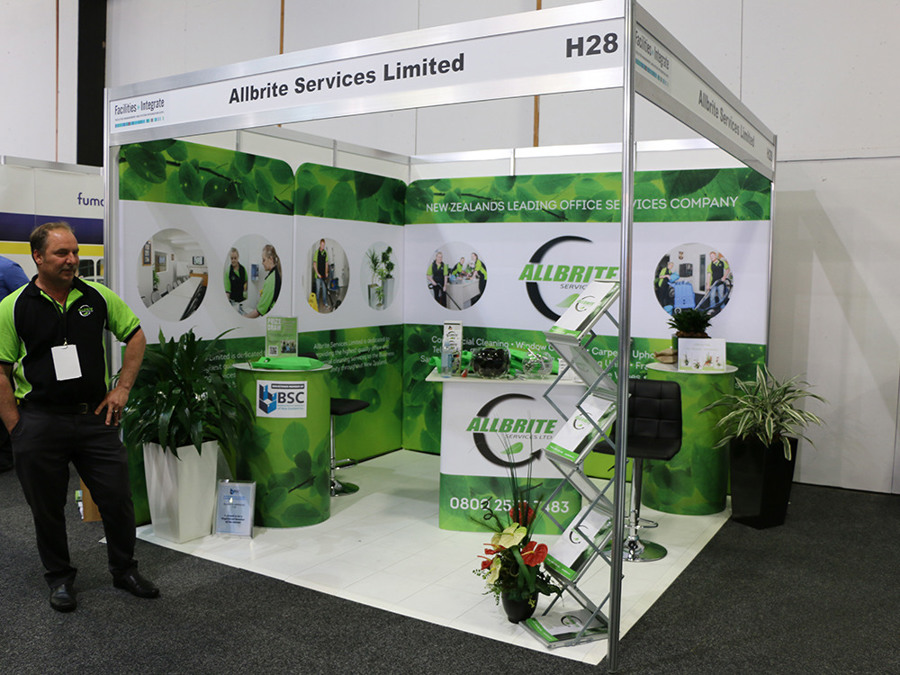
A shell scheme package comes with basic walls and a fascia sign; at one 2025 show at ICC Sydney that meant 2.5m high white panels in an aluminium frame. Space only means you bring a complete stand and the plans need approval. This choice decides most of what follows, so make it when you book.
What should I do 6 months out?
Write the stand brief. Include your space allocation, what the stand must achieve, what has to fit on it (products, screens, meeting space, storage) and the budget. Our guide to writing an exhibition stand brief lists the questions to answer.
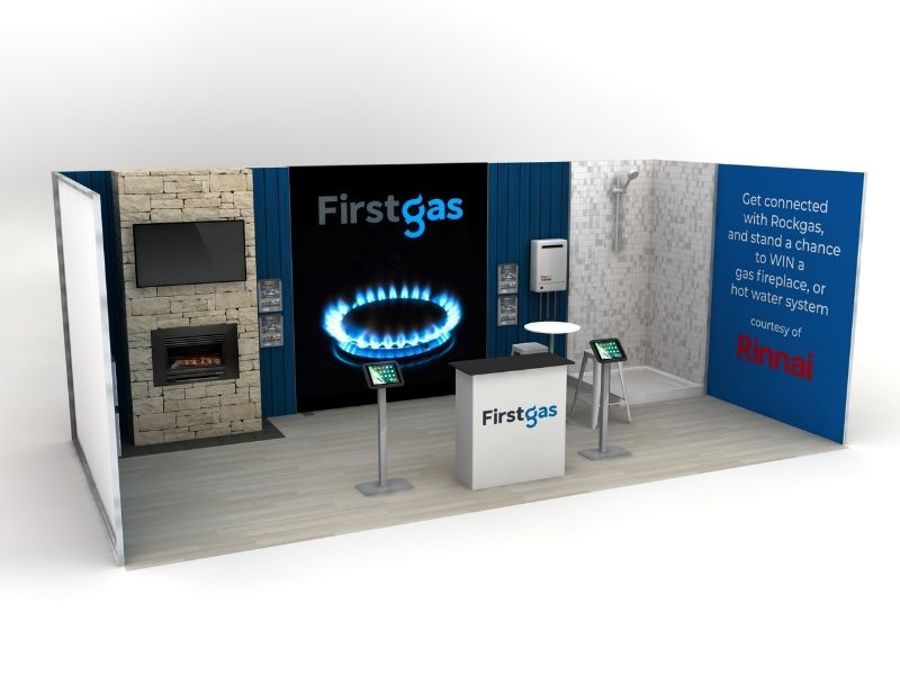
Design and sign off. For custom exhibition stands, we start from your objectives, space and budget, then build the stand in 3D so you can look at it from every side before anything is made. Make changes at this stage. They cost far less here than on the show floor.
Allow for internal approvals. Build in review time for brand, legal and product teams.
Book travel and accommodation as soon as the show dates and your stand team are confirmed.
Should I buy or hire a stand?
Buying pays off if you exhibit several times a year. Hiring makes sense for one or two shows a year, or to trial a show before spending on a stand of your own. Our exhibition hire kits go back after the show, so there is nothing to store.
What should I do 3 months out?
Put every exhibitor manual date in the calendar. The forms close well before the show. At Sydney Build 2025 (7-8 May at ICC Sydney), exhibitor passes, stand plans, freight and stand activity forms were all due on 14 March, nearly eight weeks ahead. The manual warned that orders submitted after the deadlines may be surcharged.
Start promotion. Invite key accounts, book meetings for show days and decide how you'll capture leads. At Sydney Build 2025, lead capture was ordered through the manual by the same 14 March deadline as the other forms.
Plan any technology. If the stand has screens or interactive content, sign off the content now and leave time to test it.
How long does a stand take to produce?
Lock in production lead times early. These are our current typical lead times:
| What | Typical lead time |
|---|---|
| Custom exhibition stand | 4-8 weeks after brief sign-off, covering concept and 3D renders, manufacture and print, then freight and install |
| Custom pop-up or brand activation build | About 5 weeks |
| SuperWall fabric backdrop | 1.5 weeks from order with print-ready artwork, plus delivery time |
Simpler stands can sometimes be done faster. Tell us your show date and we'll confirm.
When are the venue deadlines?
The venue's own deadlines fall in the last few weeks. These examples come from venue guidelines and one show manual; your exhibitor manual sets the dates for your show, and an organiser's date can be earlier than the venue's.
- Custom stand plans: 21 days before the event (GCCEC); 14 days before bump-in (BCEC).
- Rigging plans: 21 days before the event (GCCEC); 21 days before move-in (Sydney Build 2025, ICC Sydney); 14 days before bump-in for items hung overhead (BCEC).
- Technology and data orders: 21 days before the event (GCCEC).
- Forklift and on-site storage: 2 weeks before move-in (Sydney Build 2025).
- Demonstration permits: 14 days before the demonstration (BCEC).
- Food and alcohol sampling approval: 35 days before bump-in for alcohol, 7 days before bump-in for outside food and beverage suppliers (BCEC).
What should I do 1 month out?
Book freight properly. At Sydney Build 2025, the venue would not accept deliveries on behalf of exhibitors, and deliveries were only taken during move-in hours. We don't recommend sending unaccompanied freight straight to a venue: the risk of it going undelivered or missing on site is too high. Road freight costs less than air, and carriers often charge on volumetric weight, so get quotes on real pack sizes. Our guide to shipping and logistics for exhibitions covers labelling, insurance and return freight.
Brief the stand team. Confirm the roster, register exhibitor passes and run a briefing on the goal, the key messages and how leads are recorded.
Check the stand before it leaves. Every custom stand we build is put together and checked before it leaves us, so problems are found before the show, not on the floor.
What happens in show week?
- Bump-in: arrive in your allocated time slot with the paperwork and contacts to hand. Bring high-vis: the Sydney Build 2025 manual made it mandatory during move-in and move-out, and the GCCEC guidelines require high-vis and enclosed shoes in the work area.
- Show days: log leads as they come in, not at the end of the day.
- Bump-out: keep people on the stand until pack-down. The Sydney Build 2025 manual called move-out "a period of high risk in terms of security" and asked for at least two staff to be present.
On custom builds, our team handles freight, installation, a full check before opening and the pack-down at the end. For clients using equipment we've supplied, we can also help on show days, on site or after hours.
What should I do after the show?
- Follow up leads quickly, while visitors still remember the conversation.
- Review the result against the goal you set 12 months earlier: cost per lead, meetings held and sales that follow.
- Write down what worked and what to change, then rebook space for next year if the show earned its place.
- Store the stand for the next show. We can store custom stands between shows and refresh the graphics.
Who should own each step?
Give every task one owner. On a typical corporate stand the split looks like this:
- Goal, budget and space booking: marketing or events manager.
- Stand brief and design sign-off: marketing, with brand and product input.
- Exhibitor manual forms and venue paperwork: events manager, with the stand builder.
- Freight, install and pack-down: stand builder or logistics provider.
- Staff roster, briefing and lead capture: sales manager.
- Follow-up and review: sales and marketing together.
With our project management, one project manager runs the stand side from the first brief to bump-out, so you have a single contact for design, production, freight and install.
---
Next step: Planning a stand for next year's show? Call 1300 240 250 about six months out, or earlier if you can, and we'll work back from your show date with you.