YOUR CART IS CURRENTLY EMPTY
How to pack for an outdoor event or field day
An outdoor site gives you nothing a hall does: no walls, no carpet, sometimes no power point, and a long walk back to the car for anything you forgot. The way round it is to pack once, from a list, and check it again before you leave.
This checklist is for the field and trade marketing teams who take a branded site to festivals, field days, sporting events and roadshows. Work through it a week out, so there's time to order what's missing, and again as you load the vehicle. For the reasons behind each item, see our guide to weatherproofing outdoor activations.
Before you pack: read the exhibitor manual
Many outdoor organisers publish an exhibitor manual or handbook, and it settles much of this list. As an example, the Henty Machinery Field Days 2026 Exhibitor Handbook, published on the organiser's website, covers:
- Site size. It warns: "do not select a site with a 5m front and expect to erect a tent with a 6m front". Check your marquee and flags fit inside your site.
- Power. Outlets are within 30 metres of most sites, and exhibitors bring their own single-length heavy-duty lead, suitable for outdoor use.
- Digging. Exhibitors are asked to check with management before digging or driving posts into the ground.
- Times. Set-up must be finished by a set deadline, and no display may be dismantled before a set time on the last day.
- Paperwork. A site safety management plan and an online induction are required.
Rules differ from event to event, so tick off your own manual, not this one.
Shelter
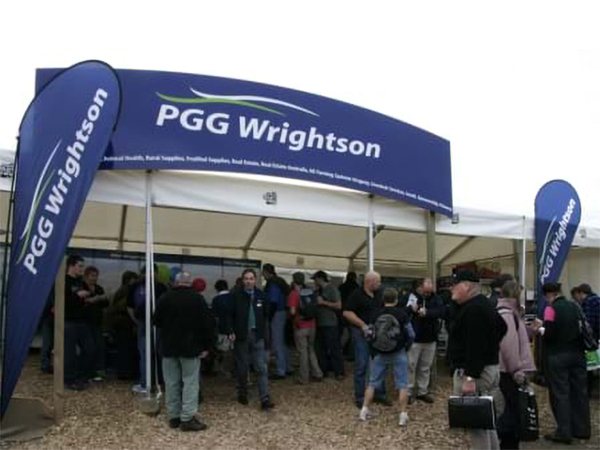
- Marquee or gazebo, with its canopy, walls and carry bag. Our Gazebo 2 Go marquees come in 3 x 3m and 3 x 6m, and our inflatable gazebos in 3 x 3m, 4 x 4m and 5 x 5m.
- Weights or anchors for every leg. Start with the manufacturer's instructions, then check the event or council rule. Clarence City Council in Tasmania, for example, requires 25kg on each leg of a small gazebo that can't be anchored, so at least 100kg for a small four-leg gazebo, and more for larger ones.
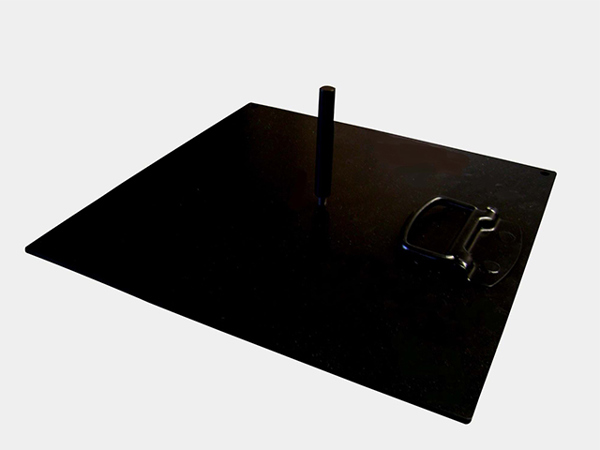
- Weighted steel base plates (7kg each), sand bags (7kg each when filled) and rain gutters are all available as Gazebo 2 Go accessories.
- Stakes only if the site allows them (see the manual).
- A second person for the build. A 3 x 3m Gazebo 2 Go frame alone weighs 23kg, plus 5kg for the roof.
Flags, banners and walls
- Flags, poles and their carry bags. A tall flag reads from across a car park or paddock: our teardrop flags and the Blade 2 Go both come in 2.5m, 3.5m and 4.5m.
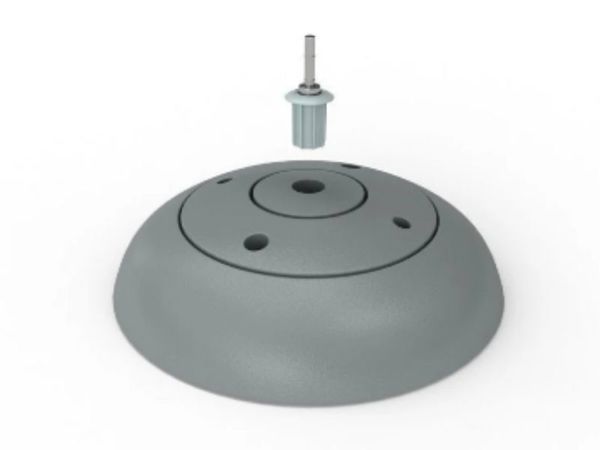
- The right base for the ground. Each flag comes with an in-ground stake for firm grass, if the site lets you dig (see the manual). On concrete, paving or bitumen, or where stakes aren't allowed, pack a cross base or steel base plate.
- Pull-up banners for the detail people read once they're close. Keep them inside the marquee, out of the wind.
- Freestanding walls, if you use them, with ballast. The SuperWall outdoor water base travels empty and is filled at the site, so check there's water available. Henty, for example, has water on site for exhibitors.
Browse our outdoor flags and banners for the rest of the range.
Furniture, display and sampling
- Tables or counters, with their graphic wraps.
- Branded umbrellas for a serving point or seating area: square 2 x 2m or 3 x 3m, or hexagonal 2.7m, with the optional 15kg base plate.
- For sampling on the move, an outdoor sampling trolley. Its gel-filled, puncture-proof tyres handle grass, beach sand and kerbs, and the 70-litre bin takes ice and cans. Add the clear lid to keep cold items cold for longer.
- Ice, stock and samples, with a plan for restocking during the day.
- Sealed tubs for brochures, and sleeves or frames for price cards and menus.
- Bins and rubbish bags.
Power and tech
- A tested and tagged, outdoor-rated extension lead long enough to reach the outlet in one length.
- Approved power boards with RCD (safety switch) protection, tested and tagged. SafeWork NSW's events guide wants a safety switch covering every electrical item, and leads and connection points kept out of the wet.
- Surge protection, if the organiser asks for it. Henty asks every exhibitor to bring their own.
- Cable covers or ramps for any lead that crosses a walkway.
- Chargers and spare batteries for tablets, scanners and payment terminals.
- Screens only if there's cover from direct sun.
Weather and people
- The forecast, checked the day before and again on the morning, and the event's severe-weather procedure.
- An agreed bad-weather response: who decides when to take flags and signage down, and how staff will hear about it. Follow the organiser's instructions and the equipment guidance; this list gives no safe wind speed.
- Sunscreen, hats and drinking water for staff. Both appear in the NSW Government's event starter guide, and ARPANSA's advice for a UV index of 3 or more is protective clothing, a hat, sunglasses, sunscreen and shade.
- Wet-weather gear, spare shirts and enclosed shoes.
- First aid kit.
- A small tool kit, cable ties and tape. Our build-day emergency kit lists the rest.
Pack-down and damage check
- Wait for the official close before anything comes down, unless your weather trigger says flags and signage come down sooner.
- Take flags and signage down first, then walls, then the marquee.
- Empty water bases and drain trolley bins before loading.
- Count every leg weight, base, stake and pole back in.
- Let canopies and walls dry completely before storage. After a coastal event, rinse frames and bases with fresh water.
- Photograph any damage, note what's missing, and order replacement graphics or parts before the next event.
If you'd like a hand choosing kit for an outdoor event, send us the location, how open the site is to the weather and who will set up, or call 1300 240 250.