

YOUR CART IS CURRENTLY EMPTY
Instant-win games for brand activations: which format to choose
Published
Quick answer
Choose an instant-win game by four things: the floor space you have, how quickly people need to move through, how many staff you can put on it, and what you need to capture from each player. A prize wheel suits busy sites where plays must be fast and the crowd can watch. A mystery prize box builds suspense around one big reveal. A target game or a beat-the-clock enclosure adds a challenge and holds people longer. If chance plays any part in who wins, even alongside skill, treat the game as a trade promotion. Either way, check the rules before launch.
The instant-win formats we see at activations
An instant-win game tells the player on the spot whether they have won, rather than at a draw days later. These are the formats that appear across our work for brand activations, trade shows and in-store promotions.
- Prize wheel. The player spins, and wherever the pointer stops sets the prize. Our prize wheels come as floor-standing wheels 1.5m high with an 800mm or 1,000mm wheel, counter-top wheels with a 420mm wheel, and an off-the-shelf wheel with write-on segments.
- Mystery prize box or crate. The prize stays hidden until the reveal. One crate in our gallery is chained and padlocked, with a sign above it promoting a $50,000 mystery prize.
- Instant-win prize box. A large printed box makes the reveal the centre of attention, with a catch on the front that keeps the lid shut until staff open it for the winner.
- Target or toss game. A self-standing printed A-frame board with a round hole to aim at.
- Beat-the-clock enclosure. A walled enclosure with the challenge printed on its side panels and an open top, with the game played inside. The one in our gallery asked players to beat the clock for a chance to toss the coin on centre court.
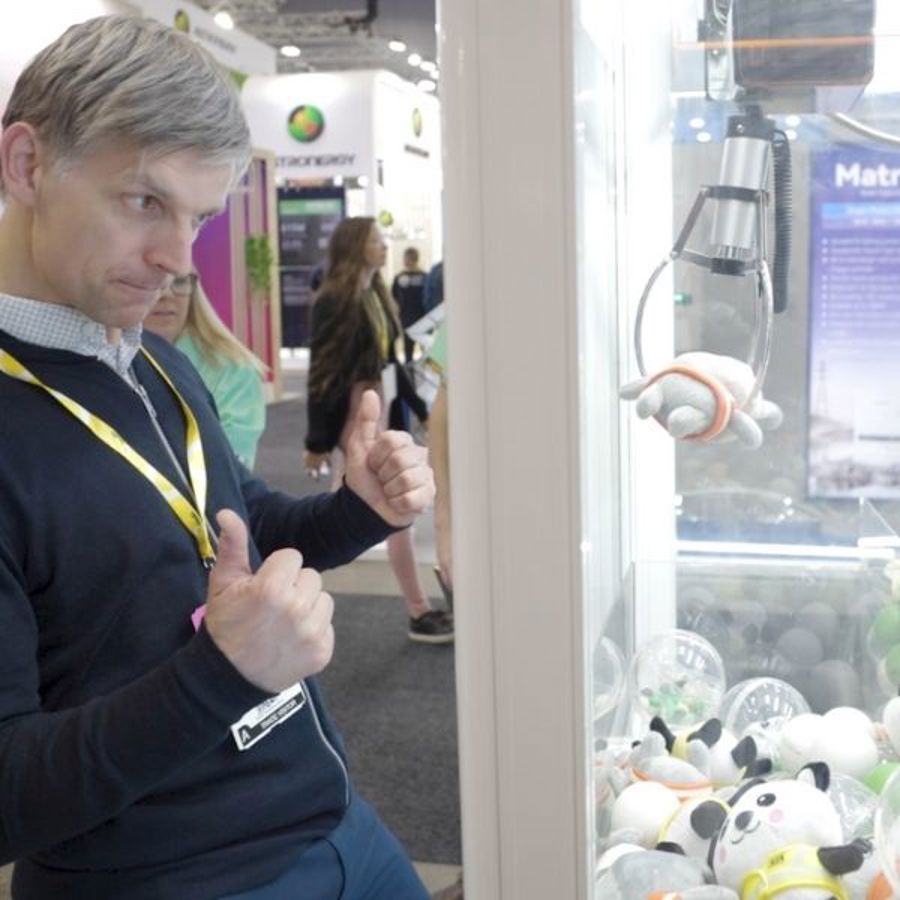
- Claw machine. Our gallery includes a claw machine on a trade show stand, where onlookers can see every attempt through the glass.
Instant-win games compared
| Format | Footprint | Time per play | Staff | How the winner is decided | Best for |
|---|---|---|---|---|---|
| Floor-standing prize wheel | Small: one wheel plus queue space | Short | Host on the spin, second person on data and prizes | Chance (segment) | High-traffic sites, quick capture |
| Counter-top prize wheel | A table or counter | Short | One or two | Chance (segment) | Sampling tables, retail counters |
| Mystery prize box or crate | Floor-standing, with a header sign | Short | One to manage the reveal and stock | Usually chance | Seasonal campaigns, a single hero prize |
| Target or toss game | Throwing distance in front of the board | Short | One to reset and run the line | Aim, with some luck | Events and in-store activations |
| Beat-the-clock enclosure | The largest: its own floor area | Medium | One host and a timekeeper | Performance against the clock | Sponsorships, hero activations |
| Claw machine | One cabinet | Short | One to manage the line and prizes | Skill and chance | Trade shows, consumer events |
The fastest formats are the ones where the outcome is decided in a single action. The longer the play, the more people stop to watch, but the fewer play per hour.
Footprint and set-up
Start with the space the organiser or centre has given you, then allow for the queue as well as the game.
- Prize wheels take the least room. A counter-top wheel sits on a demo table or counter; a floor-standing wheel stands on its own base at the front of the space. Either way, agree queue space along your frontage rather than across the aisle.
- Boxes and crates need height to be seen. A header sign above the box carries the offer over people's heads, so the display reads from further away than the box alone.
- Target games need a throwing line. Leave clear space between the line and the board, away from walkways, so a missed throw doesn't land in someone's path.
- Enclosures need their own floor area. Plan the footprint with the organiser early, as an enclosure is closer to a small build than a prop.
- Anything with power needs a powered site. Book it with the venue at the same time as your space.
Throughput and queues
Speed matters most where traffic is heavy and dwell time is short, such as a shopping centre concourse or an exhibition aisle.
- A wheel is fast and theatrical. The clicker can be heard across the aisle, the result comes in seconds, and the whole queue sees each spin. That makes it a strong choice for volume.
- A reveal is slower but bigger. A mystery box creates one moment per player. It works best when every player gets a small prize and a few find the big one.
- Challenges hold a crowd. A beat-the-clock game or claw machine gives watchers something to follow, which brings more people over, but each play takes longer.
Whatever the format, two habits keep a line moving: take details first and play second, and allow one play per person per visit, set out in the rules and applied to everyone.
Staffing and prize control
Every format needs someone in charge of the prizes, and most need a second person so the host can keep drawing people in.
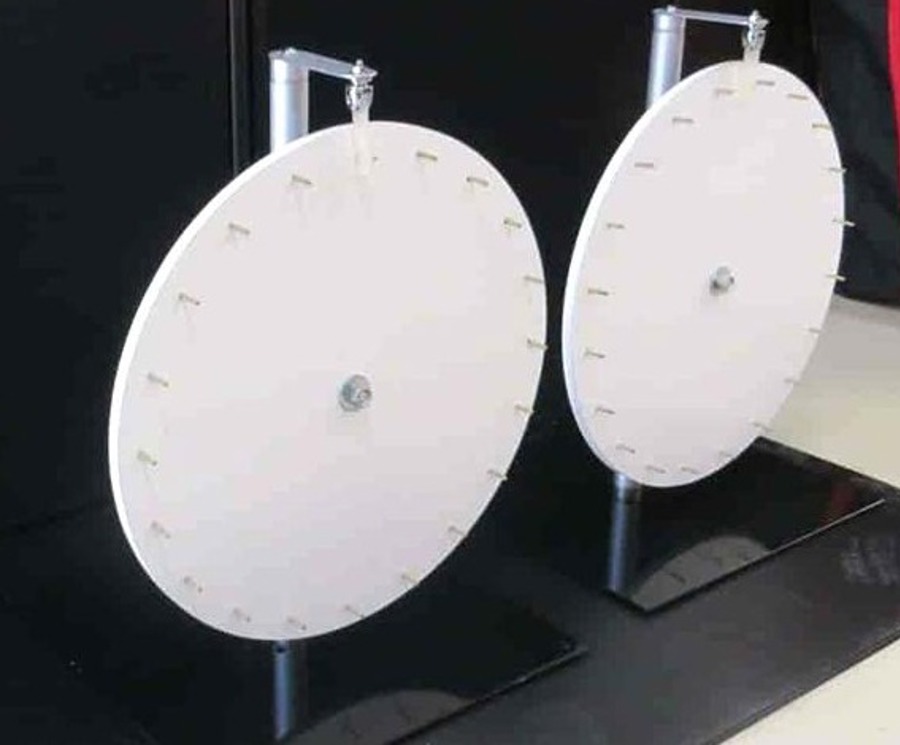
- Wheels set the odds by segments. If the wheel is balanced and the segments are equal, a prize's odds are its share of the segments: 3 segments out of 16 gives 3 chances in 16. Our spin to win prize wheel guide works through an example.
- Boxes need a written prize plan. Decide in advance how many winning entries go in, record it, and keep the record with the promotion paperwork.
- Claw machines need agreed settings. Ask whoever supplies the machine how it is set up, and make sure your terms describe how prizes are won.
- Stock goes out of reach. Put one of each prize on display and keep the rest behind the counter or under lock.
For a timed draw, use a branded entry box or raffle barrel to collect entries. The draw still involves chance. See our competitions and prize promotions range.
Data capture and privacy
An instant-win game is usually a trade for details: a play in return for a name, an email or a qualifying answer. Decide what you need before the game is designed, and keep it short so the line keeps moving. If you want likely buyers rather than prize hunters, ask a qualifying question before the play; our guide to trade show prizes that attract buyers, not prize hunters covers prize choice and qualifying.
If your organisation is covered by the Privacy Act, Australian Privacy Principle 5 applies. The Office of the Australian Information Commissioner says an organisation that collects personal information must take reasonable steps to notify the person of certain matters, including the purposes of collection, and that this must happen "before, or at the time it collects personal information", or as soon as practicable afterwards if that isn't practicable. In practice, put a short collection notice on the entry screen or form, and have your privacy team approve it before the activation.
Chance, skill and the rules
Adding a challenge doesn't necessarily take a game outside the trade promotion rules. What the regulators' own pages say:
- ACT. The Gambling and Racing Commission describes a trade promotion lottery as one with winners decided by any means that includes "an element of chance or a mixture of chance and skill".
- Victoria. The VGCCC says trade promotion lotteries award prizes determined by chance, and "This applies even if the event includes skill-based activities". No permit is required, but conditions apply, and entry fees can't be charged (asking people to buy a product to take part is allowed).
- NSW. Trade promotions "cannot have an entry or other related fee for participating", though entry by buying goods at their normal retail value is allowed. An authority is required if the total prize value for a single promotion exceeds $10,000. Advertising must not "suggest that winning will be a definite outcome", so have your legal team check lines such as "everyone wins" before they go on a sign.
So a claw machine, a target game or a timed challenge with a prize at the end can still be a trade promotion. The rules differ in each state and territory, so check with the regulator in each one where entrants live; our spin to win guide sets out what more of them say. Your promotions or legal team should own the terms and conditions; we build the game to suit them.
Buy, build or brief us
We sell prize wheels; we don't hire them. The boxes, crates, target boards and game enclosures in our gallery were each branded for a specific campaign, so ask us about one like them. Our interactive games are designed to your brief: we agree the structure, the graphics and how the game is played with you. For longer-format games such as leaderboards and touchscreen quizzes, see our guide to gamification at trade shows.
Next step
Send us your activation date, the space you have and the prize list through the enquiry form on any game or prize wheel page, or call 1300 240 250, and we'll recommend the format that suits your crowd and your team.