

YOUR CART IS CURRENTLY EMPTY
What permits does a pop-up shop need in Australia?
The permits a pop-up shop needs depend on where it sits and what it does. In a shopping centre, the centre's licence and its rules come first. On a street, in a vacant shop or in a public space, the local council and state regulators decide most of what you need. Selling food or serving alcohol adds approvals wherever you trade, and a competition can need a permit depending on the state and the prize value.
This page covers approvals outside the landlord. We've used examples published by councils and state regulators in NSW, Victoria and Queensland. Rules differ by state and by council, so treat this as a list of questions to ask, not legal advice.
Start with where the pop-up sits
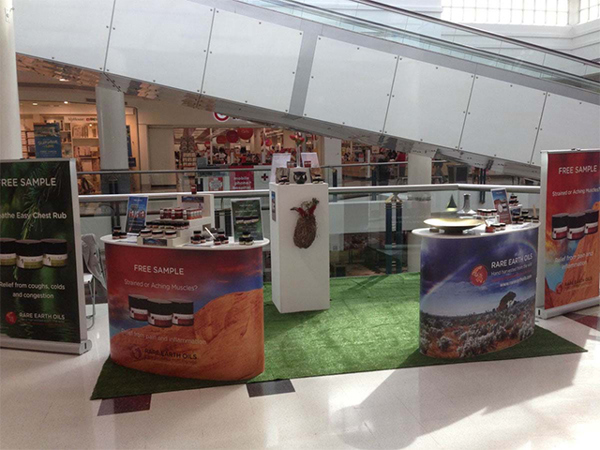
- In a shopping centre. You book a casual mall site or a vacant shop through the centre, and its licence, design rules and operations team set most of the conditions. Our comparison of concessions, shop-in-shops and pop-ups explains casual mall licensing, and our guide to getting a pop-up shop in a vacant store approved covers the landlord's fit-out approval. Food, liquor and competition rules below still apply.
- In a street-front shop. You need an agreement with the property owner, then check planning, signs and footpath use with the council.
- In a public space or at an event. The council or event organiser issues the permit, and its conditions decide what you can sell, give away and set up.
#1 - Get the agreement right
Even a short stay needs a written agreement. Brisbane City Council's pop-up shop guidance says pop-up tenants can expect to pay a rental fee and utilities, may be asked to contribute to outgoings, and "usually need public liability insurance". It publishes sample pop-up clauses, and notes that Queensland's Retail Shop Leases Act 1994 "generally applies to pop-up occupancy licence terms". Have your legal team review it, as leasing law differs by state.
#2 - Check whether council planning approval is needed
In NSW, taking over a shop to run another shop usually needs no new planning approval, but check before you assume. The NSW Planning Portal says "a change from one type of retail shop to another is not considered to be a change of use, but a change of tenant." Some changes between business premises, office premises, shops and kiosks can also go ahead without approval if they meet the NSW conditions, and minor internal work such as re-painting or changing light fittings may not need approval.
Exempt development generally can't be carried out on a building listed on the State Heritage Register, and anything on public land or over a public road needs separate approval from the council or Transport for NSW. If the use changes (from an office to a shop, say) or the building is heritage listed, ask the council before you sign.
#3 - Plan shopfront signs within the rules
In NSW, a sign can go up without planning approval only if it meets every condition on the NSW Planning Portal's list, such as written consent from the property owner, and separate approval if it hangs over a public road or footpath. A building with one commercial tenant can have up to 3 such business signs, and no building more than 6.
In Victoria, sign permits come under the council's planning scheme. Yarra City Council, for example, says whether you need a permit depends on the number, size and type of signs. If the property is in a Heritage Overlay "almost all signs will need a planning permit", while small, non-illuminated business identification signs elsewhere may not.
Inside a shopping centre, the centre sets the sign rules instead. Many Westfield centres no longer allow pull-up banners, for example, so check before you order any freestanding signs.
#4 - Ask before you use the footpath
Using the footpath outside a shop is a separate approval. The City of Sydney's footway display policy sets a clear path of travel and distances from street furniture for retailers displaying goods outside. A display in an area the policy doesn't cover needs an application for use of the footway, development consent and Roads Act consent. Other councils have their own rules, so ask yours.
#5 - Get a permit for promotions in public space
If the pop-up spills into a mall, square or forecourt run by the council, expect to need a council permit. The City of Melbourne's promotion and sampling permits show the conditions to expect:
- a permit is needed for any promotion or sampling activation in the public open spaces it manages, at its allocated sites only (roaming promotions aren't permitted)
- apply 10 full business days ahead for low impact activations (sampling only, equipment walked on), or 3 to 4 weeks ahead for activations needing vehicle access or a complex build
- no more than 7 consecutive days per site
- product sales are prohibited, and so are promotions involving alcohol, tobacco or gambling
- food or drink giveaways need a temporary and mobile food premises registration and a statement of trade
- fees from 1 July 2026 (GST free): a $70 application fee plus $1,409.10 per site per day for up to 2 hours, $2,117.70 for up to 4 hours, or $2,831.50 for longer.
#6 - Check food registration before you sell or hand out food
Safe Food Victoria says "Local councils are responsible for registering and regulating most food businesses in Victoria." In the City of Sydney, a temporary food stall at a market or event must register with the council at least 28 days before it first trades, and that registration counts as notification to the NSW Food Authority. Registration is free, inspected stalls pay a $370 fee once per financial year, and selling high-risk food needs a food safety supervisor. For a pop-up shop selling food from a tenancy, ask the council how it registers the premises. Whether free samples need registering also varies by council, so ask before you plan a giveaway.
#7 - Allow time for a liquor licence
Liquor licences need weeks of notice. In Victoria, a temporary limited liquor licence can suit a "pop-up bar for a limited time". Liquor Control Victoria asks for applications at least 8 weeks before the event and says it may not process one lodged less than 3 weeks out. One application covers up to 3 events, or a short run of up to 6 weeks, and each location needs its own licence.
In NSW, a pop-up licence covers temporary pop-up bars and events, and lets a NSW licensed producer offer tastings and take-away sales at off-site pop-up promotions. Applications are due "no later than 28 days before the event start date". Check with Liquor & Gaming NSW which licence, if any, fits your pop-up.
#8 - Check the trading days
A pop-up over Easter, Anzac Day or Christmas may not be allowed to open. Under the NSW Retail Trading Act 2008, most retail shops must close on Good Friday, Easter Sunday, Anzac Day, Christmas Day and Boxing Day unless exempt, although any retail shop may trade on Boxing Day if employees freely elect to work. The small shop exemption covers shops with 4 or fewer employees and no more than 2 owners, who don't own another shop, so a brand's pop-up is unlikely to qualify. Some shop types and council areas are exempt, but council-area exemptions don't cover Anzac Day. Other states set their own trading days, so check them for each location.
#9 - Check competition permits
A prize draw or spin-to-win at the pop-up is a trade promotion. In NSW, an authority is required if the total prize value of a single trade promotion exceeds $10,000, and the rules must be clearly advertised. Each state is different. Our guide to what a shopping centre or supermarket will ask before a prize promotion covers other states, and our competitions and prize promotions range covers entry boxes, barrels and wheels.
How we help
We build pop-up displays that suit the approvals: freestanding fixtures for sites where you can't fix to the walls, and shopping centre hire packages designed for casual leasing spaces. For planning ideas, see our pop-up shop guide. Tell us where your pop-up will be and when, or call 1300 240 250, and we'll plan the build around the approvals you're applying for.